







Miele vs Bissell: Overview
Comparing Miele and Bissell helps you determine which brand is best suited for your needs in Vacuum Cleaners. Both brands offer strong choices depending on your budget and key feature requirements.
Key Features & Comparison
Evaluate factors such as build quality, warranty, customer satisfaction, and total value before making your final purchase choice between Miele and Bissell.
Features
Miele approaches vacuum features with an emphasis on refined mechanical operation and indoor air quality preservation. Most Miele vacuums incorporate multi-stage rotary dial or handle-integrated suction controls, allowing users to dial in precise air volume for everything from delicate drapes to high-pile carpeting. A hallmark feature is their AirClean 3D filtration architecture, which combines self-sealing dust bags with certified HEPA filtration to trap 99.9% of microscopic particulates. Furthermore, Miele integrates high-end convenience engineering, such as dynamic one-touch cable rewinds, protective bumper strips to safeguard furniture, and electrobrush heads with independent motors that effectively groom carpets without stalling under heavy loads.
Bissell focuses its feature set on high-utility mess removal, particularly regarding pet-related debris and wet-spill management. Notable Bissell innovations include the Tangle-Free Brush Roll system that actively deters hair wrapping, multi-cyclonic spooling systems that eliminate dust contact during bin emptying, and specialized wet-cleaning components found in lines like the CrossWave and Little Green. While Bissell typically uses bagless designs that save on recurring consumable costs, these bins often require more manual maintenance than Miele's hygienic bagged systems. Bissell’s tool ecosystem heavily features specialized rubberized nozzles, febreeze-infused filtration discs, and stain-trapping tools that directly target pet hair, dander, and liquid accidents.
Performance
In terms of dry pickup and deep-cleaning power, Miele consistently outperforms Bissell across both hard surfaces and complex carpeting. Driven by proprietary high-output motors, Miele machines maintain sustained airflow and deep suction, drawing embedded dirt, fine sand, and micro-dust from the base of carpet fibers rather than just skimming surface debris. On hard floors, Miele's specialized parquet heads with natural bristles glide smoothly without scattering loose particles or scratching delicate hardwoods. The closed-loop acoustic insulation also ensures this immense performance is delivered with surprisingly quiet decibel outputs, permitting conversation even while operating at maximum wattage.
Bissell delivers strong, aggressive surface-cleaning performance that is remarkably competitive given its significantly lower price point, though it lacks the raw static lift and sealed-system containment of Miele. Bissell uprights generate ample brushroll agitation to lift surface-level pet hair from low-to-medium pile carpets, making them highly effective for quick daily touch-ups. However, Bissell tends to run much louder mechanically, and its reliance on washable foam filters and bagless chambers can lead to a gradual loss of suction if not regularly washed. Where Bissell undeniably holds a performance advantage is in its wet-extraction capabilities, where machines combine motorized brush agitation with cleaning solution injection to lift wet stains and ground-in mud that dry Miele vacuums cannot touch.
Design
Miele's design language exemplifies functional minimalism, precision assembly, and ergonomic balance. Primarily known for their canister designs—though they also produce premium cordless sticks and uprights—Miele builds their chassis using high-impact ABS plastic that resists cracking, chipping, and fading over decades. Every joint, latch, and telescopic wand connects with a reassuring, tactile click, underscoring the tight engineering tolerances. Canister units feature 360-degree castor wheels mounted on steel axles, providing effortless tracking and maneuverability that prevents tipping, while internal storage compartments keep precision accessories tucked cleanly out of sight.
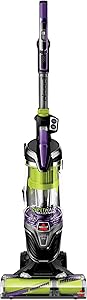
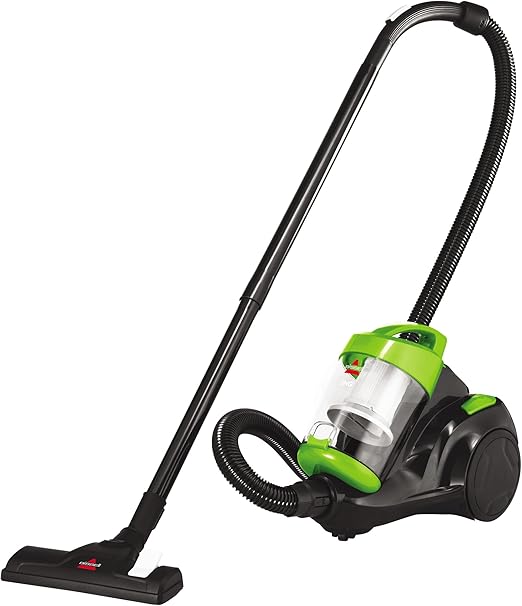
Bissell's design ethos centers on practicality, visibility, and lightweight modularity tailored to the modern consumer. The aesthetic is visibly functional, often featuring bright accent colors, translucent dirt tanks that show collected debris in real time, and easy-to-read maintenance indicators. Most Bissell vacuums adopt an upright or compact handheld form factor, which allows for convenient standalone storage without requiring dedicated closet floor space. While the lightweight plastics make Bissell machines easy to carry up and down stairs, the components inherently feel less rigid than Miele’s industrial-grade casings, meaning clips, hoses, and latches require gentler handling over years of regular use.
Compare current retail pricing, active promotions, and verified stock availability directly from authorized stores:
Compare current retail pricing, active promotions, and verified stock availability directly from authorized stores: