













You’re looking at a face-off between refined legacy and next-gen brilliance.
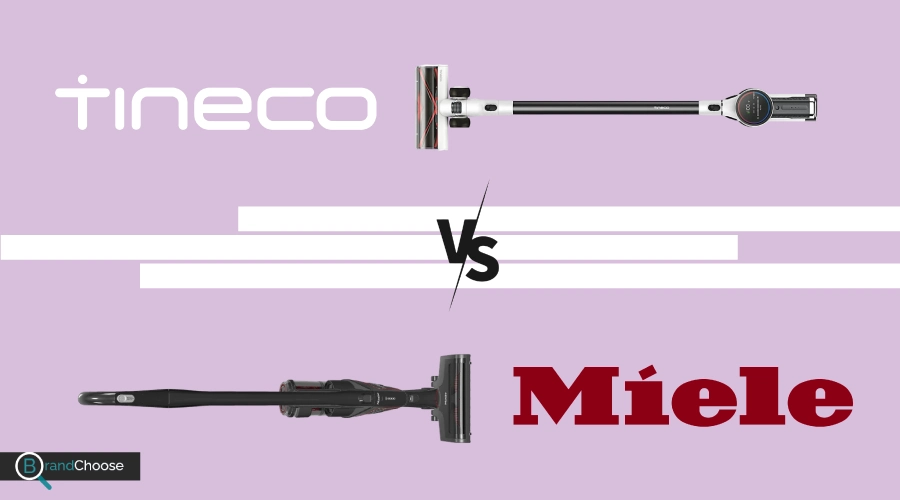
Miele, the German legend, is known for building vacuums like luxury cars: durable, powerful, and whisper-quiet. Tineco, the rising star from China, is rewriting the rules of cordless convenience — blending lightweight designs, smart tech, and app integration into vacs that feel more like gadgets than appliances. One delivers timeless reliability, the other delivers futuristic flair. Let’s dig into what really sets them apart.
Features
Feature architecture between these brands reflects their contrasting engineering priorities. Tineco leans heavily into proprietary digital automation, most notably via its iLoop Smart Sensor technology, which dynamically monitors floor dirt levels to automatically modulate suction power and water flow in real time. Tineco wet-dry units (such as the Floor ONE series) offer voice prompts, full-color LED/LCD displays, smartphone app telemetry, and automated self-cleaning cycles that flush out the roller bar and internal tubing using high-speed extraction and centrifugal drying. These features significantly reduce the tactile labor associated with clearing wet, sticky household messes on sealed hard floors.
Miele approaches functionality from an industrial ergonomics and utility standpoint. Rather than app integration or digital sensors, Miele outfits its vacuums with electro-mechanical suction controls, foot-operated speed selectors, integrated accessory storage, and 360-degree pivoting caster wheels that effortlessly track across rooms. The brand's standout engineering features include their variable electric electrobrushes (with independent motorized rollers tailored for deep pile agitation) and the multi-stage AirClean filtration system with self-sealing hygienic dustbags. While Miele's feature set lacks the flashy digital connectivity of Tineco, its physical components—such as auto-reversing cord reels and crush-proof hoses—are vastly more resilient over years of mechanical stress.
Performance
When measuring pure, raw vacuuming performance—specifically static lift and sustained airflow (CFM)—Miele remains virtually unchallenged. Driven by high-efficiency Vortex motors, Miele canisters generate tremendous air wattage capable of drawing deeply embedded dust, dander, and fine particulate from the base of high-pile carpets. Furthermore, Miele’s certified HEPA AirClean system captures 99.95% of micro-particles down to 0.3 microns, ensuring that exhaust air is cleaner than the room’s ambient air. This makes Miele the superior performer for allergy sufferers and households with thick carpets where deep agitation and unwavering suction are paramount.
Tineco, however, disrupts traditional cleaning metrics by excelling in fluid, multi-state dynamic performance that dry vacuums cannot replicate. Rather than relying purely on high static lift, Tineco's wet-dry systems combine moderate suction with controlled fluid delivery and mechanical roller scrubbing. This enables Tineco to effortlessly lift wet spills, cereal milk, and stuck-on kitchen grime in a single pass. On hard surfaces, Tineco often achieves a cleaner, residue-free finish in less time than a dry vacuum could manage. The trade-off is evident on carpets, where Tineco stick models lack the profound deep-cleaning reach of Miele, and where battery runtimes are inherently limited compared to Miele’s continuous, corded power output.
Design
Miele's industrial design is an exercise in German functionalism, prioritizing robustness, modular servicing, and ergonomic longevity. Constructed using thick, high-impact ABS plastic shells, Miele canisters and uprights are built to endure repetitive collisions with furniture and baseboards without structural failure. Wand mechanisms feature heavy-gauge stainless steel telescoping shafts with solid, positive-locking latch connections that eliminate suction loss. While Miele machines are inherently heavier and require cord management and dedicated storage space, the weight distribution rests on the floor rather than in the user's hand, reducing wrist fatigue during prolonged whole-home cleaning sessions.
Conversely, Tineco embraces a sleek, modern aesthetic that reflects contemporary consumer electronics. Engineered around cordless agility, Tineco devices favor ultra-lightweight chassis designs, clear polycarbonates, and compact profiles that fit neatly into dedicated wall mounts or floor charging stations. The industrial design of their wet-dry units ingeniously isolates dirty and clean water tanks within a streamlined, upright footprint. However, this focus on lightweight, compact housing entails trade-offs: smaller dust and water capacities require frequent emptying, and complex plastic clips, seals, and lithium-ion battery packs present more potential points of wear and tear over a multi-year ownership cycle.
Conclusion
Miele and Tineco couldn’t be more different — and that’s exactly what makes this such a compelling choice.
Miele stands for legacy, durability, and perfection in every detail. Tineco is all about innovation, smart living, and adapting to today’s lifestyle. Whether you're building a home for the next two decades or just want a fast, powerful clean with tech flair — one of these brands is calling your name.
Compare current retail pricing, active promotions, and verified stock availability directly from authorized stores:








