Shark vs Tineco: Overview & Brand Philosophy
In the rapidly evolving home cleaning market, Shark and Tineco represent two distinctly different approaches to floor care innovation. Shark, a flagship subsidiary of Massachusetts-based SharkNinja, has built an enduring legacy by democratizing premium vacuum performance. The brand thrives on utilitarian, mechanical ingenuity—designing versatile, aggressively priced uprights, stick vacuums, and cordless models that directly challenge higher-priced heritage competitors like Dyson. Shark’s design ethos centers on consumer-reported pain points, consistently integrating high-utility features such as sealed HEPA filtration, specialized anti-hair-wrap brushrolls, and articulating wands that physically transform to tackle multiple household surfaces.
Conversely, Tineco—a premium smart home brand under the Ecovacs robotics ecosystem—embodies modern digital lifestyle engineering. While Tineco produces high-performing stick vacuums, the brand largely achieved international prominence by pioneering and dominating the wet/dry vacuum cleaner category with its FLOOR ONE series. Tineco's product philosophy hinges on digital sensory intelligence, integrated IoT, automated power regulation, and simultaneous mopping-and-vacuuming solutions. Rather than solely maximizing raw mechanical suction, Tineco leans heavily into multi-tasking utility, streamlined aesthetic design, and digital interfaces that actively guide the cleaning process.
Choosing between these two heavyweights ultimately comes down to your home's flooring composition and your personal cleaning workflow. Shark remains an all-around floor-to-ceiling cleaning powerhouse engineered for intensive dry debris capture and deep carpet restoration. In contrast, Tineco focuses primarily on hard floor optimization, offering automated, moisture-regulated cleaning technologies that fundamentally reduce the multi-step chore of sweeping, vacuuming, and mopping into a single, cohesive action.
Key Differences & Technological Comparison
The operational distinctions between Shark and Tineco are dictated by their core engineering choices, sensor suites, and filtration mechanisms:
- Cleaning Mechanics & Specialization: Shark is renowned for mechanical dry pickup systems like the DuoClean technology—combining a soft roller for hard floors with a stiff-bristled brush for deep-cleaning carpets in a single floor head. Tineco separates itself with smart wet-dry roller systems that disperse clean water and surfactant while simultaneously extracting dirty liquid into a dedicated recovery chamber, eliminating dry sweeping before mopping.
- Smart Sensors & Automation: Tineco relies heavily on its proprietary iLoop Smart Sensor technology, which dynamically detects hidden dirt, spills, and debris in real time, automatically scaling roller speed, suction power, and water volume while signaling clean status via illuminated color-changing LED rings. Shark has begun introducing automated debris-detection (such as Clean Sense IQ) into newer flagship cordless models, but the majority of its portfolio still prioritizes manual switchgear and consistent mechanical suction.
- Filtration Architecture: Shark holds a technical edge in dry air purification through its Anti-Allergen Complete Seal Technology paired with true HEPA filters, capturing 99.9% of dust and allergens down to 0.3 microns. Tineco utilizes advanced multi-stage cyclonic separation and washable cartridge filters; however, its wet-dry models rely partially on water filtration, requiring prompt dirty-water tank drainage and maintenance to prevent odor buildup.
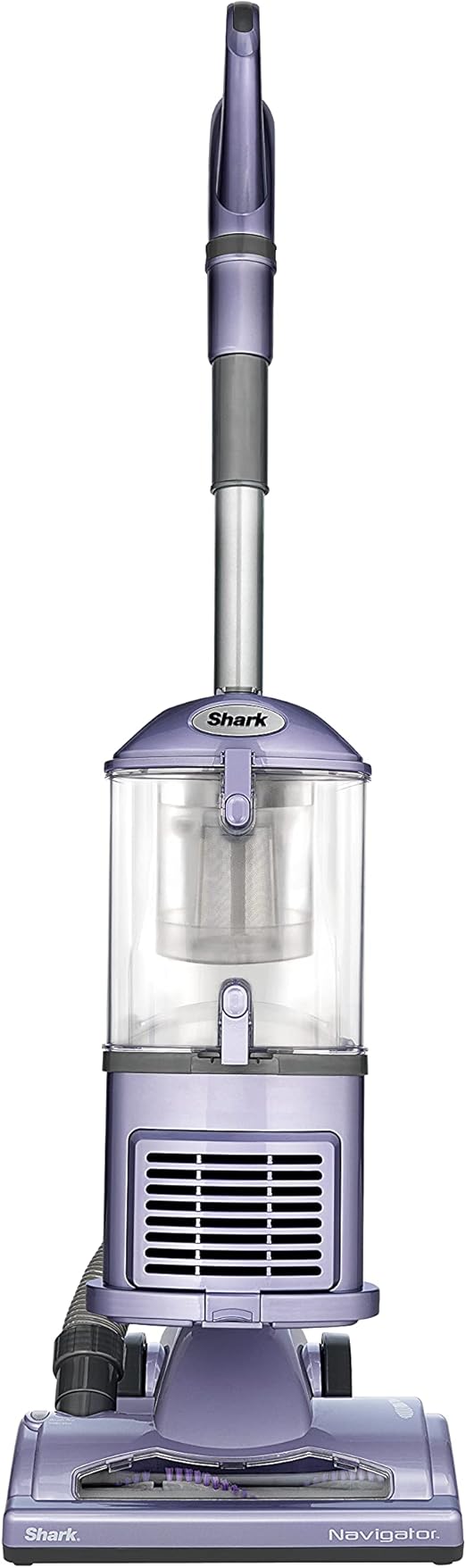
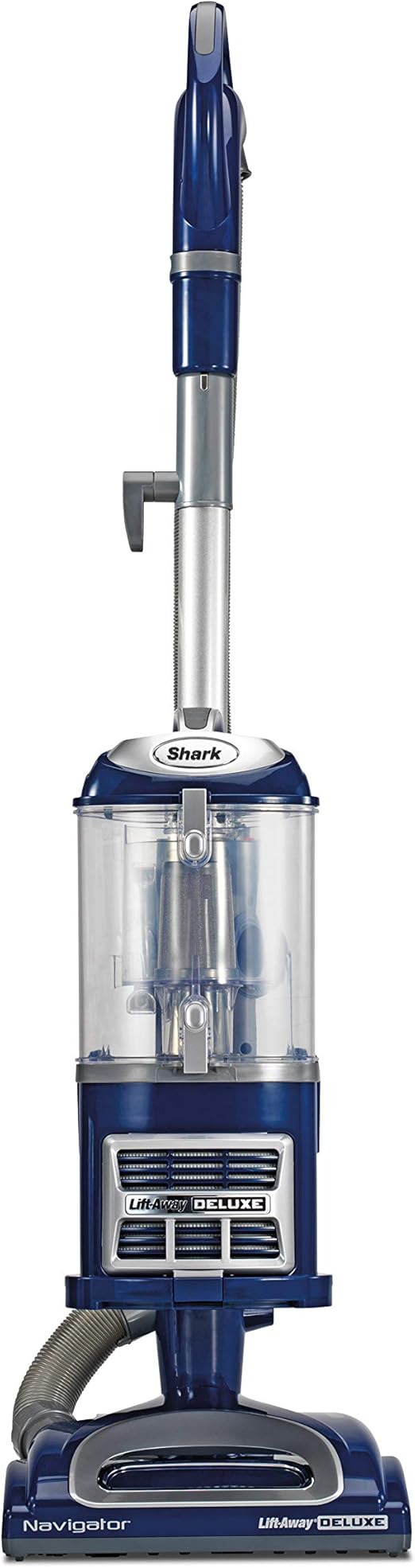
- Form Factor & Versatility: Shark vacuums excel at modularity. Features like "Powered Lift-Away" allow users to detach the canister from the main wand to clean under ultra-low furniture, drapes, and stairs with motorized power heads. Tineco models feature sleek, minimalist ergonomics optimized for upright handling, low center of gravity, and motorized self-propulsion, though their wet-dry machines cannot operate horizontally without risking dirty water leakage into the motor intake.
Pros & Cons Comparison
Shark Vacuum Cleaners
- Pro: Exceptional deep carpet agitation and pet hair extraction driven by self-cleaning brushrolls.
- Pro: Lift-Away functionality offers unparalleled floor-to-ceiling versatility and upholstery reach.
- Pro: Industry-standard Anti-Allergen Complete Seal Systems with true HEPA filtration across most product tiers.
- Pro: Broad product catalog spanning heavy-duty corded uprights, lightweight sticks, and cordless models.
- Con: Can feel top-heavy in cordless stick configurations compared to lightweight rivals.
- Con: Plastic latch components, hose joints, and dust cups can exhibit wear under intense long-term usage.
Tineco Vacuum Cleaners
- Pro: Market-leading wet/dry hybrid functionality cleans liquid spills and dry debris simultaneously.
- Pro: Proprietary iLoop intelligent sensor technology optimizes battery life and suction power on the fly.
- Pro: Self-cleaning cycles and centrifugal roller-drying systems minimize manual brush cleaning.
- Pro: Ultra-quiet motor engineering and self-propelled wheel assists minimize physical user fatigue.
- Con: Wet-dry variants cannot deep-clean medium-to-high-pile carpets or rugs.
- Con: Requires strict post-cleaning hygiene; tanks must be manually emptied and rinsed after every run to prevent mildew.
Performance, Durability & Value Analysis
From a raw performance and durability standpoint, Shark continues to lead in pure, unadulterated mechanical longevity, especially within medium-to-large homes with high-pile carpets. Shark’s traditional corded uprights generate substantial air wattage and robust static lift that cordless battery platforms struggle to emulate over prolonged periods. In terms of build quality, Shark products are functional workhorses: while they employ extensive ABS plastic throughout their chassis, their motors, sealed pathways, and non-slip drive belts are engineered to withstand rigorous, multi-year abuse. When parts do break, Shark’s widespread retail presence makes locating replacement filters, rollers, and hoses remarkably straightforward, ensuring a strong total cost of ownership across a 5-to-7-year operational window.
Tineco approaches value through the lens of modern efficiency and time reclamation. For homes dominated by sealed hardwoods, tile, laminate, or vinyl, a Tineco wet-dry vacuum cuts maintenance labor in half by collapsing sweeping and mopping into one fluid pass. However, long-term durability in wet-dry vacuums introduces complex engineering challenges: continuous moisture exposure demands diligent user care. If dirty water tanks are left full or if internal sensors become coated with debris, performance degrades quickly. Lithium-ion battery decay also places a natural operational ceiling on Tineco's cordless stick products after several years. Nonetheless, for modern suburban homes with hard floors, the premium pricing of a Tineco unit is readily justified by the significant weekly labor savings it delivers.
Final Verdict: Which Brand Should You Choose?
Your ultimate decision between Shark and Tineco should be dictated primarily by your home's flooring architecture and your daily cleaning style:
Choose Shark if: Your home features significant carpet coverage, you share your space with multiple shedding pets, or you require an all-in-one modular system capable of reaching ceilings, ceiling fans, car interiors, and deep under upholstery. Shark offers the ideal balance of heavy-duty dry suction, top-tier allergy-grade filtration, and long-term mechanical reliability without demanding an excessive investment.
Choose Tineco if: Your living space consists predominantly of sealed hard floors, you have young children or pets that cause frequent wet and dry kitchen messes, and you prioritize modern design paired with smart automation. If you find the traditional multi-step ritual of sweeping followed by manual mop buckets tedious, a Tineco FLOOR ONE model will fundamentally upgrade your domestic workflow.
Features
When evaluating feature sets in the vacuum cleaner market, Shark and Tineco embody fundamentally different engineering philosophies: Shark focuses on versatile mechanical utility and multi-surface adaptability, whereas Tineco leans heavily into digital intelligence and wet-dry hybrid technology. Shark’s signature features are rooted in practical, tactile convenience. Innovations like the DuoClean dual-brushroll system, which marries a soft front roller with stiff bristles to capture both fine dust and large debris simultaneously, and self-cleaning Anti-Hair Wrap technology address common consumer pain points without requiring app integration. Furthermore, Shark's patented Powered Lift-Away canisters and MultiFLEX folding wands allow users to physically transform uprights and cordless sticks into compact, under-furniture cleaning tools, giving them an expansive mechanical range across both high-pile carpets and bare floors.
Conversely, Tineco has established its dominance through algorithmic cleaning and specialized hard-floor engineering, particularly within its pioneering Floor One wet-dry series. Tineco's hallmark feature is the proprietary iLoop Smart Sensor technology, which dynamically detects mess severity in real time and automatically modulates suction power, brush roller speed, and water flow, visibly communicating this data through full-color LED/OLED displays or smartphone connectivity. In their wet-dry lineups, Tineco integrates continuous clean-water rinsing with one-touch multi-stage self-cleaning and centrifugal drying cycles, drastically reducing the labor required to maintain sticky, liquid-prone floors. However, this high-tech approach means Tineco models generally exhibit fewer mechanical transformations, with their primary strengths hyper-focused on sealed hard surfaces rather than the deep, multi-pile carpet agitation that Shark delivers.
Ultimately, the practical trade-off between the two brands centers on your flooring profile and preference for digital versus mechanical automation. Shark’s feature architecture is superior for diverse, whole-home cleaning that encompasses thick upholstery, complex stairs, and dense carpeting, offering rugged, hardware-driven solutions that don't depend on software or sensors. On the other hand, Tineco is the undisputed leader for households with predominantly hard surfaces that require simultaneous vacuuming and mopping, offering an automated, data-driven user experience. While Shark provides maximum mechanical flexibility with minimal digital maintenance, Tineco delivers cutting-edge smarts and liquid-mess management, making the ideal choice a matter of carpet versatility versus automated hard-floor convenience.
Performance
When evaluating core vacuuming performance, Shark establishes a distinct advantage in raw suction power and multi-surface versatility, particularly across fibrous flooring. Built around robust cyclonic motors and innovative brushroll architectures—most notably its dual-roller DuoClean and anti-hair-wrap PowerFins systems—Shark vacuums excel at aggressively agitating deep-pile carpets while simultaneously pulling fine dust off hard surfaces without snowplowing. Shark’s sealed HEPA filtration and higher airflow (CFM) metrics mean that across traditional uprights and premium cordless models like the Stratos, deep-seated pet dander, micro-debris, and heavy dirt are extracted with high operational efficiency. The primary trade-off with Shark’s performance profile is mechanical bulk; its motors and complex floorheads require more manual effort to maneuver, and without intelligent liquid management, they are strictly bound to dry-debris remediation.
Conversely, Tineco approaches performance through specialized automation and wet/dry hybrid engineering, dominating hard floor cleaning rather than heavy-duty carpet agitation. Tineco's standout technical strength lies in its proprietary iLoop Smart Sensor technology, found in flagships like the Floor ONE and PURE ONE series, which dynamically monitors debris density in real time and automatically scales suction power and roller speed to optimize energy and cleaning fluid consumption. In wet/dry performance, Tineco is nearly unmatched, vacuuming spills, wet messes, and sticky residues simultaneously while washing hard floors in a single pass—a capability standard Shark dry vacuums cannot replicate. However, Tineco's dry-only stick vacuums generally yield lower peak suction metrics than Shark, and their wet-floor washers are entirely unsuitable for carpets, often struggling with edge-to-edge cleaning where the water-recovery squeegee cannot reach wall bases.
Ultimately, the performance verdict between the two brands depends directly on household floor composition and cleaning priorities. Shark delivers superior, heavy-duty mechanical performance engineered to tackle dense carpets, persistent pet hair tangles, and large debris loads with relentless brute-force suction. Tineco redefines performance convenience for modern, hard-surface-dominant homes through intelligent debris-sensing and automated wet-and-dry washing capabilities. While Shark remains the superior performer for total-home carpet restoration and pure suction velocity, Tineco provides an undeniably higher-efficiency, all-in-one solution for households requiring frequent tile, vinyl, and sealed hardwood sanitization.
Design
When evaluating design engineering, Shark and Tineco embody fundamentally different design philosophies that reflect their distinct historical strengths. Shark approaches vacuum design with a focus on mechanical versatility, functional modularity, and durability. Its hallmark innovations, such as the Powered Lift-Away canister system, MultiFLEX folding wands, and DuoClean dual-brushroll floorheads, prioritize problem-solving through clever mechanical engineering. Shark’s stick and upright models are crafted with robust, heavy-duty ABS plastics designed to withstand years of physical knocks and high-impact use. However, this commitment to multi-configuration hardware often makes Shark vacuums visibly utilitarian, heavier in hand, and bulkier to store than modern rivals, with weight distributions that can induce wrist fatigue during prolonged above-floor cleaning sessions.
In contrast, Tineco champions a sleek, technology-first design language deeply rooted in digital integration and ergonomic minimalism. Tineco’s design footprint is particularly dominant in the wet-dry vacuum and lightweight cordless segments, where streamlined silhouettes, lightweight unibody construction, and balanced center-of-gravity engineering take center stage. Signature design elements like the iLoop Smart Sensor integrate aesthetics with function: full-color LED and LCD animated displays embedded into the handle or chassis change color in real time to indicate floor cleanliness, creating an intuitive, modern user experience. While Tineco’s digital-forward approach, magnetic attachments, and dock-charging ecosystems feel distinctly next-generation compared to Shark's manual switches and latches, the extensive reliance on sensitive electronics, motorized liquid-channel systems, and high-gloss plastics can introduce trade-offs in long-term drop resilience and complex maintenance requirements.
Ultimately, the practical trade-offs regarding design center on tactile, physical utility versus smart, lightweight refinement. Shark excels for consumers who value versatile multi-surface engineering, flexible reach under low-profile furniture without kneeling, and rugged component assemblies that require minimal electronic troubleshooting. Tineco is the superior design choice for users seeking an ultra-modern aesthetic, seamless digital feedback, automated self-cleaning cycles on wet-dry models, and featherweight ergonomics that prioritize effortless maneuverability around modern hard-floor living spaces.