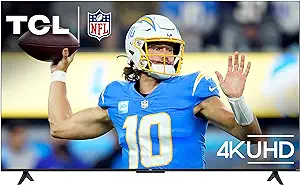
In the rapidly evolving landscape of smart TVs, TCL and Amazon have emerged as key contenders, each vying for dominance with their unique offerings. This article delves into the clash between TCL and Amazon TVs, dissecting their strengths, features, and value propositions to help consumers navigate the competitive world of smart televisions.
Key Features Comparison
Affordability
When evaluating affordability, both TCL and Amazon dominate the value-oriented segment of the television market, but they approach cost efficiency from distinct manufacturing philosophies. TCL operates as a vertically integrated display titan through its CSOT (China Star Optoelectronics Technology) subsidiary, allowing it to manufacture its own LCD panels and backlights. This hardware integration enables TCL to offer aggressive price-to-performance ratios, equipping budget and mid-tier models with advanced display tech like Mini-LED backlighting and high refresh rates at price points traditionally occupied by standard edge-lit sets. Consequently, consumers investing in a TCL display often receive hardware specifications that outperform the dollar amount spent.
Amazon, conversely, leverages its massive retail infrastructure and content ecosystem to subsidize hardware costs, framing its Fire TV Omni and 2-Series/4-Series lineups as gateway portals into the Prime ecosystem. Amazon's pricing strategy is frequently punctuated by steep promotional discounts during events like Prime Day, making their entry-level sets some of the least expensive smart displays available. However, from a pure hardware standpoint, Amazon cuts corners more visibly on lower-tier models—often using basic 60Hz panels and direct backlights without local dimming. While Amazon often wins the absolute bottom-dollar pricing contest, TCL delivers superior long-term hardware value per dollar spent across comparable price tiers.
Picture Quality
Top-Rated Picture Quality Brands





In terms of picture quality, TCL holds a pronounced technical edge over Amazon, primarily driven by its early adoption and continual refinement of Mini-LED and Quantum Dot technologies. In its mid-range and premium tiers (such as the Q7 and QM8 series), TCL incorporates hundreds to thousands of full-array local dimming zones that yield deep, inky black levels, high contrast ratios, and exceptional peak brightness capable of exceeding 2,000 nits. This makes TCL displays formidable performers for HDR content (supporting Dolby Vision IQ and HDR10+) and bright-room viewing, while maintaining superior color volume and high motion clarity with native 120Hz and 144Hz panels.
Amazon has steadily improved its image pipeline, particularly with the Fire TV Omni QLED series, which introduces quantum dot color and modest full-array local dimming to the lineup. However, Amazon’s displays remain fundamentally constrained to entry-level and mid-range performance benchmarks. The Omni series features significantly fewer local dimming zones than comparable TCL models, resulting in noticeable blooming around bright objects and lower peak luminance that limits HDR impact. Furthermore, processing on Amazon televisions is tuned primarily for standard streaming workloads, lacking the sophisticated upscaling, advanced shadow detail retention, and motion interpolation algorithms present in TCL’s AIPQ processing engines.
Brand Reputation
TCL has steadily built a reputation over the past decade as a disruptive, hardware-first innovator that revolutionized consumer expectations for affordable high-performance displays. Widely respected among audio-video enthusiasts and tech reviewers, the brand is celebrated for democratizing display features like Mini-LED, variable refresh rates, and low input lag for gaming. However, TCL's rapid iterative hardware cycle has historically drawn criticism regarding quality control inconsistencies, panel lottery variances, and occasional firmware bugs, though customer support and post-launch software stability have seen marked improvements in recent product generations.
Amazon’s television brand reputation is fundamentally tied to consumer trust in its retail service, logistics, and pervasive smart home ecosystem. Rather than positioning itself as a boutique display manufacturer, Amazon represents seamless convenience, user-friendly software interfaces, and effortless integration with Alexa-enabled smart homes. While Amazon sets are generally viewed as reliable, utilitarian appliances for casual viewing in secondary rooms, bedrooms, or budget setups, the brand lacks technical prestige among cinephiles and serious gamers, who often perceive Amazon's Fire OS interface as overly ad-dense and hardware configurations as basic.
Smart Features
TCL TVs often come equipped with Roku's easy-to-navigate interface, providing seamless access to a variety of apps and features. Roku's platform supports a vast library of apps and channels, making it a versatile choice for streaming enthusiasts. Voice control features may also be present in some TCL models, enhancing the overall user experience.
Amazon's Fire TV Edition leverages the power of Alexa for smart features. Users can control their TVs, search for content, and perform various tasks through voice commands. The integration of Alexa skills expands the capabilities, allowing users to control smart home devices and access a broader range of voice-activated functionalities.
Conclusion
Choosing between TCL and Amazon TVs depends on individual preferences, budget constraints, and specific needs. TCL excels in providing affordable yet feature-packed displays, making it an excellent choice for those seeking value without compromising essential features. Amazon, with its Fire TV Edition, offers a compelling package with a focus on affordability, a vast content ecosystem, and the convenience of Alexa for smart control. In the dynamic realm of smart TVs, TCL and Amazon continue to refine their offerings, ensuring that consumers have diverse options to suit their unique entertainment preferences. Whether it's the affordability and value-driven approach of TCL or the content integration and smart features of Amazon, the battle for supremacy in our living rooms remains a captivating spectacle.