






Sceptre vs Amazon: Overview
Comparing Sceptre and Amazon helps you determine which brand is best suited for your needs in Televisions. Both brands offer strong choices depending on your budget and key feature requirements.
Key Features & Comparison
Evaluate factors such as build quality, warranty, customer satisfaction, and total value before making your final purchase choice between Sceptre and Amazon.
Affordability
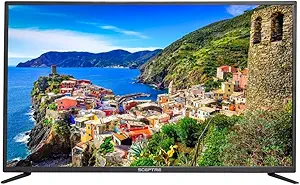
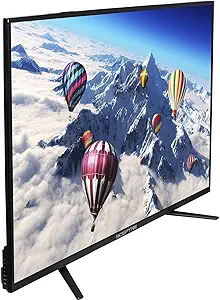
When analyzing upfront cost, Sceptre is widely recognized as one of the most aggressively priced display manufacturers on the market, consistently undercutting virtually all competitors. By stripping away connected services, complex licensing agreements, and advanced video processing chips, Sceptre manages to keep manufacturing overhead extraordinarily low. This ultra-budget positioning makes Sceptre an exceptionally cost-effective option for secondary locations like garages, dorm rooms, or guest bedrooms, as well as for commercial settings where a basic monitor-style panel is all that is required.
Amazon approaches affordability through a distinct ecosystem-driven business model, using its Fire TV lineup (including the 2-Series, 4-Series, and Omni Series) as a gateway into its broader digital retail network. While Amazon televisions generally cost slightly more than equivalent Sceptre screen sizes, Amazon frequently leverages deep discounts during events like Prime Day, dramatically closing the price gap. The slightly higher initial investment in an Amazon television delivers far greater value per dollar, as buyers receive integrated streaming hardware, Wi-Fi connectivity, and built-in voice assistance that would otherwise require separate, third-party purchases on a basic Sceptre set.
Picture Quality
Top-Rated Picture Quality Brands




Sceptre relies primarily on baseline LED backlighting and standard LCD panels, offering utilitarian visual fidelity that fulfills the bare minimum requirements for broadcast TV and casual viewing. Contrast ratios are generally mediocre, dynamic range is constrained, and color calibration straight out of the box leans either overly cool or desaturated. Furthermore, Sceptre displays lack the processing power necessary for sophisticated upscaling or effective motion interpolation, which often leads to visible banding, artifacting in fast-paced content, and crushed shadow details in low-light scenes.
Amazon offers a significantly wider spectrum of panel performance, particularly as consumers move up from the entry-level 4-Series to the flagship Fire TV Omni QLED Series. While Amazon's entry-tier panels are comparable to basic budget sets, the Omni line introduces quantum dot color technology, full-array local dimming, and support for advanced dynamic HDR formats such as Dolby Vision and HDR10+ Adaptive. This technical divergence allows Amazon to deliver substantially higher peak brightness, deeper black levels, and superior color volume, providing a noticeably more cinematic and immersive viewing experience than Sceptre can achieve.
Brand Reputation
Sceptre holds a legacy reputation as a direct-to-consumer hardware vendor focused purely on utility, having spent decades producing low-cost computer monitors and straightforward televisions. Consumers generally view Sceptre through a purely transactional lens: it is not a prestigious brand associated with home theater excellence, but rather a functional commodity manufacturer. Customer service is basic, software updates are practically nonexistent due to the lack of smart infrastructure, and long-term hardware reliability is variable, with some units lasting years without issue while others suffer premature component failures.
Amazon enjoys massive global brand equity and widespread consumer trust, which translates into strong platform confidence despite being a relative newcomer to first-party television manufacturing. Consumers readily associate the Amazon Fire TV badge with reliable software integration, continuous cloud-level feature updates, and seamless customer support. While audiophiles and high-end cinephiles still revere dedicated display giants over tech conglomerates, Amazon's established supply chain, clear warranty protections, and robust distribution network make it a significantly more reassuring and dependable purchase for the average consumer.
Smart Features
Smart capabilities represent the most stark technical contrast between these two manufacturers, as Sceptre historically eschews built-in smart functionality in favor of a traditional, "dumb" television architecture. Most Sceptre models contain only a basic on-screen display menu for adjusting source inputs and rudimentary picture settings. While this lack of software eliminates sluggish interfaces, tracking bloatware, and operating system obsolescence, it fundamentally requires the end user to supply their own streaming stick, set-top box, or gaming console to access services like Netflix or Prime Video.
Amazon televisions are constructed from the ground up around the Fire TV OS, providing a fully integrated, feature-dense smart home hub directly on the screen. The interface delivers instant access to thousands of streaming applications, personalized watchlists, and algorithmic content curation. Crucially, Amazon includes far-field microphones in its higher-tier Omni models, enabling hands-free Alexa voice control to manage television playback, operate smart home devices, and display live camera feeds. This deep integration transforms an Amazon television from a simple visual output device into a centralized smart home controller, an ecosystem capability that Sceptre does not attempt to replicate.