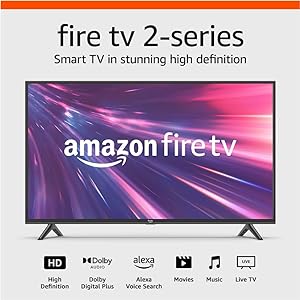
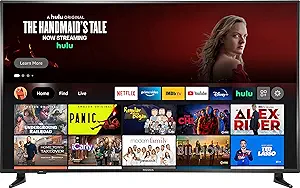
As the smart TV market continues to evolve, consumers are presented with an array of choices, each offering distinct features and value propositions. In this article, we explore the clash between INSIGNIA and Amazon TVs, two contenders in the competitive landscape of smart televisions. By dissecting their strengths, weaknesses, and unique offerings, we aim to assist consumers in navigating the dynamic world of home entertainment.
Key Features Comparison
Affordability
When evaluating affordability, both Insignia and Amazon Fire TV target budget-conscious consumers, yet they execute their value propositions through distinct retail strategies. Insignia, serving as Best Buy's in-house brand, consistently undercuts mainstream competitors by focusing on functional minimalism. Its product catalog spans ultra-compact 720p and 1080p bedroom displays starting well under two hundred dollars, up to entry-tier 4K panels priced aggressively against tier-three imports. Insignia achieves these low price points by utilizing standardized, off-the-shelf panel inventory and basic chassis constructions, passing manufacturing efficiencies directly to the consumer without layering on premium proprietary display engineering.
Amazon approaches affordability through an ecosystem-subsidized business model, particularly evident in its Fire TV 2-Series, 4-Series, and Omni Series. While baseline pricing is highly competitive with Insignia, Amazon leverages frequent promotional discounts during retail tentpoles like Prime Day and Black Friday, often making their feature-rich 4K panels marginally more cost-effective per square inch than Insignia. Furthermore, Amazon offers a wider pricing ladder; the budget 2-Series competes dollar-for-dollar with Insignia's entry models, but the upscale Omni and Omni QLED lines ask for a moderate premium to deliver advanced hardware perks like hands-free far-field voice control and ambient art modes that Insignia simply does not offer.
Picture Quality
Top-Rated Picture Quality Brands




In terms of raw visual performance, both brands cater to casual viewing environments, but Amazon demonstrates a higher engineering ceiling. Insignia televisions rely almost exclusively on standard direct-lit or edge-lit LED-backlit LCD panels, paired with elementary processing engines. While Insignia's 4K displays support baseline HDR formats like HDR10, their peak brightness typically struggles to exceed 250 to 300 nits. This limited luminance, combined with standard 60Hz refresh rates and the absence of full-array local dimming, results in subdued contrast, elevated black levels that appear charcoal gray in dark rooms, and minimal specular highlight impact when viewing high-dynamic-range content.
Amazon differentiates its portfolio by engineering tiers that substantially outperform basic panel benchmarks. While Amazon's entry-level 4-Series mirrors Insignia's modest contrast and limited color volume, the Amazon Fire TV Omni QLED Series introduces significant optical upgrades. Featuring a quantum dot layer for wide color gamut coverage (DCI-P3) and full-array local dimming zones, the Omni QLED delivers noticeably deeper black levels, reduced blooming, and superior color saturation. Amazon also incorporates support for premium dynamic metadata formats, including Dolby Vision and HDR10+ Adaptive, offering far superior tone mapping and picture fidelity compared to Insignia’s purely utilitarian display tuning.
Brand Reputation
Brand reputation for Insignia is anchored in Best Buy’s brick-and-mortar retail footprint and customer service network. For decades, Insignia has maintained consumer trust as a reliable, no-frills workhorse brand that shoppers can inspect physically before purchasing. The brand carries a reputation for decent longevity relative to its low cost, serving as an ideal second or third television for kitchens, dorms, and guest rooms. Additionally, consumers benefit from accessible return windows, Geek Squad support infrastructure, and standardized manufacturing warranties, which mitigates the perceived risk often associated with ultra-budget electronics.
Amazon’s brand reputation in the television space is that of a disruptive tech behemoth leveraging software dominance to capture living rooms. While historically known as an e-commerce platform and smart home innovator rather than an AV manufacturer, Amazon’s Fire TV brand has quickly established credibility by integrating seamless Alexa smart ecosystem compatibility and a modern user interface. Consumer perception is bolstered by rapid over-the-air firmware updates and advanced software support. However, Amazon occasionally faces scrutiny regarding user privacy concerns, aggressive on-screen advertising within Fire OS, and the transactional, direct-to-consumer warranty process that lacks the immediate physical assistance of Insignia's retail parent.
Smart Features
Insignia smart TVs often come equipped with features like voice control and compatibility with virtual assistants like Alexa. This enhances the overall user experience, allowing for hands-free operation and integration with other smart home devices.
Amazon's Fire TV Edition utilizes Alexa for smart features. Users can control their TVs, search for content, and perform various tasks through voice commands. The integration of Alexa skills expands the capabilities, allowing users to control smart home devices and access a broader range of voice-activated functionalities.
Conclusion
Choosing between Insignia and Amazon TVs ultimately depends on individual preferences, budget constraints, and specific needs. Insignia excels in providing affordable yet reliable visual performance, making it an excellent choice for those seeking a budget-friendly smart TV experience. Amazon, with its Fire TV Edition, offers a compelling package with a focus on affordability, a vast content ecosystem, and the convenience of Alexa for smart control. In the ever-evolving landscape of smart TVs, both Insignia and Amazon continue to refine and expand their offerings, ensuring that consumers have a range of options to suit their unique entertainment preferences. Whether it's the affordability of Insignia or the content integration and smart features of Amazon, the competition between these contenders remains a captivating spectacle in our living rooms.