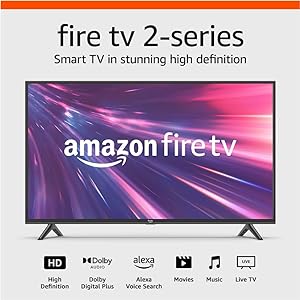
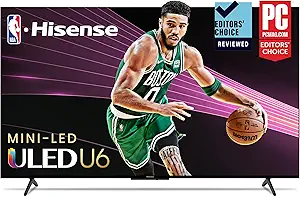
As the smart TV market continues to expand, consumers are faced with a plethora of options, each promising a unique blend of features and technologies. In this article, we delve into the fierce competition between Hisense and Amazon TVs, two prominent contenders striving for a dominant position in our living rooms. By exploring their strengths, weaknesses, and distinctive offerings, we aim to guide consumers through the decision-making process in the dynamic world of smart televisions.
Key Features Comparison
Affordability
When evaluating affordability in the television market, Hisense and Amazon approach cost-efficiency through fundamentally divergent manufacturing and monetization philosophies. Amazon utilizes an ecosystem-subsidized model, designing its Fire TV lineups (such as the 2-Series, 4-Series, and Omni Series) with aggressive price floors aimed at driving Prime adoption, ad impressions, and Alexa smart home integration. This allows Amazon to frequently lead the market in rock-bottom entry pricing, especially during marquee retail events. Conversely, Hisense defines affordability through exceptional spec density and price-to-performance ratios. Rather than merely offering the cheapest functional screen, Hisense’s manufacturing scale enables the company to trickle high-end engineering—including Mini-LED backlighting, multi-zone local dimming, and Quantum Dot color filtration—down into entry-level and mid-range tiers (such as the U6 and U7 series) at prices that aggressively disrupt established tier-one competitors.
From an engineering and technical standpoint, the hardware value proposition heavily favors Hisense for consumers prioritizing picture quality per dollar spent. Hisense consistently equips its budget and lower-mid-tier models with superior peak brightness, higher contrast ratios, proprietary Hi-View image processing engines, and native 120Hz or 144Hz refresh rates paired with full-bandwidth HDMI 2.1 ports for gaming. In contrast, Amazon’s engineering leans toward utilitarian minimalism to keep bills of materials low. Most Amazon-branded displays rely on standard direct-lit or basic edge-lit LED configurations capped at 60Hz, with modest peak luminance that struggles in bright rooms and limits true high dynamic range (HDR) impact. While the flagship Omni QLED narrows this gap with full-array local dimming and an ambient art mode, it remains constrained by modest processing power compared to similarly priced Hisense panels.
The practical trade-offs regarding affordability hinge on upfront savings versus long-term user experience. Amazon delivers immediate, turnkey economy for secondary spaces like bedrooms, dorms, or kitchens, incorporating hands-free far-field microphones and frictionless Fire OS operation that eliminates the need for separate streaming hardware. However, the hidden cost lies in an ad-saturated interface and relatively low-powered system-on-chip (SoC) hardware that can show performance lag as the operating system updates over time. Hisense demands a marginally higher upfront investment across comparable screen sizes, and panel lottery variations occasionally impact quality control, yet it rewards buyers with substantially higher visual fidelity, wider HDR format support (Dolby Vision and HDR10+), and a longer shelf life before performance obsolescence sets in. Consequently, while Amazon wins on pure, bottom-dollar barrier to entry, Hisense represents the far superior investment in actual display engineering and overall visual affordability.
Picture Quality
Top-Rated Picture Quality Brands





When evaluating picture quality, Hisense operates from a position of pronounced technical superiority over Amazon, driven by an aggressive adoption of advanced display hardware. Hisense has established itself as an industry leader in accessible Mini-LED and Quantum Dot technology through its U-Series lineups (such as the U7 and U8). By engineering panels with hundreds—and in some models, thousands—of dedicated local dimming zones alongside peak brightness capabilities ranging from 1,000 to over 3,000 nits, Hisense displays achieve exceptional contrast ratios, inky blacks, and searing specular highlights with minimal blooming. In contrast, Amazon’s television portfolio, centered on the Fire TV 4-Series, Omni, and Omni QLED, targets baseline consumer utility. Even the flagship Amazon Fire TV Omni QLED relies on a modest full-array local dimming system with substantially fewer zones and a peak brightness that typically hovers around 400 to 500 nits. This hardware gap means Amazon sets struggle to deliver true high-dynamic-range (HDR) impact, often mapping tone curves downward and leaving bright highlights looking muted in comparison.
The processing architecture and motion handling of each brand further emphasize their divergent display philosophies. Hisense deploys proprietary silicon, such as the Hi-View Engine, to govern real-time dynamic tone mapping, artifact reduction, and upscaling of legacy sub-4K content. Coupled with native 120Hz and 144Hz refresh rates on its mid-to-high-tier models, Hisense excels at motion resolution and spatial clarity, rendering fast-paced sports and high-frame-rate gaming without noticeable judder or smear. Conversely, Amazon caps most of its lineup at native 60Hz panels driven by standard system-on-chip (SoC) image processors. While Amazon's Omni QLED provides accurate out-of-the-box color reproduction and respectable DCI-P3 color gamut coverage for casual cinematic viewing, its processing engine reveals noticeable weaknesses in motion smoothing, shadow detail retention, and the upscaling of heavily compressed cable or streaming feeds, occasionally introducing macroblocking and color banding.
From an analytical standpoint, the practical trade-offs between the two brands come down to specialized visual performance versus adequate entry-level integration. Amazon produces competent, color-accurate displays suitable for casual consumers watching SDR broadcasts or streaming episodic content in controlled lighting where ambient glare is not a factor. However, for cinephiles, gamers, and bright-room applications, Hisense provides significantly better engineering quality. With universal HDR support—including both Dolby Vision IQ and HDR10+ Adaptive—superior panel luminance, and sophisticated backlight arrays, Hisense consistently outclasses Amazon in color volume, dynamic range, and overall visual fidelity across virtually every testing metric.
Brand Reputation
Hisense and Amazon approach the television market from fundamentally different vantage points, which heavily shapes their respective brand reputations among consumers and industry analysts. Hisense has earned a reputation as an ambitious display-first powerhouse, transitioning from an entry-level budget manufacturer to a formidable disruptor capable of competing with legacy giants like Samsung and Sony. Built around aggressive hardware engineering, Hisense is celebrated for democratizing high-end display technologies—most notably Mini-LED backlighting, thousands of local dimming zones, and class-leading peak brightness in its ULED series. Amazon, by contrast, leveraged its immense global footprint and consumer trust to enter the television space through its Fire TV Omni and 4-Series lineups. Within the AV space, Amazon’s television reputation is defined not by display manufacturing supremacy, but by smart-home integration, affordability, and the ubiquitous convenience of its Fire OS and Alexa ecosystems.
When assessing engineering quality and technical feature sets, Hisense commands substantially higher prestige among enthusiasts and cinephiles. The brand's focus on picture quality has yielded critical praise for high dynamic range (HDR) performance, native 144Hz refresh rates, and comprehensive format support (including both Dolby Vision and HDR10+). Conversely, Amazon's reputation leans toward utility rather than optical performance. Because Amazon outsources manufacturing to third-party original design manufacturers (ODMs), its panels—even within the flagship Omni QLED range—are engineered for mass-market adequacy rather than cinephile-grade contrast or motion handling. While Amazon excels at seamless hands-free voice control, smart home dashboard utility, and friction-free set-up, its TVs are broadly perceived as entry-level to mid-tier media hubs rather than true performance displays.
In terms of post-purchase sentiment, customer reliability, and practical trade-offs, both brands encounter distinct reputational hurdles. Hisense’s rapid ascent has occasionally been marred by quality-assurance volatility, often evidenced by consumer reports of panel variance (the "panel lottery") and software bugs in initial firmware rollouts, which can impact its long-term brand equity despite exceptional specs-to-price ratios. Amazon, meanwhile, enjoys immense consumer goodwill regarding logistical reliability, warranty handling, and painless return policies, backed by consistent software patches. However, Amazon’s television reputation is somewhat compromised by an ad-heavy interface design and a perceived lack of hardware ambition. Ultimately, Hisense has solidified a reputation as a serious display innovator offering unrivaled performance-per-dollar for home theater and gaming, whereas Amazon maintains a dependable, low-risk reputation catering to ecosystem-driven, casual viewers.
Smart Features
Hisense TVs often come equipped with intuitive smart features, depending on the chosen operating system. For example, Android TV on Hisense models supports Google Assistant for voice control and easy integration with other smart devices. Similarly, Roku TV on Hisense sets provides a user-friendly interface and access to a variety of apps and channels.
Amazon's Fire TV Edition utilizes Alexa for smart features. Users can control their TVs, search for content, and perform various tasks through voice commands. The integration of Alexa skills further expands the capabilities, allowing users to control smart home devices and access a broader range of voice-activated functionalities.
Conclusion
Choosing between Hisense and Amazon TVs depends on individual preferences, budget constraints, and specific needs. Hisense excels in providing feature-rich displays at affordable prices, making it an excellent choice for those seeking value without compromising on essential features. Amazon, with its Fire TV Edition, offers a compelling package with a focus on affordability, a vast content ecosystem, and the convenience of Alexa for smart control. In the dynamic landscape of smart TVs, both Hisense and Amazon continue to refine and expand their offerings, ensuring that consumers have a range of options to suit their unique entertainment preferences. Whether it's the affordability and feature-rich displays of Hisense or the content integration and smart features of Amazon, the clash between these contenders remains a captivating spectacle in our living rooms.