
Google vs Microsoft: Overview
Comparing Google and Microsoft helps you determine which brand is best suited for your needs in Tablets. Both brands offer strong choices depending on your budget and key feature requirements.
Key Features & Comparison
Evaluate factors such as build quality, warranty, customer satisfaction, and total value before making your final purchase choice between Google and Microsoft.
Affordability
When evaluating affordability, Google and Microsoft adopt fundamentally divergent pricing strategies that reflect their distinct operating philosophies. Google's contemporary tablet lineup, anchored by the Pixel Tablet, targets the mid-range consumer tier by bundling utility and hardware into a single, accessible package. By integrating a multi-functional speaker dock directly into the base purchase price, Google lowers the total cost of ownership for users seeking a shared household hub and media consumption device. This all-in-one proposition eliminates the hidden peripheral taxes common in modern slates, positioning Google as an economically sensible alternative for media-first users who want a capable smart display and portable Android device without exceeding baseline consumer budgets.
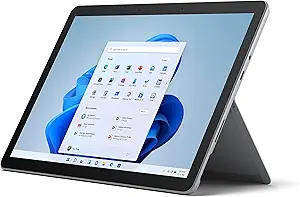
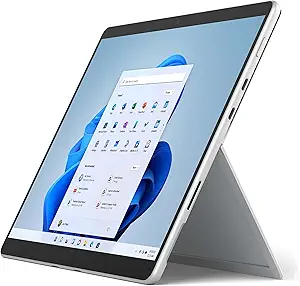
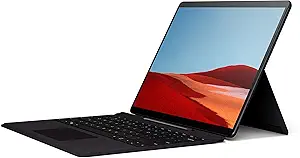
Conversely, Microsoft approaches the tablet market through the enterprise-grade Surface Pro family, where the initial entry price is merely the foundation of a significantly higher financial commitment. While Microsoft occasionally offers lower-cost alternatives like the Surface Go, the flagship Surface Pro models command premium pricing that escalates rapidly once essential productivity accessories—namely the Surface Pro Flex or Signature Keyboard and the Slim Pen—are factored into the checkout total. However, this higher expenditure reflects Microsoft’s value proposition: providing a full-fledged, commercial-grade Windows 11 PC in an ultra-portable form factor. For budget-conscious shoppers, Google offers far better standalone hardware-to-dollar efficiency, whereas Microsoft justifies its steeper pricing by functioning as a legitimate primary work machine rather than a secondary screen.
Battery Life
Battery endurance reveals a core structural divergence between Google’s mobile-optimized architecture and Microsoft’s desktop-derived operating demands. Google's tablets utilize energy-efficient ARM silicon and Android’s aggressive background process management to deliver reliable multi-day standby performance and extended screen-on time for casual tasks. Because Android applications are engineered from the ground up for portable constraints, the Pixel Tablet excels in passive consumption, video streaming, and idle states. Furthermore, the inclusion of the Charging Speaker Dock fundamentally alters the battery paradigm: the device constantly maintains an optimal charge buffer while docked, effectively neutralizing range anxiety for home-based users and ensuring maximum capacity whenever it transitions into handheld use.
Microsoft's battery profile is historically more volatile, shaped by the high thermal and computational demands of running a complete desktop operating system like Windows 11. Traditional x86 Intel-based Surface configurations often struggle under mixed professional workloads, suffering from accelerated battery drain and thermal throttling when running unoptimized legacy Win32 software. However, Microsoft's integration of Qualcomm Snapdragon X-series ARM processors in its latest Surface Pro iterations marks a major inflection point, drastically closing the endurance gap by delivering true all-day battery life and superior thermal efficiency. While Google maintains the edge in low-draw media playback and effortless passive charging, modern Microsoft tablets running on ARM silicon offer significantly more robust operational stamina under sustained, heavy productivity sessions.
Display
The visual hardware choices between Google and Microsoft underscore their opposing philosophies regarding media consumption versus professional productivity. Google outfits the Pixel Tablet with an 11-inch LCD panel operating at a 16:10 aspect ratio and a standard 60Hz refresh rate. While the panel delivers accurate color reproduction, sufficient peak brightness for indoor environments, and robust viewing angles, its modest technical specifications reflect its entertainment-first orientation. The omission of a high-refresh-rate panel (such as 90Hz or 120Hz) and the reliance on traditional IPS technology rather than OLED limit its appeal for users accustomed to the ultra-smooth scrolling and deep contrast ratios found in high-end portable computing hardware.
Microsoft, in contrast, treats the display as an elite creative canvas and rigorous productivity surface. The Surface Pro features a larger 13-inch PixelSense display with a productivity-oriented 3:2 aspect ratio, providing substantially more vertical real estate for viewing documents, spreadsheets, and complex software interfaces. Microsoft further elevates the visual experience by integrating a fluid 120Hz dynamic refresh rate, advanced color management with Dolby Vision certification, and optional cutting-edge OLED panel configurations that yield exceptional black levels and contrast. Supported by tactile, low-latency haptic stylus interactions, Microsoft’s display engineering vastly outclasses Google's conservative setup in fluid rendering, professional color accuracy, and overall visual immersion.
Performance
Under the hood, Google's computing strategy relies on its proprietary Tensor processing architecture, which prioritizes on-device artificial intelligence, natural language processing, and smart computational tasks over sheer raw processing throughput. The Tensor silicon allows Google tablets to excel at computational photography, real-time voice transcription, and contextual ambient computing within the Android ecosystem. However, in raw CPU and GPU synthetic benchmarks, the hardware operates at parity with upper-mid-range mobile chips rather than flagship silicon. This constraint, combined with Android’s persistent desktop windowing limitations, means that performance remains exceptional for casual multitasking, media rendering, and smart-home orchestration, but quickly bottlenecks under intensive enterprise workflows.
Microsoft’s performance profile occupies an entirely different compute class, operating as a genuine desktop replacement rather than a mobile client. Whether equipped with multi-core Intel Core processors or the newer Qualcomm Snapdragon X Elite neural-processing engines, the Surface Pro delivers immense single-core and multi-core headroom designed to compile code, render complex CAD models, and manage dense multithreaded desktop suites. Running full 64-bit Windows 11, Microsoft tablets eliminate the functional barriers of mobile operating systems, allowing uncompromised application parity with desktop workstations. For consumers requiring industrial-strength computing, high-bandwidth data handling, and comprehensive external monitor connectivity, Microsoft stands definitively superior to Google’s mobile-restricted architecture.
Compare current retail pricing, active promotions, and verified stock availability directly from authorized stores: