

Google vs Amazon: Overview
Comparing Google and Amazon helps you determine which brand is best suited for your needs in Tablets. Both brands offer strong choices depending on your budget and key feature requirements.
Key Features & Comparison
Evaluate factors such as build quality, warranty, customer satisfaction, and total value before making your final purchase choice between Google and Amazon.
Affordability
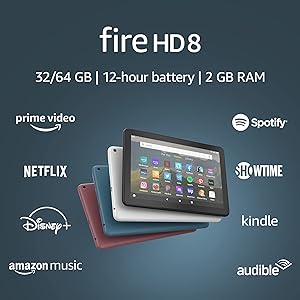
When evaluating affordability, Amazon and Google approach the tablet market from fundamentally opposing pricing tiers. Amazon dominates the budget and entry-level tablet space with its Fire HD lineup, positioning its devices as high-utility, low-cost consumption portals. By subsidizing hardware through lock-screen advertisements and deep integration with Amazon digital storefronts, Amazon offers functional tablets at sub-$100 price points that are nearly impossible for competitors to match. This strategy makes Fire tablets extraordinarily accessible for families, students, and casual media consumers who prioritize bare-minimum expenditure over premium hardware aesthetics.
In contrast, Google targets the mid-range to premium smart-home ecosystem with products like the Pixel Tablet. Google’s pricing model reflects higher upfront hardware margins, incorporating aluminum enclosures, premium accessories like the included Speaker Dock, and clean, ad-free software. While Google delivers far greater intrinsic value in terms of long-term software support, versatile dual-role functionality, and pure Android capabilities, its barrier to entry is significantly higher. Amazon represents unbeatable absolute affordability for budget-conscious buyers, whereas Google provides superior value-per-dollar for consumers seeking a durable, multi-functional device that bridges personal computing and home automation.
Battery Life
Battery performance reveals critical differences in how each brand balances hardware efficiency, background processing, and usage paradigms. Amazon Fire tablets excel at sustained, low-draw media consumption thanks to their aggressive background app management and relatively modest silicon. Because Fire OS restricts background tasks and prioritizes basic media streaming or e-reading, devices like the Fire HD 10 can easily achieve 12 to 13 hours of continuous mixed usage on a single charge. This makes Amazon tablets exceptional companions for long-haul travel or extended viewing sessions where charging outlets are scarce.
Google takes a distinct architectural approach that redefines the battery lifecycle through its hybrid docking concept. The Pixel Tablet features a robust physical battery optimized for active day-to-day productivity and multimedia use, lasting approximately 10 to 12 hours under normal conditions. However, its real strength lies in the Charging Speaker Dock, which employs intelligent battery-protection algorithms to keep the cell conditioned at optimal percentages without degradation. While Amazon delivers slightly better standalone endurance during passive playback, Google eliminates battery anxiety entirely within the home, ensuring the device is constantly topped off and ready for mobile use without requiring manual cable management.
Display
Display engineering highlights the stark divide between utilitarian consumption and modern visual fidelity. Amazon equips its Fire tablets with modest IPS LCD panels that prioritize durability and cost-efficiency over wide color gamuts or razor-sharp pixel densities. While higher-tier Fire models provide Full HD (1080p) resolutions that are perfectly adequate for streaming standard video and reading Kindle books, they often suffer from lower peak brightness, noticeable color shifting at off-angles, and thicker display bezels. The visual experience is practical and resilient, catering directly to casual viewing rather than creative tasks or critical media appreciation.
Google elevates the visual standard considerably with higher-grade LCD panels that boast crisp 2560 x 1600 resolutions, higher pixel densities, and superior factory color calibration. The Pixel Tablet features anti-smudge coatings, broader sRGB color coverage, and higher peak nits of brightness, ensuring text remains sharp and colors pop accurately during creative workflows, high-definition video playback, or photo editing. Furthermore, Google’s panel integration minimizes optical air gaps, providing better touch responsiveness and an immersive viewing experience that clearly outclasses the budget-oriented display assemblies found on Amazon hardware.
Performance
Performance benchmarks showcase the vast architectural chasm between Amazon’s budget silicon and Google’s custom flagship engineering. Amazon Fire tablets rely on entry-to-mid-tier MediaTek processors paired with minimal RAM allotments (typically 2GB to 4GB). This hardware envelope is adequate for single-task operations such as running Prime Video, browsing the web, or reading e-books, but it quickly encounters bottlenecks under heavy multitasking, rapid app switching, or demanding mobile 3D gaming. Combined with Fire OS’s restrictive ecosystem and absence of the native Google Play Store, Amazon tablets offer a strictly compartmentalized performance profile.
Conversely, Google equips its tablets with proprietary Tensor processors, bringing desktop-grade machine learning and flagship computing power to the tablet form factor. Backed by generous RAM and advanced GPU architectures, the Pixel Tablet handles heavy split-screen multitasking, graphically intensive games, and sophisticated on-device computational tasks—such as Magic Eraser and real-time voice transcription—with fluid responsiveness. Supported by pure Android with the Google Play Store, Google delivers an uncompromising performance environment suited for both work and play, far outstripping the computational ceiling of Amazon’s lineup.