Yamaha vs Klipsch: Overview
Comparing Yamaha and Klipsch helps you determine which brand is best suited for your needs in Subwoofers. Both brands offer strong choices depending on your budget and key feature requirements.
Key Features & Comparison
Evaluate factors such as build quality, warranty, customer satisfaction, and total value before making your final purchase choice between Yamaha and Klipsch.
Design/Look
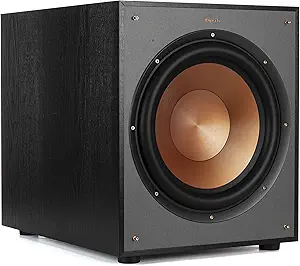
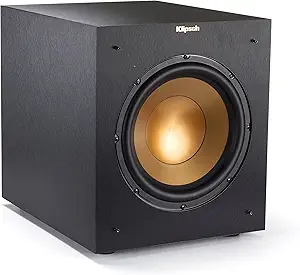
Klipsch subwoofers are visually striking, defined by their bold and industrial aesthetic that makes an unapologetic statement in any listening space. The hallmark feature of Klipsch design is the spun-copper Cerametallic driver, which creates a high-contrast focal point against the dark, textured wood-grain or ebony vinyl finishes. With clean geometric lines, cast aluminum feet, and low-profile magnetic grilles that allow users to either flaunt or conceal the vivid metallic cones, Klipsch subwoofers look modern, aggressive, and premium. The engineering quality extends to the sturdy cabinet construction, which is heavily braced to eliminate internal resonances while supporting the high output demanded by modern home theater setups.
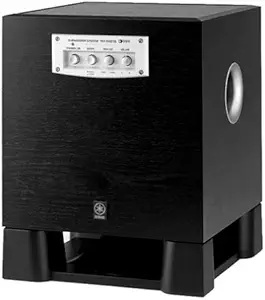
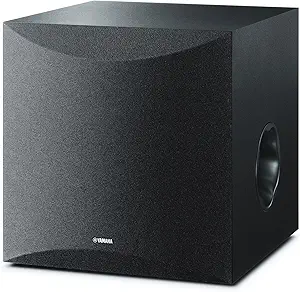
In stark contrast, Yamaha takes a much more conservative, minimalist approach to subwoofer aesthetics, designing units intended to integrate quietly into traditional living environments rather than draw attention. Yamaha subwoofers typically feature understated black or dark wood veneer cabinets, simple cloth grilles, and gentle contouring, occasionally accentuated by subtle piano-black gloss accents reminiscent of the brand's musical instruments. While Yamaha's designs may lack the visual drama and sheer physical presence of Klipsch, they offer practical advantages for multi-use living rooms where discretion is key. The build quality remains robust, utilizing rigid MDF enclosures engineered around proprietary acoustic principles rather than high-octane visual styling.
Affordability
When analyzing pricing and affordability, Klipsch generally targets the mid-range to high-end enthusiast markets, resulting in a higher financial point of entry. Even within their entry-level Reference series, Klipsch subwoofers tend to sit at a price bracket above budget supermarket offerings, with their premium Reference Premiere series commanding significant investment. However, this cost structure is reflected in higher-output digital amplification (often Class D Bash or standard Class D producing substantial RMS power), advanced cone materials, and lower frequency extension capabilities. For the performance enthusiast, Klipsch delivers high value-per-watt metrics, though it remains a cost-prohibitive option for casual shoppers on strict budgets.
Yamaha excels in the entry-level to mid-tier market segments, making dedicated low-frequency reproduction accessible to virtually any budget. By focusing on cost-effective Class AB and efficient standard digital amplifiers, paired with reliable treated-paper or composite cone drivers, Yamaha maintains highly competitive pricing. Their popular compact models are frequently among the best-selling budget subwoofers for desktop setups and modest secondary home theaters. While Yamaha does produce higher-end subwoofers to complement their premium AV receivers, their core catalog represents exceptional affordability, trading ultra-deep sub-bass frequencies and massive output for everyday reliability and wallet-friendly accessibility.
Reputation
Klipsch holds a legendary status in the home theater and enthusiast community, renowned specifically for dynamic, high-impact acoustic reproduction. Founded on Paul W. Klipsch's horn-loaded principles, the company has built decades of brand equity around the philosophy of high efficiency and massive output with minimal distortion. In the subwoofer category, Klipsch is widely recognized as a powerhouse brand that excels at the visceral "slam" required by modern blockbuster cinema. Consumers and audio critics associate Klipsch with visceral, energetic home theater performance, making it a default recommendation for users building dedicated media rooms and immersive audio systems.
Yamaha's reputation is vast and deeply respected, rooted in a broader cross-disciplinary legacy that spans professional audio engineering, consumer electronics, and world-class musical instrument manufacturing. Because Yamaha operates in every stage of music creation and reproduction, the brand is perceived as an authority on neutral, reliable, and technically sound equipment. While Yamaha subwoofers may not inspire the same cult-like devotion among hardcore home theater enthusiasts as Klipsch, they are universally recognized for bulletproof reliability, consistent build quality, and sensible acoustic design. Buyers trust Yamaha as an enduring consumer brand that reliably delivers on its specifications without unexpected failure or fuss.
Sound Quality
The sound signature of Klipsch subwoofers is characterized by high SPL capability, explosive dynamic transient response, and chest-thumping low-end extension. Engineered primarily for cinematic immersion, Klipsch models utilize high-excursion Cerametallic or composite drivers coupled with efficient digital amplifiers and custom-tuned front- or rear-firing Tractrix ports to achieve frequencies that reach deep into the sub-20Hz realm on higher-end models. This yields remarkable authority during movie explosions, heavy synth notes, and action sequences. However, this tuning can occasionally result in a slight port-induced boominess in untreated rooms, and lower-tier models require careful calibration and phase adjustment to blend seamlessly with delicate musical passages.
Yamaha subwoofers prioritize acoustic linear balance, musical agility, and controlled bass dissipation over raw, seismic output. Utilizing proprietary technologies such as Advanced YST (Yamaha Active Servo Technology) and Twisted Flare Ports, Yamaha minimizes air turbulence and effectively cancels non-linear speaker behaviors to produce cleaner, tighter bass with reduced distortion. While Yamaha subs generally lack the bottom-octave subterranean reach and immense sound pressure levels of Klipsch, they offer a very tight, rhythmic response that integrates exceptionally well with stereo speakers for music listening. The trade-off is a less visceral physical sensation during high-impact cinema tracks, but with the distinct benefit of refined, accurate tonal tracking across varied genres.