Yamaha vs SVS: Overview
Comparing Yamaha and SVS helps you determine which brand is best suited for your needs in Subwoofers. Both brands offer strong choices depending on your budget and key feature requirements.
Key Features & Comparison
Evaluate factors such as build quality, warranty, customer satisfaction, and total value before making your final purchase choice between Yamaha and SVS.
Design/Look
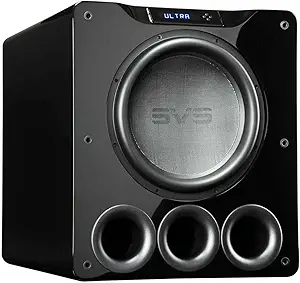
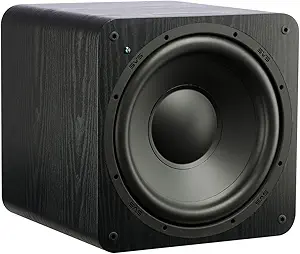
SVS approaches subwoofer design with a balance of aggressive acoustics and premium living-room aesthetics. Their lineup spans compact sealed cubes, ported enclosures, and unique vertical cylinder models like the PC-series, providing targeted visual solutions for varying room constraints. SVS enclosures are meticulously constructed from thick, internally braced medium-density fiberboard (MDF) to eliminate cabinet resonance, and they are typically available in high-end finishes like Piano Gloss Black or genuine Black Ash veneer. Curved non-resonant steel mesh grilles or acoustic cloth coverings add an industrial, modern look, while the rear panels are clean and uncluttered, frequently featuring LED control interfaces rather than traditional mechanical potentiometers.
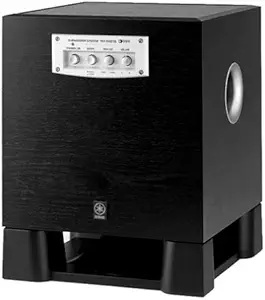
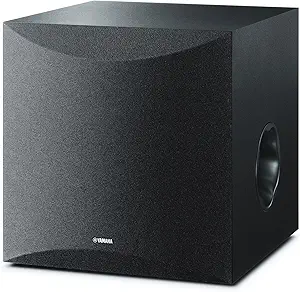
Yamaha adopts a more conventional, utilitarian design philosophy aimed at broad consumer integration. Their subwoofers are generally smaller, lighter, and shaped to blend discreetly beside entertainment consoles without drawing attention. Construction largely relies on standard vinyl-wrapped particle board or lighter MDF, often in a simple black matte finish. Many of Yamaha's most popular models, such as the NS-SW050 or NS-SW300, incorporate a front-firing driver with a side-facing port, utilizing their signature Twisted Flare Port design that adds a distinct sculpted contour to the port opening. While Yamaha designs do not convey the heavy, luxurious presence of an SVS cabinet, they excel at practical, low-profile placement in casual living spaces.
Affordability
Yamaha holds a clear advantage in baseline affordability, positioning itself predominantly in the entry-level to mid-tier consumer markets. Many Yamaha subwoofers retail well under $200, making them accessible to budget-conscious buyers who want to augment a television setup or complete an entry-level 5.1 surround sound package. This low barrier to entry provides respectable low-frequency support without requiring significant capital investment. However, this lower price point involves compromises in raw driver excursion, amplifier output, and the inclusion of advanced feature sets like automated room equalization.
SVS operates primarily in the premium performance and enthusiast tiers, where pricing typically begins around $500 for entry-level models like the SB-1000 Pro and extends past $2,000 for their flagship Ultra series. While SVS units demand a higher upfront cost, they offer exceptional value-per-dollar when assessed through metric performance, high-current Sledge amplification, and digital signal processing. SVS also offsets cost through high long-term value, robust warranty coverage, and high resale retention. For consumers seeking true home theater performance, SVS represents an investment in dedicated low-end authority, whereas Yamaha is tailored for cost-effective everyday listening.
Reputation
SVS has earned a sterling reputation among audiophiles and home theater purists as a dominant force in low-frequency reproduction. Founded by enthusiasts seeking to challenge commercial subwoofer limitations, the brand built its identity entirely around low-frequency engineering before expanding into full-range speakers. SVS is widely lauded in the acoustic community for its transparent measurements, consistent consumer-first policies, and responsive technical support. Their reputation is reinforced by sophisticated smartphone app control integration across recent lines, earning frequent praise from professional reviewers and installation calibrators alike.
Yamaha possesses an expansive global reputation as a legacy audio-visual and musical instrument conglomerate, bringing institutional engineering prowess and reliability to its products. Consumers respect Yamaha for manufacturing robust, fail-safe electronics that integrate seamlessly with their market-leading AV receivers. While Yamaha is universally recognized and trusted by the general public, home theater enthusiasts do not typically view it as an elite subwoofer specialist. Rather, Yamaha is celebrated for consistent quality control, wide retail availability, and dependable performance within consumer-grade budget constraints.
Sound Quality
SVS is engineered to achieve deep, distortion-free infrasonic bass, with many ported and sealed models capable of flat extension down to 20 Hz or below. Powered by discrete MOSFET Sledge amplifiers coupled with 50 MHz Analog Devices DSPs, SVS subwoofers maintain exceptional control over high-excursion drivers. The resulting output is articulate, visceral, and clean, delivering the sudden tactile impact required for cinematic explosions as well as the tight, nuanced decay needed for critical hi-fi stereo listening. The integrated parametric EQ allows users to mitigate room modes, ensuring that low frequencies integrate seamlessly without muddiness or boomy overhang.
Yamaha subwoofers provide pleasant, energetic bass reinforcement suited for small to medium rooms, but they encounter physical limits in dynamic range and true sub-bass extension. Utilizing proprietary Advanced YST (Yamaha Active Servo Technology) alongside the Twisted Flare Port, Yamaha effectively reduces turbulence noise and maximizes output from modest driver sizes and low-wattage amplifiers. While this approach results in punchy, musical mid-bass that improves standard television audio and pop music tracks, Yamaha subs typically roll off sharply below 30 Hz to 35 Hz. Consequently, they lack the deep tactile pressure and pinpoint transient precision that SVS delivers during demanding high-SPL soundtracks.