Polk Audio vs SVS: Overview & Brand Philosophy
In the home audio landscape, few components dictate the visceral impact of movies and music quite like the subwoofer. Polk Audio and SVS represent two fundamentally different philosophies within this category. Founded in 1972 in Baltimore, Maryland, Polk Audio made its name by democratizing hi-fi sound. Polk's overarching ethos has long centered on broad accessibility, engineering capable audio gear at price points that appeal to the everyday consumer and budget-conscious enthusiast. Within the subwoofer market, Polk generally targets mixed-use, living-room-friendly systems, offering models that prioritize small footprints, plug-and-play simplicity, and affordability over bone-crushing low-frequency extension.
By contrast, SVS (Specialty Technologies/SV Sound) was born in 1998 out of a pure enthusiast desire to redefine low-frequency performance. Starting as a direct-to-consumer operation building cylinder subwoofers in Ohio, SVS quickly earned legendary status in home theater communities. The brand's philosophy is rooted in uncompromising performance: achieving deep, linear bass extension (often reaching well below 20Hz) with flat frequency response and minimal distortion at high output levels. While Polk views subwoofers as supportive components to complete a standard home speaker package, SVS treats the subwoofer as the foundational pillar of the entire listening experience, backing their designs with advanced DSP technology and rigorous acoustic engineering.
Key Differences & Technological Comparison
The engineering delta between Polk Audio and SVS becomes apparent when examining driver construction, cabinet design, and amplification architecture. Polk primarily utilizes traditional Class D and Class AB amplification, pairing modest power supplies with standard poly-composite or dynamic-balance paper cones. Polk’s proprietary Power Port technology, found on their mid-range to higher-tier models like the HTS series, uses a specialized cone at the port mouth to smooth airflow and reduce port chuffing. While effective within their target frequency ranges (typically 28Hz to 160Hz), Polk subwoofers are fundamentally tuned to augment mid-bass energy, which provides punch for casual music listening and standard television viewing but rolls off rapidly when confronted with true infrasonic cinematic content.
SVS approaches subwoofer design from a precision-engineering standpoint. Most SVS subwoofers utilize custom proprietary Sledge Class D amplifiers that pump out massive RMS and peak wattage (ranging from 325 watts continuous on entry-level models to over 1,500 watts on flagship models) driven by sophisticated 50MHz Analog Devices Audio DSPs. These DSP engines continually regulate driver excursion and monitor electrical current to deliver clean, uncompressed output without bottoming out. SVS drivers feature heavy-duty edge-wound voice coils, massive dual-ferrite magnet assemblies, and long-throw parabolic surrounds that allow for extreme linear excursion. Furthermore, SVS offers users the choice between sealed (SB-Series) designs for musical speed and compact setups, and ported (PB-Series) enclosures engineered for maximum low-frequency SPL.
Control architecture is another area of divergence. While most Polk subwoofers rely on traditional rear-panel analog dials for gain, phase, and low-pass crossover adjustment, SVS has standardized digital control across nearly its entire line. Through the SVS Bluetooth smartphone app, users can adjust volume, parametric EQ, room gain compensation, polarity, and custom listening presets directly from their primary listening position. This digital flexibility allows SVS subwoofers to integrate seamlessly into difficult acoustic environments where physical placement alone cannot resolve room modes.
Pros & Cons Comparison
Polk Audio Subwoofers
- Pros:
- Budget-friendly pricing that fits entry-to-intermediate home audio budgets.
- Aesthetically pleasing, furniture-grade cabinet designs that blend well into living rooms.
- Patented Power Port technology significantly reduces audible port turbulence in compact models.
- Widely available through mainstream consumer retail channels for easy demonstration and purchase.
- Cons:
- Limited low-frequency extension, rarely achieving tactile sub-25Hz performance.
- Basic rear-panel controls lack modern DSP-driven calibration or parametric EQ tools.
- Prone to dynamic compression and distortion during high-volume, deep-bass movie sequences.
SVS Subwoofers
- Pros:
- True infrasonic capability, with several models routinely digging down to 16Hz–20Hz with authority.
- Industry-leading Bluetooth control app provides precise parametric EQ and real-time room tuning.
- Exceptional transient response and dynamic headroom driven by high-output Sledge amplification.
- Robust build quality featuring braced MDF cabinets and heavy-duty, high-excursion custom drivers.
- Unrivaled customer support and the "SVS SoundPath" program, including in-home trials and upgrade paths.
- Cons:
- Substantially higher barrier to entry in terms of upfront financial investment.
- Ported models (PB series) possess large, heavy enclosures that can dominate living spaces.
- Often requires dedicated time and calibration to realize their full potential within a room.
Performance, Durability & Value Analysis
When assessing absolute performance, SVS operates in a completely different tier than Polk Audio. In terms of frequency extension and sheer output, an SVS subwoofer delivers the chest-thumping, room-pressurizing tactile energy that modern film sound mixes demand. Polk subwoofers, while dynamic in the 35Hz–80Hz region, tend to roll off steeply right where action movies place their heaviest dynamic loads. Regarding long-term durability, SVS utilizes premium components designed to withstand sustained high-stress operation, including high-grade voice coils, advanced thermal management, and robust limiter circuits. Polk subwoofers are well-built for their price bracket, but their amplifiers and driver surrounds are engineered for average domestic loads rather than high-SPL, low-frequency abuse.
The concept of value between these two brands depends entirely on what the buyer expects per dollar spent. Polk Audio provides remarkable "budget-to-utility" value; a consumer spending a modest sum on a Polk HTS 10 or 12 gains an attractive, well-behaved subwoofer that effortlessly rounds out television, sports, and casual streaming. However, in terms of "performance-per-dollar" among audio enthusiasts, SVS often represents the higher intrinsic value. An entry-level SVS SB-1000 Pro or PB-1000 Pro retains higher resale value, offers professional-grade calibration tools, and delivers true high-fidelity bass reproduction that eliminates the immediate urge to upgrade—a common side effect of purchasing lower-tier subwoofers.
Final Verdict: Which Brand Should You Choose?
The decision between Polk Audio and SVS comes down to your budget ceiling, listening goals, and the physical constraints of your space:
Choose Polk Audio if:
- You are building a casual media room, bedroom setup, or secondary home theater on a strict budget (typically under $400–$500).
- Your primary focus is standard music listening, streaming television, or light gaming where sub-30Hz performance is unnecessary.
- You prefer a plug-and-play solution without the complexity of app-based calibration or parametric equalization.
- Living room aesthetics and compact dimensions are your top priority over maximum low-end impact.
Choose SVS if:
- You are designing a dedicated home theater or critical stereo listening room and demand reference-grade bass down to 20Hz or lower.
- You want the precision of smartphone-controlled DSP to tame room acoustics, peaks, and nulls from your listening seat.
- You view audio equipment as a long-term investment and want outstanding customer support, upgrade programs, and robust warranty backing.
- You have the floor space and budget (starting typically above $500–$600) to accommodate high-performance, heavy-excursion subwoofers.
Design/Look
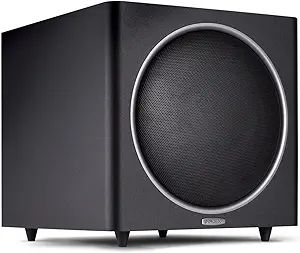
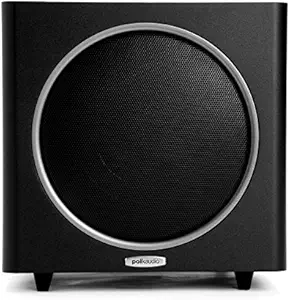
When evaluating industrial design and aesthetic execution in the subwoofer category, Polk Audio and SVS target distinctly different consumer environments and interior design philosophies. Polk Audio approaches subwoofer aesthetics with a contemporary, lifestyle-oriented focus intended to harmonize with modern living spaces. In lines such as the Signature Elite and Monitor XT series, Polk employs rounded cabinet corners, textured vinyl wraps, and acoustically transparent, anti-diffraction fabric grilles that mimic high-end furniture rather than overt audio machinery. Their engineering prioritizes a low-profile footprint, frequently integrating down-firing or internally routed port configurations—such as the proprietary Power Port technology—which conceals unsightly bass reflex ports on the bottom plate while serving as a structural base. While these materials are consumer-friendly and blend seamlessly into living rooms, the construction relies heavily on standard-density fiberboard with simulated wood finishes that, under scrutiny, lack the ultra-rigid, heirloom presence demanded by high-end audiophiles.
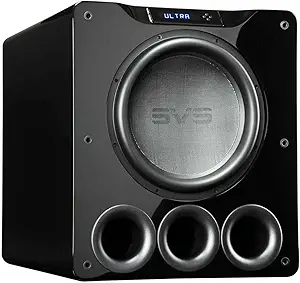
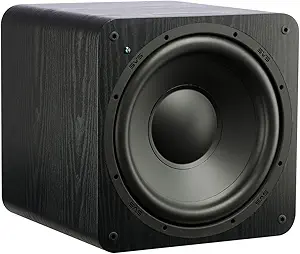
Conversely, SVS approaches industrial design through an engineering-first paradigm, prioritizing acoustic inertness and performance-driven geometry over casual lifestyle blending. Ranging from their compact SB-series sealed cubes to the monolithic PB-series ported enclosures and unique PC-series vertical cylinders, SVS designs are unapologetically purposeful. Their structural engineering utilizes thick, dual-baffle Medium Density Fiberboard (MDF) with extensive internal bracing designed to withstand massive internal air pressures, resulting in a significantly heavier and more rigid enclosure. Aesthetically, SVS sets a high benchmark by offering premium real-wood veneers, such as Black Ash, along with an exceptionally deep, mirror-like Piano Gloss finish. SVS also utilizes heavy-gauge, non-resonant steel mesh grilles on many of their high-output models, providing maximum physical protection for the high-excursion driver surrounds without rattling, though this presents a decidedly utilitarian, high-tech aesthetic that may dominate modest living spaces rather than complement them.
The practical trade-off between the two brands centers on visual integration versus acoustically uncompromising form factors. Polk excels for multi-purpose media rooms where the subwoofer must remain visually unobtrusive, affordable, and cohesive with broader architectural elements. SVS, however, produces statement pieces engineered for dedicated home theaters and discerning listening rooms where the visual language reflects technical prowess and internal acoustic volume is non-negotiable. While a Polk subwoofer disappears into home decor with subtle elegance, an SVS subwoofer commands attention through superior material durability, high-end lacquer finishes, and visible, heavy-duty engineering that signals its ultra-low frequency capabilities.
Affordability
When evaluating affordability, Polk Audio and SVS represent two fundamentally distinct pricing tiers and value philosophies within the subwoofer market. Polk Audio targets budget-conscious consumers and mainstream home theater enthusiasts, offering models that span from entry-level sub-$200 units, such as the Monitor XT series, to mid-tier offerings like the HTS series priced under $600. To achieve these accessible price points, Polk leverages mass-manufacturing scale and cost-effective componentry, including class-D amplifiers with modest continuous wattage and ported enclosures tuned for mid-bass punch. Conversely, SVS operates within the premium-value and enthusiast segment, with its entry-level 1000 Pro series starting around the $600 mark and flagship models well exceeding $2,000. In strict terms of initial capital outlay, Polk Audio is undeniably more affordable and provides an accessible entry point for casual listeners seeking to add basic low-end extension without significant financial investment.
However, true affordability must be weighed against engineering quality, technical capabilities, and performance-per-dollar. While Polk relies on traditional analog controls and basic limiter circuits to keep prices low, SVS offsets its higher price floor through superior engineering that maximizes longevity and fidelity. Even SVS’s lowest-priced models feature high-current Sledge Class-D amplifiers, sophisticated Analog Devices DSPs, rigid composite drivers with oversized motor structures, and Bluetooth-enabled parametric EQ app control. These technical enhancements allow SVS subwoofers to achieve clean, subterranean extension below 20 Hz with minimal distortion—territory where budget-oriented Polk units suffer from severe port chuffing and steep acoustic roll-offs above 30 Hz. Consequently, SVS delivers a far higher ratio of acoustic output and accuracy per dollar at reference levels, redefining affordability as long-term performance value rather than mere shelf-price accessibility.
The practical trade-off between these brands ultimately hinges on user expectations and room acoustics. For secondary living spaces, small apartments, or users upgrading basic soundbar audio, Polk Audio delivers unquestionable economic value; its upfront savings are substantial, and the performance is adequate for casual TV watching and pop music. For serious home theater builders and audiophiles, however, Polk’s lower price point can become a false economy, as demanding bass tracks expose hardware limitations that frequently prompt premature upgrade cycles. SVS demands a significantly steeper initial investment, but its premium build quality, advanced enclosure bracing, comprehensive 5-year warranty, and acoustic sophistication mean that buyers rarely outgrow their investment, making SVS the more cost-effective choice over an extended ownership timeline.
Reputation
In the home audio landscape, Polk Audio and SVS possess radically different, highly distinct brand reputations that dictate consumer expectations before a single note is played. Polk Audio commands an entrenched legacy as a mainstream audio pioneer, enjoying ubiquitous brand recognition built over five decades of delivering accessible, consumer-friendly hi-fi equipment. Within the subwoofer space, Polk's reputation is synonymous with high-value entry points and versatile, mass-market integration. Consumers and casual home theater enthusiasts view Polk as a safe, highly available, and budget-conscious choice, celebrated for its reliable build quality and easy plug-and-play architecture found in retail chains worldwide. However, among dedicated audiophiles, Polk’s reputation in the low-frequency realm carries the caveat of compromise: their subwoofers are generally perceived as mid-tier performers that prioritize affordability and compact footprints over true sub-bass extension, occasionally struggling with port chuffing and output distortion when pushed below the 30Hz threshold.
Conversely, SVS (Specialty Technologies) enjoys an uncompromising, tier-one reputation built specifically around low-frequency engineering and direct-to-consumer excellence. SVS revolutionized the subwoofer market by transforming from a niche, cylinder-subwoofer enthusiast project into the gold standard for dedicated home theater bass. Among critical listeners and home cinema purists, SVS represents elite engineering, uncompromising linear response, and deep-frequency reproduction down to 16Hz and lower. Their reputation is reinforced by high-tech feature sets, particularly their proprietary Sledge amplification and pioneering smartphone DSP app, which provides parametric EQ control that traditional subwoofers in the consumer space lack. Rather than competing in the budget mass-market, SVS’s reputation is anchored in prestige, authoritative output, and their customer-centric "SoundPath" support ecosystem, which offers risk-free in-home trials and extensive upgrade programs that foster immense brand loyalty.
The practical trade-off between the two brands regarding reputation comes down to mainstream accessibility versus specialist pedigree. Polk Audio holds the advantage in immediate consumer familiarity and lower financial risk; their subwoofers—such as the HTS or Monitor XT series—are recognized as reliable, aesthetically pleasing additions that capably round out casual media rooms without demanding technical calibration. SVS, meanwhile, holds near-unassailable prestige among home theater connoisseurs, where its logo guarantees audiophile-grade precision, thunderous physical impact, and advanced room integration, albeit at a significantly higher price floor. Consequently, while Polk maintains an enviable reputation for democratic, budget-conscious audio utility, SVS retains the definitive technological reputation as a high-performance specialist that routinely outperforms competitors well above its price class.
Sound Quality
When evaluating sound quality, SVS operates in a significantly higher acoustic tier than Polk Audio, driven by a design philosophy anchored in extreme low-frequency extension, subterranean output, and vanishingly low distortion. SVS subwoofers—particularly within the 1000 Pro, 2000 Pro, and flagship Ultra series—utilize custom high-excursion drivers paired with massive voice coils and proprietary Sledge Class-D amplification. The true technical differentiator is SVS’s sophisticated 50 MHz Analog Devices DSP, which meticulously sculpts the frequency curve and controls driver excursion in real time. The practical result is sound reproduction that reaches deep into the infrasonic realm (often extending down to 16–20 Hz at flat responses), offering articulate, chest-thumping impact for cinema alongside rapid transient response for complex, rhythmic bass lines in musical tracks without the slightest hint of cabinet coloration or port chuffing.
Polk Audio focuses on delivering accessible, mass-market value, which naturally demands compromises in low-end authority and linear output. While Polk’s entry-to-midrange offerings like the Monitor XT or standard PSW series provide an immediate sense of warmth and perceived impact, they achieve this primarily through a mid-bass emphasis centered around 50–80 Hz. This tuning works adequately for casual television viewing and energetic pop music, but it struggles with precision; complex bass passages can blur together, resulting in a slightly loose or "boomy" characteristic. Polk has made notable engineering strides with their HTS series through their proprietary Power Port technology, which smooths boundary airflow to reduce turbulence. Even so, Polk subwoofers generally roll off steeply below 28–30 Hz, lacking the raw acoustic bandwidth and uncompressed dynamic headroom that audiophiles and dedicated home theater enthusiasts require.
Ultimately, the sound quality comparison presents a clear trade-off between casual utility and reference-grade performance. Polk Audio engineered their acoustic profiles to blend seamlessly into living room environments, making them forgiving of poor source material and easy to enjoy at lower, everyday listening volumes. In contrast, SVS delivers surgical, uncompromising acoustic accuracy designed to faithfully expose every detail of a soundtrack. SVS further enhances sound quality integration via an advanced smartphone app that offers a three-band parametric EQ, phase control, and custom presets, allowing listeners to correct acoustic room nodes that typically degrade bass fidelity. For consumers seeking precise, pit-of-the-stomach realism with absolute transient control, SVS is unequivocally superior, while Polk remains a practical compromise for modest budgets and less acoustically demanding spaces.