Sony vs Yamaha: Overview
Comparing Sony and Yamaha helps you determine which brand is best suited for your needs in Subwoofers. Both brands offer strong choices depending on your budget and key feature requirements.
Key Features & Comparison
Evaluate factors such as build quality, warranty, customer satisfaction, and total value before making your final purchase choice between Sony and Yamaha.
Design/Look
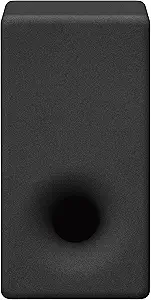
When examining visual engineering and cabinet craftsmanship, Sony generally pursues a sleek, modern, and consumer-friendly aesthetic that integrates seamlessly with contemporary television panels and modern entertainment consoles. Sony subwoofers—whether part of their standalone home theater components like the SA-CS9 or integrated into premium modular systems like the SA-SW5—feature minimalist enclosures characterized by rounded baffles, matte black or textured graphite finishes, and fabric-wrapped grilles. The Japanese giant deliberately prioritizes clean lines, compact footprints, and unobtrusive physical profiles designed to blend into living room environments rather than dominate them, often incorporating sophisticated internal bracing to minimize panel resonance despite smaller enclosure volumes.
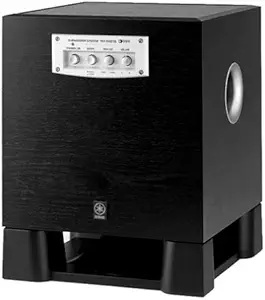
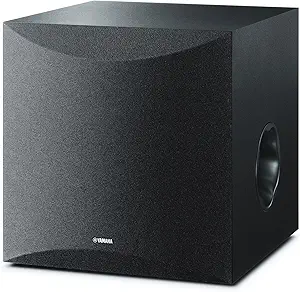
In contrast, Yamaha leans heavily into classic acoustic furniture design and traditional audio-component architecture, yielding a more utilitarian, studio-grade appearance. Many Yamaha subwoofers, particularly those in the NS-SW line, feature distinctive trapezoidal or gently tapered side panels paired with front- or side-firing Twisted Flare Ports, an acoustic engineering feature that doubles as a bold visual signature. Yamaha commonly utilizes dense medium-density fiberboard (MDF) finished with durable wood-grain veneers, brushed laminates, or high-gloss piano black lacquers reminiscent of their grand pianos. Where Sony opts for futuristic subtlety, Yamaha celebrates the subwoofer as a tangible, high-fidelity instrument with prominently displayed controls and distinctive tactile materials.
Affordability
From an affordability standpoint, both manufacturers provide accessible entry points into low-frequency audio, but their cost structures diverge based on system integration and intended use cases. Sony's core standalone units, such as the entry-level Core Series subwoofers, are celebrated for delivering exceptional price-to-performance ratios for budget home theater builders. However, Sony’s recent pricing architecture skews higher when considering their proprietary wireless add-on subwoofers built for soundbars and modular HT-A systems, which carry a significant premium for proprietary wireless transmitters and lifestyle-oriented industrial design rather than pure acoustic displacement per dollar.
Yamaha maintains a fiercely competitive edge across traditional budget and mid-tier standalone segments, frequently providing superior acoustic power and driver sizes at strictly lower price thresholds. Utilizing economies of scale from their massive pro-audio and instrumental divisions, Yamaha's subwoofers offer cost-conscious buyers heavy-duty voice coils, robust magnet structures, and high-efficiency class-D amplification without paying a markup for proprietary wireless protocols. For home theater enthusiasts assembling custom, component-based systems on a strict budget, Yamaha often presents the more economically sound investment, maximizing low-end output, wattage, and physical cabinet volume per dollar spent.
Reputation
In the domain of audio heritage and consumer perception, Sony holds a legendary status as a consumer electronics pioneer with a focus on immersive processing and user accessibility. While Sony’s historical ES (Elevated Standard) line established serious audiophile credibility, the broader market largely recognizes Sony for versatile, plug-and-play home entertainment systems, soundbars, and consumer-grade home theaters. Sony is praised for reliability, modern DSP room-correction integration, and seamless cohesion with wider smart-home and visual ecosystems, though pure audiophiles sometimes regard their contemporary standalone subwoofers as mainstream-oriented rather than dedicated reference-grade low-frequency transducers.
Yamaha commands a distinctive reputation steeped in deep acoustic science, professional recording studio monitoring, and musical instrument manufacturing. Because Yamaha designs everything from grand pianos to commercial sound reinforcement gear, the brand enjoys widespread reverence among both critical listeners and home theater purists for its acoustic integrity. Yamaha’s proprietary technologies, such as Advanced YST (Active Servo Technology), have cemented their standing as master engineers of precise bass reproduction. Consequently, Yamaha’s subwoofer reputation is primarily defined by musical fidelity, rugged operational longevity, and time-tested acoustic principles that garner respect across both pro-audio and enthusiast communities.
Sound Quality
Sony’s sound quality profile is tuned to provide punchy, dynamic, and cinematic impact tailored for modern movie mixing and popular music genres. Sony subwoofers excel at producing energetic mid-bass slam—typically within the 40Hz to 80Hz region—giving action sequences visceral physical presence and clarity. Higher-end models utilize dual passive radiators or reinforced foamed mica woofer cones that deliver rapid transient response without noticeable voice-coil distress. However, in smaller entry-level ported cabinets, Sony can occasionally exhibit port chuffing during demanding ultra-low frequency passages, and ultra-deep subterranean sub-bass extension below 30Hz is generally rolled off in favor of higher output efficiency in the audible mid-bass spectrum.
Yamaha delivers a fundamentally different acoustic signature characterized by speed, pitch definition, and exceptional low-frequency control that appeals strongly to music lovers. Thanks to their patented Twisted Flare Port design, Yamaha subwoofers excel at diffusing turbulent air vortices, resulting in remarkably clean, tight, and articulate bass free from port noise even under high cone excursion. Coupled with Advanced YST II circuitry, which uses negative-impedance drive to dynamically cancel speaker cone distortion, Yamaha units reproduce complex acoustic basslines, double basses, and kick drums with superior tonal accuracy. While they may not emphasize the room-shaking boom of some lifestyle cinema subwoofers, Yamaha excels in delivering clean, neutral, and distortion-free low-end reproduction.