Sony vs Polk Audio: Overview & Brand Philosophy
When selecting a dedicated subwoofer, discerning audio enthusiasts and home theater builders frequently find themselves weighing the mass-market technological prowess of Sony against the acoustic heritage of Polk Audio. Sony approaches the low-frequency market from an integrated, ecosystem-first standpoint. As a consumer electronics titan, Sony aims to deliver subwoofers that seamlessly interface with its wider array of AV receivers, wireless soundbars, and proprietary spatial audio systems. Their acoustic design philosophy emphasizes clean integration, digital sound enhancement, and accessible, plug-and-play low-end response suited for general multimedia consumption.
In contrast, Polk Audio operates with a heritage rooted firmly in dedicated loudspeaker engineering. Founded in 1972, Polk built its reputation on the concept of "The Real American Hi-Fi," striving to deliver audiophile-grade acoustic fidelity at a price accessible to working-class consumers. Polk’s subwoofers prioritize traditional acoustic mechanics: carefully tuned cabinet air displacement, precision-engineered ports, and advanced driver materials designed to minimize distortion under heavy excursion. Rather than focusing on proprietary ecosystem locks, Polk produces versatile, standalone subwoofers intended to elevate any multi-brand system with deep, musical, and room-filling low end.
Key Differences & Technological Comparison
The engineering divergence between Sony and Polk Audio is apparent across several critical technical vectors, including cabinet design, amplifier topology, proprietary bass technologies, and ecosystem flexibility:
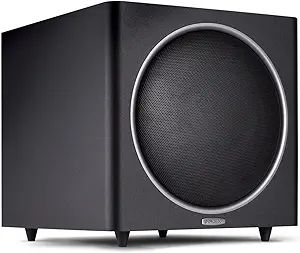
- Port and Enclosure Design: Polk Audio extensively utilizes proprietary cabinet technologies like the Power Port design, which smoothly transitions air flow from the speaker into your listening area, virtually eliminating turbulent port noise ("chuffing") and maximizing low-end extension. Sony subwoofers typically employ more conventional forward-firing or bass-reflex down-firing ports, which perform adequately for cinematic rumbles but can introduce audible port noise at maximum excursion in compact enclosures.
- Driver Architecture: Polk leverages its patented Dynamic Balance technology, utilizing laser interferometry to identify and eliminate driver resonance and material distortion before manufacturing. This results in stiff, lightweight composite cones capable of tight, musical bass. Sony frequently relies on Mica-Reinforced Cellular (MRC) or standard paper/polypropylene cones, which are durable and responsive, but occasionally exhibit cone flex when driven by sustained, high-output sub-bass signals.
- Amplification and Output Control: While entry-level offerings from both brands utilize standard Class D or Class AB plate amplifiers, Polk traditionally integrates heavier magnetic motor structures and higher continuous (RMS) power handling relative to their peak ratings. Sony emphasizes digital sound field processing and automatic calibration routines that work dynamically with their native receivers to prevent clipping, though this can sometimes artificially compress the dynamic range of sudden, explosive transients.
- Ecosystem and Connectivity: Sony heavily segments its subwoofer lineup between traditional analog units (like the popular SACS9) and proprietary closed-loop wireless units (such as the SA-SW3 and SA-SW5) tailored strictly for Sony HT-series soundbars and the BRAVIA Theatre ecosystem. Polk designs almost all its subwoofers (e.g., the HTS and Monitor XT series) with universal RCA Line-in/LFE inputs, variable low-pass crossovers, and phase switches, ensuring seamless compatibility across any standard audio receiver or pre-amplifier on the market.
Pros & Cons Comparison
Sony Subwoofers
- Pros:
- Frictionless wireless pairing with modern Sony soundbars, BRAVIA TVs, and home theater setups.
- Cost-effective entry-level active subwoofers offering solid baseline performance for standard television audio.
- Compact footprints that fit neatly into space-constrained living rooms.
- Digital processing reliably prevents bottoming-out and thermal overloads.
- Cons:
- Top-tier wireless models are locked into the Sony ecosystem, offering zero utility with traditional AV receivers.
- Limited sub-bass extension, often rolling off sharply above 30Hz to 35Hz.
- Bass can lean toward "boomy" or muddy during complex musical playback.
Polk Audio Subwoofers
- Pros:
- Superior acoustic fidelity with tight, articulate, and highly musical bass response.
- Proprietary Power Port technology significantly minimizes turbulent air distortion.
- Universal connectivity across virtually all home theater equipment via standard LFE and speaker-level inputs.
- Robust, heavy-duty MDF cabinet construction minimizes structural resonance.
- Cons:
- Cabinets are physically larger, requiring more dedicated floor space.
- Aesthetic designs are traditional and utilitarian, which may clash with modern minimalist decor.
- Fewer truly wireless plug-and-play options for basic soundbar pairing out of the box.
Performance, Durability & Value Analysis
From an objective acoustic performance standpoint, Polk Audio consistently yields a more linear frequency response and substantially deeper low-frequency extension. When evaluating dedicated models in equivalent price brackets—such as the Polk HTS 10/12 against comparable standalone models—Polk demonstrates superior control over transient attacks. Kick drums hit with tactile punch rather than lingering decay, and cinema-grade sub-bass effects reach lower into the physical realm (sub-28Hz) without generating distracting port chuffing. Sony units perform admirably for general television viewing, action-movie explosions, and gaming, but their cabinets and lighter drivers tend to favor high-splatter impact over controlled tonal accuracy.
Regarding long-term durability and investment value, Polk Audio holds an edge due to its heavy-grade MDF internal bracing, substantial heatsinks on plate amplifiers, and broad cross-compatibility. A quality Polk subwoofer remains a viable, modular component that will survive multiple AV receiver upgrades over a decade. Sony’s traditional wired subwoofers exhibit comparable mechanical longevity; however, their wireless lifestyle subwoofers inherently carry lifecycle risks tied to proprietary wireless protocols and firmware compatibility with host systems, potentially rendering them obsolete if your central soundbar or TV platform changes.
Final Verdict: Which Brand Should You Choose?
Your choice between Sony and Polk Audio hinges directly on whether you are building a flexible, high-fidelity sound stage or augmenting an existing consumer media ecosystem.
Choose Sony if: You currently own a modern Sony BRAVIA TV, HT-series soundbar, or Sony AV ecosystem and prioritize a clean, wireless aesthetic with zero configuration headaches. Sony subwoofers are the logical choice for consumers seeking immediate plug-and-play performance without running cables across the floor, or for those whose primary usage consists of casual television streaming and video games.
Choose Polk Audio if: You are an audio purist, dedicated cinephile, or home theater builder looking for maximum acoustic performance, musicality, and real low-frequency extension per dollar spent. Polk is the clear victor for users running standalone AV receivers, multi-brand stereo setups, or those who demand tight, chest-thumping bass free of distortion across both high-octane Hollywood blockbusters and complex musical compositions.
Design/Look
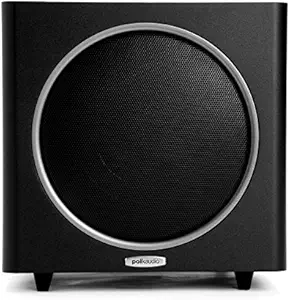
When evaluating the industrial design and aesthetic execution of subwoofers, Polk Audio leans heavily into traditional, furniture-grade acoustic design, whereas Sony prioritizes ultra-modern, minimalist consumer integration. Polk Audio’s subwoofer portfolio—spanning from the budget-conscious Monitor XT and HTS series up to the flagship Reserve line—showcases a heritage-driven hi-fi approach. The engineering quality is defined by robust, non-resonant MDF (medium-density fiberboard) cabinetry often wrapped in textured vinyl wood-grain finishes or sleek black ash. Polk emphasizes structural acoustic integrity in its design language, utilizing thick internal bracing and visible, engineered design elements like their proprietary Power Port technology, which features down-firing, cone-guided vents that double as striking physical design accents. The aesthetic is warm, substantial, and deliberately speaker-like, designed to match broader home theater suites and appeal to audiophiles who appreciate visible acoustic craftsmanship, curved cabinet edges, and classic fabric grilles.
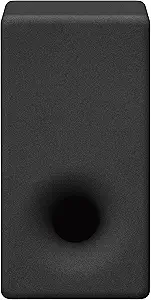
Conversely, Sony engineers its subwoofers with an emphasis on seamless living-space integration, cutting-edge compactness, and monolithic, lifestyle-oriented styling. Sony’s designs, best exemplified by modern standouts like the SA-SW3 and SA-SW5, abandon traditional wood-grained cabinetry in favor of unified, rounded-corner cuboids finished in sophisticated matte textures, dark fabric wraps, and omnidirectional acoustic grilles. Their aesthetic philosophy centers on blending invisibly alongside modern OLED televisions and soundbars. Technically, Sony excels in internal space optimization, often employing passive radiator designs or magnetic circuit systems (like their Separated Notch Edge) that allow for a dramatically smaller visual footprint without losing excursion capability. While Sony’s enclosures frequently incorporate high-grade, structurally molded plastics alongside internal MDF bracing, the visual output is distinctly high-tech and cosmopolitan, rather than classic acoustic furniture.
The practical trade-offs between the two brands come down to visual presence versus spatial discretion. Polk Audio’s technical strengths in port engineering and cabinet volume result in physically larger, heavier units that demand dedicated floor space and cannot easily be hidden, which may disrupt modern, hyper-minimalist room designs. However, this bulk is directly correlated with lower acoustic turbulence and superior natural cabinet resonance damping. On the other hand, Sony offers immense lifestyle versatility, with sleek form factors and wireless integration capabilities that minimize cable clutter, making them aesthetically ideal for multi-purpose living rooms. The trade-off with Sony is a synthetic, lifestyle appearance that can look out of place in dedicated, wood-accented home theaters, along with a design language that is often locked specifically to Sony's proprietary AV ecosystem rather than serving as a versatile, universal aesthetic anchor.
Affordability
When assessing affordability in the dedicated subwoofer space, Polk Audio consistently emerges as the more performance-driven budget choice, offering a specialized price-to-performance ratio that caters directly to home theater purists. Polk’s strategic engineering concentrates acoustic value where it matters most, deploying rigid Dynamic Balance driver cones, flared low-turbulence ports, and resilient Class-D amplifiers even within entry-level offerings like the Monitor XT and legacy PSW lines. Because Polk operates predominantly as an acoustic specialist, their subwoofers achieve lower frequency extensions and higher continuous power handling for the dollar than general consumer electronics brands. Consumers purchasing an entry-to-midrange Polk subwoofer rarely have to compromise on crucial acoustic calibration features, as robust physical gain knobs, phase toggles, and variable low-pass crossovers come standard, providing exceptional engineering equity that outperforms its sub-$300 to $500 price tags.
Sony approaches the affordability paradigm from a broad-market consumer electronics perspective, but this often results in a bifurcated catalog that creates notable trade-offs. On the standalone market, Sony’s budget offerings—such as the perennial SACS9—compete well on shelf price, offering respectable transient response with reinforced cellular mica cones, yet they routinely fall short of Polk in sheer amp headroom, cabinet bracing density, and sub-35Hz performance. Meanwhile, a substantial portion of Sony's modern bass portfolio is tethered to proprietary wireless ecosystems (such as the SA-SW3 and SA-SW5 modules designed for Sony soundbars and HT-A systems). These wireless modules demand a steep monetary premium that quickly degrades true acoustic affordability, forcing buyers to pay heavily for software integration, wireless convenience, and brand pairing rather than superior raw transducer engineering.
Ultimately, the practical trade-off between the two brands centers on acoustic yield versus ecosystem integration within your budget constraint. Polk Audio dominates true structural affordability by delivering superior component durability, deeper bass extension, and expansive connectivity per dollar spent, making them the superior financial investment for traditional AV receiver setups. Conversely, Sony's affordability is largely contextual: while their entry-level standalone units serve as adequate, highly accessible starter subs, stepping into their modern lineup typically requires overpaying for proprietary wireless compatibility. For listeners seeking maximum acoustic impact, higher clean output, and long-term upgradeability without inflating their budget, Polk Audio provides far greater architectural value for the investment.
Reputation
In the realm of consumer audio, Polk Audio and Sony possess vastly different reputations that directly influence consumer trust and market positioning. Polk Audio is widely recognized among home theater enthusiasts as a dedicated, heritage audio specialist. Built on a "Real American Hi-Fi" ethos, Polk’s reputation in the subwoofer category centers on specialized acoustic engineering, exceptional performance-to-cost ratios, and musicality. From their entry-level PSW models to the sophisticated HTS and Reserve series with patented Power Port technology, consumers perceive Polk as a purpose-driven acoustic brand. Their subwoofers are celebrated for robust cabinetry, high-current internal amplification, and bass response that integrates smoothly into dedicated, multi-speaker surround setups. The prevailing sentiment among audiophiles is that Polk prioritizes low-frequency fidelity, minimal port chuffing, and tonal accuracy over mass-market digital gimmicks.
Conversely, Sony commands an indomitable reputation as a global consumer electronics titan, but its standing in the standalone subwoofer category is more polarized. Consumers associate Sony with technological innovation, lifestyle convenience, and seamless digital integration rather than raw acoustic purism. While Sony produces standalone budget units like the SA-CS9—frequently praised for exceeding expectations in entry-level setups—much of the brand’s modern subwoofer prestige is tied to its proprietary wireless ecosystems (such as the SA-SW3 and SA-SW5 designed specifically for the BRAVIA and HT-A series soundbars). Sony’s technical reputation excels in spatial acoustic processing, DSP, and frictionless wireless connectivity, but purists often view their subwoofers as lifestyle-first components that trade physical acoustic mass, driver displacement, and amplifier headroom for sleek, living-room-friendly designs.
Ultimately, the practical trade-off between these brands comes down to acoustic pedigree versus integrated ecosystem reliability. Polk Audio maintains the superior reputation among serious home theater builders and traditional AV receiver owners who demand high dynamic output, low distortion at deep frequencies, and flexible crossover integration. Sony, on the other hand, wins consumer confidence through supreme ease of use, dependable build consistency, and unrivaled plug-and-play simplicity within its own hardware universe. Buyers seeking a dedicated low-frequency anchor will find Polk’s heritage reassuring, while consumers prioritizing streamlined aesthetics and seamless compatibility within a broader smart entertainment setup lean heavily on Sony's ubiquitous reliability.
Sound Quality
When evaluating sound quality, Polk Audio consistently demonstrates a hi-fi heritage that prioritizes acoustic precision, tonal balance, and low-frequency musicality. Engineered specifically for discerning home theater and stereo enthusiasts, Polk subwoofers—particularly lines like the HTS and Reserve series—utilize robust long-throw dynamic balance drivers paired with proprietary technologies such as Power Port venting. This design significantly reduces port turbulence and air chuffing, allowing the subwoofers to reproduce deep, sub-30Hz frequencies with remarkable cleanliness and minimal distortion. The bass delivered by Polk is articulate and tight, excelling at rendering subtle instrumental textures in complex musical passages while still offering the visceral, tactile impact required for cinematic explosions without sounding boomy or bloated.
Sony approaches subwoofer sound quality through the lens of modern consumer home entertainment, focusing on impactful dynamics, spatial integration, and seamless digital signal processing. While their standalone budget options often emphasize a mid-bass punch that can lean toward a warmer, occasionally unrefined resonance, Sony’s premium integrated offerings—such as the SA-SW3 and SA-SW5 designed for the HT-A series ecosystem—leverage sophisticated DSP and proprietary Magnetic Fluid technologies. The SA-SW5, for instance, uses a passive radiator design and an omnidirectional acoustic profile to fill a room with deep, immersive, and cinematic bass. However, Sony’s reliance on automated room calibration and digital equalization means that while the low-end feels expansive and movie-ready, it can sometimes lack the critical transient speed, pitch definition, and raw analog nuance found in dedicated high-performance audio designs.
Ultimately, the sound quality trade-off between the two brands hinges on whether your priority is acoustic fidelity or effortless dynamic presence. Audiophiles and serious home theater builders will lean toward Polk Audio for its superior enclosure rigidity, lower total harmonic distortion (THD), and linear frequency response, which keeps bass notes distinct and rhythmic. Conversely, Sony provides an exceptionally convenient, punchy sound profile that excels at enhancing movie soundtracks with thunderous, room-shaking energy, though purists may find its lower-end models slightly loose and prone to masking fine details compared to the controlled authority of Polk.