Sony vs Pioneer: Overview
Comparing Sony and Pioneer helps you determine which brand is best suited for your needs in Subwoofers. Both brands offer strong choices depending on your budget and key feature requirements.
Key Features & Comparison
Evaluate factors such as build quality, warranty, customer satisfaction, and total value before making your final purchase choice between Sony and Pioneer.
Design/Look
Sony and Pioneer approach subwoofer aesthetics from distinct industrial design philosophies, particularly when bridging the gap between home theater applications and car audio environments. Sony leans heavily into a sleek, minimalist modernism characterized by clean geometric lines, understated branding, and matte black or brushed finishes. In home audio, models like the SA-SW5 or core series subwoofers feature smooth, unadorned baffles and subtle acoustic fabric grilles that blend effortlessly into contemporary living spaces. In mobile audio, Sony’s Mobile ES line presents a refined, technical appearance that favors precision-engineered aluminum accents and integrated heat-dissipating frameworks, appealing to audiophiles who appreciate sophisticated, adult styling over ostentatious visual flair.
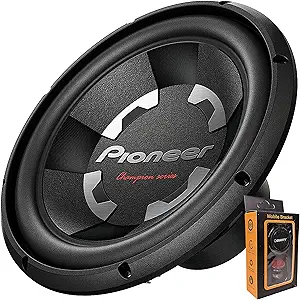
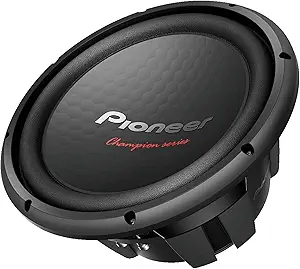
Pioneer, by contrast, favors an aggressive, performance-oriented aesthetic that is especially pronounced in its market-dominant car audio subwoofers like the Champion Series. Pioneer units frequently display structural cone reinforcements, high-visibility contrast stitching on surrounds, angular basket ribs, and prominent branding that signals raw power and mechanical capability. In home theater settings, Pioneer subwoofers—often carrying the legacy of Andrew Jones design language—prioritize function over high-concept elegance, utilizing dense, utilitarian MDF cabinets with textured vinyl wraps. While Sony designs excel in understated integration within stylish modern rooms and OEM-plus automotive interiors, Pioneer's visual identity resonates with users who want their hardware to look robust, muscular, and inherently capable of high acoustic output.
Affordability
When analyzing price-to-performance metrics, Pioneer holds a substantial edge in entry-level accessibility and raw component value across both automotive and domestic audio segments. Pioneer has perfected high-volume manufacturing efficiencies, allowing them to deliver car subwoofers with multi-layer voice coils and heavy-duty magnet assemblies at aggressive, sub-$100 price points. In the budget home audio category, Pioneer's standalone powered subwoofers have historically set the benchmark for low-frequency extension per dollar, offering robust amplification and reliable drivers without imposing a high barrier to entry. This makes Pioneer the default choice for budget-conscious hobbyists and DIY installers focused on maximizing sound pressure levels per financial investment.
Sony structures its subwoofer portfolio across broader, often more segmented price tiers, demanding a modest premium for advanced digital integration and refined build materials. While Sony offers accessible introductory options, its most compelling subwoofer products are clustered around mid-range and premium home entertainment ecosystems, where wireless proprietary transmitters and auto-calibration DSP inflate the initial purchase price. For automotive applications, Sony's entry-tier models compete closely with Pioneer, but its flagship Mobile ES line commands significant investment aimed squarely at the high-resolution audiophile market. Consequently, Pioneer remains the undisputed champion of bare-knuckle affordability and power per dollar, whereas Sony appeals to buyers willing to invest extra capital for ecosystem synergy, streamlined setup, and refined material engineering.
Reputation
Pioneer holds an iconic, virtually unshakeable reputation in the specialized realms of car audio and pro-sumer acoustic engineering. For decades, the brand's 'Champion Series' subwoofers and advanced automotive componentry have established it as an essential, high-reliability staple for bassheads, SPL (sound pressure level) competitors, and aftermarket installers. In home audio, Pioneer’s legacy is elevated by historic collaborations with renowned acoustic engineers, solidifying their status as a dedicated audio-first brand capable of delivering audiophile-grade acoustic tuning at accessible price tiers. Enthusiasts widely regard Pioneer as a steadfast, no-nonsense audio workhorse with deep foundational roots in transducer physics.
Sony possesses immense global brand prestige as a comprehensive electronics innovator, though its reputation in subwoofers is perceived through a different lens. Rather than being categorized strictly as an enthusiast-only transducer specialist, Sony is renowned for its proprietary DSP mastery, seamless ecosystem integration, and holistic home theater solutions. While automotive audiophiles hold high respect for Sony’s elite Mobile ES subwoofers, casual consumers primarily associate Sony with premium wireless home entertainment, pairing effortlessly with BRAVIA setups and soundbars. Pioneer therefore carries greater street credibility among dedicated bass mechanics and competitive audio builders, while Sony enjoys universal trust for cutting-edge digital integration, pristine build reliability, and sophisticated mainstream acoustic consumer products.
Sound Quality
Acoustic performance between the two brands reveals contrasting voicing philosophies, directly tied to driver damping, motor assembly, and enclosure tuning. Sony subwoofers generally emphasize musicality, agility, and acoustic linearity over brute sonic force. Utilizing technologies like Mica Reinforced Cellular (MRC) cones and rigid, low-distortion voice coil designs, Sony subwoofers deliver fast, articulate low-end response with tight transient attack. In home theater setups, this translates to clear, pitch-accurate bass that blends naturally with mid-range drivers without creating unwanted mid-bass bloom or cabinet resonance. Sony excels at reproducing orchestral passages, complex jazz percussion, and intricate cinema foley with controlled, refined depth.
Pioneer subwoofers prioritize sheer impact, low-frequency extension, and explosive dynamic authority. Engineered with rigid injection-molded polypropylene (IMPP) composite cones and substantial dual-spider suspensions, Pioneer drivers can absorb massive excursions while maintaining structural integrity. This results in visceral, chest-thumping bass that excels at producing deep electronic sub-bass frequencies and high-impact cinematic explosions. While Pioneer's entry-level tuned enclosures can occasionally sacrifice micro-detail and tonal nuance in favor of boomy volume, their higher-end models deliver an authoritative, room-energizing presence that Sony’s restrained tuning rarely attempts to match. Sony is the superior choice for nuanced, high-fidelity accuracy, whereas Pioneer is unmatched for energetic, punchy output and cinematic scale.