Sony vs JBL: Overview
Comparing Sony and JBL helps you determine which brand is best suited for your needs in Subwoofers. Both brands offer strong choices depending on your budget and key feature requirements.
Key Features & Comparison
Evaluate factors such as build quality, warranty, customer satisfaction, and total value before making your final purchase choice between Sony and JBL.
Design/Look
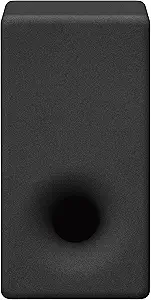
Sony and JBL approach subwoofer aesthetics from fundamentally different design philosophies, reflecting their respective roots in home lifestyle integration versus live audio performance. Sony emphasizes an understated, modern minimalism across its subwoofer lineup, whether dealing with dedicated home theater drivers or wireless units meant to complement their soundbar ecosystems. Enclosures typically feature clean lines, rounded baffles, and subtle black or charcoal textured finishes that are designed to disappear into contemporary living room decors. Materials often favor matte composite surfaces and acoustic fabrics, minimizing visual distractions in darkened viewing spaces while ensuring structural rigidity through compact, high-density fiberboard cabinets.
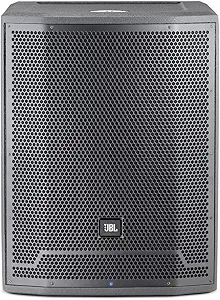
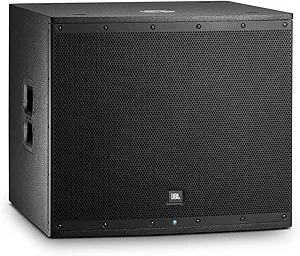
In contrast, JBL injects a more muscular, utilitarian presence into its subwoofer designs, heavily drawing from its storied legacy in professional concert sound and studio monitoring. JBL subwoofers often boast bolder cabinet geometry, ribbed woofer cones, exposed driver surrounds, and distinctive visual accents such as two-tone colorways or prominent metallic branding. Many JBL enclosures feature flared slipstream ports and textured vinyl or wood-grain veneers that project durability and acoustic purpose rather than seamless decor assimilation. While Sony's visual strategy appeals to consumers seeking low-profile integration, JBL caters to audio enthusiasts who view the subwoofer as a showcase piece of high-performance acoustic hardware.
Affordability
When analyzing pricing and value-to-performance metrics, Sony generally positions its subwoofers as accessible components within cohesive entertainment packages. In the entry-level to mid-range retail space, Sony offers highly competitive pricing, particularly for users already invested in their broader ecosystem of televisions and soundbars. Their standalone home theater subwoofers frequently target budget-conscious consumers looking for dramatic bass enhancement without a heavy financial commitment. However, Sony’s proprietary modular subs designed for specific soundbar systems often carry a slight premium relative to their raw acoustic output, leveraging seamless wireless pairing to justify the cost.
JBL operates across a broader, more segmented pricing spectrum that provides specialized solutions from budget-friendly options to premium audiophile investments. In the entry-level bracket, JBL consistently delivers superior raw mechanical output per dollar, utilizing robust voice coils and larger magnet assemblies that typically outpace competitors in acoustic sheer force. As consumers step up into JBL's higher-tier lines, prices elevate significantly, but this is matched by substantial upgrades in internal amplification wattage, sophisticated DSP, and heavier cabinet bracings. Consequently, while Sony provides convenient affordability within an integrated hardware package, JBL frequently offers higher long-term acoustic value for standalone audiophile and custom home cinema budgets.
Reputation
Sony enjoys a peerless global reputation as a consumer electronics giant whose engineering prowess spans digital imaging, high-resolution audio, and display technology. In the subwoofer domain, consumers associate Sony with plug-and-play simplicity, dependable reliability, and seamless technological harmony with TVs and home theater receivers. Audiophiles generally view Sony's consumer subwoofers as competent, mass-market performers that excel at enhancing casual movie and gaming experiences, backed by expansive global warranty support and rigorous manufacturing quality control standards.
JBL, on the other hand, possesses an iconic acoustic heritage directly rooted in professional cinema installations, recording studios, and live venue sound reinforcement. Under the Harman umbrella, JBL's brand reputation among home theater purists and bass enthusiasts is formidable, carrying significant acoustic credibility for raw dynamic capability, transient response, and scientific enclosure tuning. Consumers turn to JBL specifically for authoritative low-frequency impact and engineering expertise born from decades of research in psychoacoustics. As a result, while Sony is venerated for consumer-friendly innovation and broad reliability, JBL is predominantly revered as an acoustic heavyweight with serious audiophile pedigree.
Sound Quality
From an acoustic engineering perspective, Sony subwoofers are tuned to deliver warm, cinema-friendly low-end reinforcement that emphasizes fullness and vocal-range support. Utilizing technologies like proprietary Mica Reinforced Cellular (MRC) cones and tuned bass-reflex enclosures, Sony units deliver ample energy in the 40Hz to 80Hz region to impart weight to movie explosions and modern music tracks. However, in more demanding listening environments, Sony subwoofers can exhibit rolled-off extension below 30Hz and may show signs of port turbulence or transient compression when pushed to reference sound pressure levels, catering primarily to everyday casual listeners.
JBL subwoofers, conversely, prioritize dynamic impact, high acoustic output, and low-frequency articulation. Benefiting from Harman's deep transducer research, JBL units employ stiff polycellulose or composite drivers paired with high-current amplifiers and aerodynamic Slipstream port geometry designed to minimize port chuffing. The result is faster transient response, tighter pitch definition for musical basslines, and deeper extension into the true sub-bass spectrum required for visceral home theater impact. For critical listeners demanding low harmonic distortion, linear frequency response, and physical room pressurization, JBL generally offers an acoustically superior and more controlled sound signature.