Polk Audio vs Yamaha: Overview
Comparing Polk Audio and Yamaha helps you determine which brand is best suited for your needs in Subwoofers. Both brands offer strong choices depending on your budget and key feature requirements.
Key Features & Comparison
Evaluate factors such as build quality, warranty, customer satisfaction, and total value before making your final purchase choice between Polk Audio and Yamaha.
Design/Look
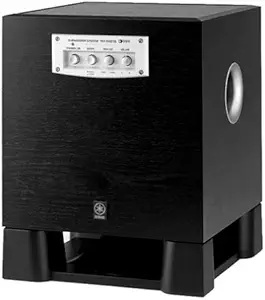
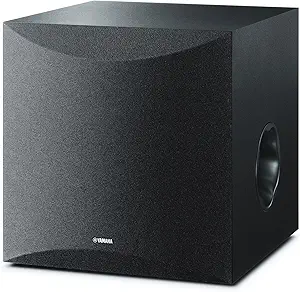
When evaluating industrial design, Yamaha adopts a conservative, utilitarian aesthetic that reflects its broader heritage in consumer electronics and pro-audio equipment. Most Yamaha subwoofers, such as those in the NS-SW series, feature clean lines, understated black vinyl wrap finishes, and compact square enclosures designed to disappear into home theater environments rather than stand out. A signature visual and functional element on many Yamaha models is the side-firing Twisted Flare Port, paired with a front baffle that frequently incorporates power and volume switches directly on the forward chassis for tactile convenience. While these designs are functional and durable, the materials used—primarily lightweight MDF with standard grain laminates—skew toward the functional rather than the luxurious, prioritizing seamless integration into modest media centers.
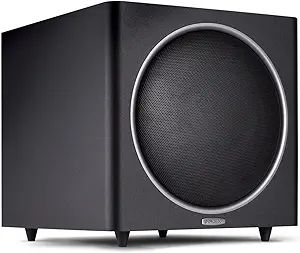
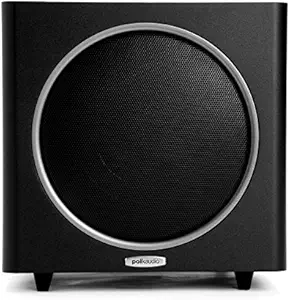
Polk Audio, by contrast, emphasizes modern residential styling with rounded edges, premium textured vinyl wraps, and acoustically transparent grilles that blend into contemporary living spaces. Across lines like the HTS and Monitor XT series, Polk pays closer attention to architectural elegance, featuring curved cabinet corners and dark walnut or washed black finishes that elevate perceived value. A standout visual and engineering characteristic of Polk's higher-tier models is the floor-firing Power Port technology, which utilizes an integrated diffuser cone suspended below the cabinet on heavy-duty pedestals. This architectural flair gives Polk subwoofers a more substantial, deliberate footprint, making them appealing to users who want their audio gear to complement modern furniture rather than just blend into dark corners.
Affordability
In terms of pricing and accessibility, Yamaha has historically dominated the ultra-budget tier of the dedicated home subwoofer market. With entry-level offerings often priced well below two hundred dollars, Yamaha provides an extraordinarily low barrier to entry for users building their first 5.1 surround sound setup or augmenting compact stereo speakers. These budget units achieve their competitive price points by pairing moderate Class-D amplifier power with high-efficiency proprietary cabinet engineering, delivering respectable output per dollar without requiring massive internal power supplies. For budget-conscious consumers seeking dependable, entry-level low-frequency reinforcement, Yamaha represents an economical choice that maximizes cost-efficiency without sacrificing fundamental assembly reliability.
Polk Audio competes aggressively in the mid-range value segment, generally demanding a slight price premium over entry-level Yamaha units while offering superior scaling up into the prosumer brackets. Polk’s lineup ranges from accessible entry models like the PSW10 up to performance-focused subwoofers in the HTS and Reserve lines that push toward premium price points. While entry-level Polk subwoofers often cost marginally more than equivalent Yamahas, they typically deliver a higher return in terms of driver diameter, voice coil size, and continuous RMS amplification wattage. The trade-off is clear: Yamaha provides maximum upfront cost savings at the lowest price thresholds, whereas Polk Audio offers deeper value through higher output headroom and superior cabinet bracing as consumer budgets expand into the intermediate category.
Reputation
Yamaha boasts an expansive brand reputation backed by over a century of manufacturing musical instruments, professional studio monitoring systems, and award-winning AV receivers. In the realm of home audio, consumers associate Yamaha with uncompromising reliability, rigorous quality control, and steadfast engineering consistency. Because Yamaha manufactures every link in the audio reproduction chain, their subwoofers enjoy strong consumer trust when paired with home theater receivers, benefiting from an ecosystem reputation of bulletproof longevity and sensible engineering. However, among dedicated audiophiles, Yamaha’s subwoofers are occasionally perceived as mainstream appliances rather than bespoke bass solutions, trusted more for dependable everyday performance than for pushing the bleeding edge of sub-bass extension.
Polk Audio commands a storied reputation built specifically upon hi-fi loudspeaker and home cinema engineering since its founding in 1972. Widely recognized as the "speaker specialist" of affordable American audio, Polk has cultivated immense goodwill among home theater hobbyists who prioritize dynamic impact, cinematic slam, and expansive soundstages. While some of Polk's oldest budget offerings, such as the ubiquitous PSW10, have drawn criticism from audio purists for amplifier port-chuffing and high harmonic distortion, the brand’s modern revival via the HTS and Reserve series has successfully restored its reputation for serious acoustic engineering. As a result, Polk is generally viewed by enthusiasts as a more loudspeaker-centric brand with deeper acoustic innovation than Yamaha’s more generalized consumer electronics portfolio.
Sound Quality
The acoustic profile of Yamaha subwoofers is defined by precision, clarity, and tight transient control, heavily enabled by proprietary technologies like Advanced YST II (Yamaha Active Servo Technology) and the Twisted Flare Port. Advanced YST II utilizes negative-impedance drive principles to maintain linear control over the woofer cone, resulting in agile bass response that excels at reproducing the natural attack and decay of acoustic instruments, kick drums, and bass guitars. The Twisted Flare Port effectively diffuses air turbulence, significantly reducing mechanical port noise at moderate-to-high volumes. However, Yamaha subwoofers generally trade off ultra-low frequency extension (sub-30 Hz) and physical chest-thumping impact, resulting in a sound signature that favors musical articulation over the visceral, seismic rumble required for blockbuster cinema effects.
Polk Audio approaches sound quality with an emphasis on low-end authority, depth, and cinematic dynamics, making their subwoofers particularly adept at handling demanding movie soundtracks. Polk’s long-throw, dynamic balance drivers combined with their patented floor-firing Power Port technology minimize air turbulence while channeling bass energy evenly across the listening space. This architecture enables models like the HTS 10 and HTS 12 to reach substantially lower into the sub-bass spectrum with minimal distortion, generating the tactile air displacement that movie enthusiasts crave during explosions and low-frequency sweeps. While they can sometimes lack the snappy, clinical transient speed of Yamaha units in fast-paced acoustic jazz or classical passages, Polk delivers a richer, more room-filling acoustic weight that excels in mixed-use home theaters.
Compare current retail pricing, active promotions, and verified stock availability directly from authorized stores: