Pioneer vs Polk Audio: Overview
Comparing Pioneer and Polk Audio helps you determine which brand is best suited for your needs in Subwoofers. Both brands offer strong choices depending on your budget and key feature requirements.
Key Features & Comparison
Evaluate factors such as build quality, warranty, customer satisfaction, and total value before making your final purchase choice between Pioneer and Polk Audio.
Design/Look
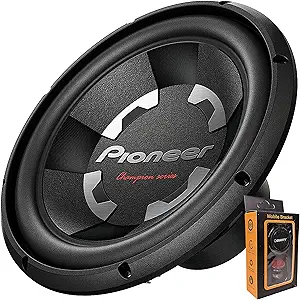
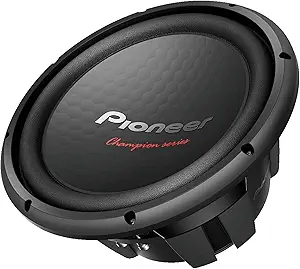
When examining cabinet engineering and industrial aesthetics, Pioneer takes a decidedly utilitarian and functional approach, largely influenced by its presence across both car and home audio markets. Pioneer's home subwoofers generally feature compact, understated enclosures constructed from standard medium-density fiberboard (MDF) with matte or brushed black vinyl wraps. The front baffles are typically unadorned, relying on simple cloth grilles that conceal reinforced paper or composite woofers. In their automotive and slim-profile architectural lineups, Pioneer prioritizes structural durability and space optimization over luxury styling, using rugged ABS enclosures and heavy-duty stamping designed to endure environmental stresses rather than serve as interior design centerpieces.
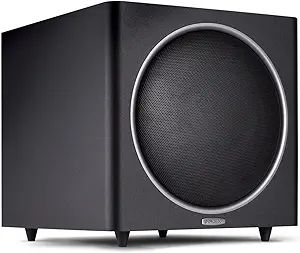
Conversely, Polk Audio emphasizes living-space integration and refined consumer furniture aesthetics across its home theater subwoofers. Polk invests heavily in exterior treatments, often incorporating radiused corners, polished timber-effect veneers, and sophisticated two-tone color schemes found in their Reserve and Signature Elite lines. A signature design feature of many Polk subwoofers is the proprietary Power Port technology, an aerodynamically designed downward-firing bass port built into an elevated base plate that not only smooths airflow to minimize chuffing but also provides a modern, high-end visual footprint. Overall, while Pioneer delivers a rugged, no-nonsense utility suitable for hidden setups, Polk Audio crafts subwoofers meant to be proudly showcased alongside contemporary home décor.
Affordability
In the entry-level to mid-tier price segments, Pioneer offers exceptional bang-for-your-buck by stripping away non-essential luxury appointments to focus purely on acoustic output per dollar. Pioneer leverages its massive global manufacturing pipeline to maintain aggressive price points, particularly in the under-$250 market where models like the Andrew Jones-designed SW-8MK2 became legends for budget-conscious home theater builders. Consumers shopping Pioneer receive competent Class D or AB internal amplification and dependable woofer assemblies without paying a premium for exotic finishes, making the brand a staple for value-driven buyers and DIY multi-subwoofer arrays on a strict budget.
Polk Audio operates across a broader economic spectrum, offering competitive entry-level subwoofers through lines like the PSW series while extending well into premium mid-fi territories with their HTS and Reserve lineups. While Polk's baseline models match Pioneer's affordability, their more advanced subwoofers command a distinct price premium due to higher continuous RMS power ratings, specialized cone materials like polyolefin, and advanced cabinet venting. However, Polk justifies this increased cost through superior internal bracing, extended warranty support, and lower total harmonic distortion at high sound pressure levels. Pioneer remains the undisputed price champion for bare-bones utility, whereas Polk represents a slightly higher financial investment tailored for longevity and acoustic refinement.
Reputation
Pioneer holds an iconic reputation within the broader consumer electronics landscape, originally forged through decades of legendary AV receivers, elite plasma displays, and dominant car audio components. In the subwoofer domain specifically, Pioneer is widely respected as an egalitarian engineering powerhouse. Enthusiasts revere the brand for democratizing high-fidelity bass through collaborative engineering projects—most notably with speaker designer Andrew Jones—which demonstrated that rigorous crossover design and phase integration could be achieved without boutique price tags. However, recent corporate restructuring and brand licensing shifts have somewhat diluted their presence in specialized home theater circles compared to their peak years.
Polk Audio commands a specialized, audiophile-adjacent reputation deeply rooted in American home loudspeaker history since its founding in 1972. Within home audio, Polk is widely viewed as a premier authority on dedicated acoustic reproduction, boasting a vast portfolio of domestic sound innovation. Enthusiasts and home theater integrators typically hold Polk subwoofers in high regard for their consistency, excellent customer service, and seamless acoustic timbre matching with widely popular speaker lines. While Pioneer's reputation is diffused across automotive, DJ, and home platforms, Polk retains a dedicated, laser-focused reputation for home theater mastery and enduring acoustic fidelity.
Sound Quality
Acoustically, Pioneer subwoofers excel at producing energetic, punchy bass that delivers immediate physical impact, particularly in small-to-medium-sized listening environments. Tuned predominantly for dynamic transients, Pioneer units shine during action-heavy cinema sequences and modern electronic or rock tracks where tight mid-bass slam (around 50 Hz to 80 Hz) is critical. However, due to smaller cabinet volumes and conservative internal amplifiers, Pioneer subwoofers often exhibit a steep low-end roll-off beneath 35 Hz. At higher volume limits, the basic port geometries on budget models can produce audible air turbulence or port chuffing, indicating a performance ceiling designed for moderate casual listening rather than seismic infrasonic reproduction.
Polk Audio delivers a more expansive, linear, and acoustically neutral response that extends notably deeper into the true sub-bass spectrum (sub-30 Hz). Utilizing advanced long-throw dynamic balance drivers and optimized port dispersion via their Power Port mechanics, Polk subwoofers minimize both mechanical distortion and aerodynamic chuffing during high-excursion peaks. This results in tighter pitch definition, making Polk subwoofers far superior for critical two-channel musical playback where articulate acoustic basslines and orchestral resonance are paramount. While Pioneer provides fun, chest-thumping energy on a budget, Polk offers the superior acoustic finesse, lower total harmonic distortion, and deeper infrasonic extension required for a true reference-grade home cinema experience.