Klipsch vs Rockville: Overview
Comparing Klipsch and Rockville helps you determine which brand is best suited for your needs in Subwoofers. Both brands offer strong choices depending on your budget and key feature requirements.
Key Features & Comparison
Evaluate factors such as build quality, warranty, customer satisfaction, and total value before making your final purchase choice between Klipsch and Rockville.
Design/Look
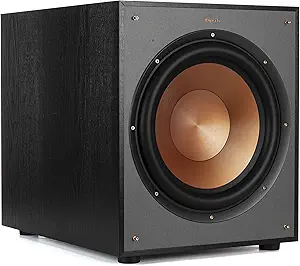
Klipsch subwoofers are instantly recognizable due to their signature spun-copper Cerametallic or thermoformed crystalline polymer (TCP) woofers contrasted against brushed black polymer or wood-grain vinyl finishes. The aesthetic language leans heavily toward premium home theater elegance, featuring robust MDF cabinetry with internal bracing that minimizes cabinet resonance while presenting a polished, high-end appearance. Klipsch designs often include subtle branding, sleek low-profile magnetic grilles, and front-firing or carefully tuned rear-slot ports that integrate seamlessly into dedicated listening rooms and modern living areas.
Rockville, conversely, approaches design with a utilitarian, performance-first ethos that reflects its roots in car audio, pro audio, and budget home theater. Their enclosures frequently feature rugged black carpeting, industrial vinyl wraps, or heavy-duty grilles built to withstand physical abuse rather than act as refined home furniture. While functional and often featuring utilitarian details like reinforced corners, LED accent rings, or robust front handles on pro-style units, Rockville subwoofers lack the bespoke visual refinement and furniture-grade precision that make Klipsch products an aesthetic centerpiece in a home environment.
Affordability
Rockville's core value proposition is aggressive affordability, disrupting traditional audio pricing models by adopting a direct-to-consumer distribution strategy. By cutting out middleman markups, Rockville is able to deliver subwoofers with massive driver sizes and high advertised peak wattages at a fraction of the cost of legacy brands. Consumers on strict budgets can acquire powered subwoofers, active home theater units, or complete dual-subwoofer arrays for minimal financial outlay, making high-decibel bass accessible to entry-level enthusiasts and casual buyers.
Klipsch occupies a mid-tier to premium price bracket, reflecting its proprietary driver engineering, advanced Class-D digital amplification, and higher build quality. While Klipsch does offer entry-level models through retail partnerships that frequently see holiday discounts, their premier lines—such as the Reference Premiere series—require a considerably higher financial investment. The trade-off is clear: Klipsch commands higher upfront costs in exchange for superior component longevity, tighter acoustic tolerances, and higher efficiency, whereas Rockville dominates on pure raw wattage and cone diameter per dollar spent.
Reputation
Founded in 1946 by audio pioneer Paul W. Klipsch, the Klipsch brand possesses deep historical prestige and is widely revered among audiophiles and home theater purists. The company has earned an enduring reputation for engineering high-efficiency horn-loaded speakers and articulate low-frequency transducers capable of dynamic, concert-level playback. Decades of positive critical reception from respected acoustic publications and an intensely loyal consumer following have solidified Klipsch as a premier, trustworthy titan in consumer and custom-install audio.
Rockville occupies a vastly different space, viewed within the audio community as a disruptive budget manufacturer specializing in high-volume, cost-effective gear across DJ, marine, car, and basic home audio sectors. While praised by budget-conscious users for offering surprisingly powerful sound at low prices, Rockville has faced skepticism from seasoned audiophiles regarding their real-world dynamic ratings versus advertised peak wattage claims. The brand's reputation is built around utility and accessible value rather than sonic heritage or high-fidelity engineering accolades.
Sound Quality
From an acoustic engineering perspective, Klipsch subwoofers excel in speed, musicality, and transient response, largely thanks to rigid, lightweight driver cones and meticulously tuned digital amplifiers. Whether delivering rapid double-bass kicks in high-resolution audio tracks or rendering subterranean low-frequency effects (LFE) down to 20Hz in cinematic soundtracks, Klipsch units maintain low harmonic distortion and articulate pitch definition. Their drivers move with precision and control, avoiding the sluggish, bloated resonance that plagues lower-end enclosure designs.
Rockville subwoofers prioritize sheer output, physical volume, and visceral punch, making them well-suited for users who crave loud, room-shaking rumble without demanding pinpoint tonal accuracy. Because they often employ heavier, more conventional cone materials paired with more basic crossover circuits and port designs, Rockville units tend to emphasize the upper-bass boom over subtle sub-bass texture. While they easily achieve high sound pressure levels (SPL) for action movies and modern bass-heavy music, they exhibit higher distortion and slower decay times, lacking the pristine clarity and seamless integration offered by Klipsch.