Klipsch vs Bowers & Wilkins: Overview
Comparing Klipsch and Bowers & Wilkins helps you determine which brand is best suited for your needs in Subwoofers. Both brands offer strong choices depending on your budget and key feature requirements.
Key Features & Comparison
Evaluate factors such as build quality, warranty, customer satisfaction, and total value before making your final purchase choice between Klipsch and Bowers & Wilkins.
Design/Look
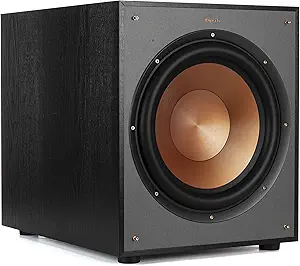
Klipsch subwoofers are instantly recognizable due to their bold, aggressive industrial aesthetic, highlighted by spun-copper Cerametallic woofers set against textured black woodgrain vinyl cabinets. Models in their Reference and Reference Premiere lineups prioritize functional, robust construction with heavy MDF bracing and front- or rear-firing slot ports. While the exposed metallic cones make a distinct visual statement in dedicated home theater environments, the utilitarian cabinet proportions and utilitarian vinyl finishes can feel overly dominant or clash with refined, modern living room decors.
In contrast, Bowers & Wilkins treats its subwoofers as pieces of high-end luxury furniture, embracing a minimalist and sophisticated design philosophy. From the sculptural, dual-opposed balanced driver architecture of the iconic DB Series to the understated matte black and satin white finishes of the 600 Series, B&W focuses on seamless integration into premium interior spaces. Their cabinets utilize curved composite forms, brushed aluminum accents, and acoustically transparent grilles that completely conceal internal hardware, offering a level of tactile refinement and structural elegance that far surpasses Klipsch's industrial styling.
Affordability
Affordability is one of Klipsch's greatest competitive advantages, as the brand dominates the entry-level to mid-tier consumer market with an exceptional performance-to-dollar ratio. Buyers can frequently find entry-level Klipsch Reference subwoofers starting under $300, while their flagship Reference Premiere models rarely exceed $1,500 even for massive 16-inch drivers. Klipsch achieves these aggressive price points through mass-market manufacturing and cost-effective cabinet materials like vinyl wraps, making high-output low-frequency reproduction accessible to budget-conscious home theater enthusiasts.
Bowers & Wilkins operates squarely in the premium-to-luxury acoustic segment, making affordability a secondary consideration behind bespoke acoustic engineering and elite materials. Even entry-level B&W subwoofers, such as the ASW608, command prices comparable to high-end Klipsch models, while top-tier options like the DB1D exceed several thousand dollars. The substantial cost covers high-current Hypex Class D amplification, Aerofoil cone technology, and sophisticated digital processing, but it represents a steep investment that may offer diminishing returns for users seeking simple cinematic rumble rather than pristine, low-distortion reproduction.
Reputation
Klipsch holds a legendary reputation in the audio industry as a powerhouse of American home theater dynamics, renowned for maximum acoustic efficiency and high-output impact. Enthusiasts celebrate the brand for delivering heart-pounding tactile bass that elevates action cinema and multichannel gaming setups. However, among critical two-channel audiophiles, Klipsch carries a slight stigma of being unrefined or boomy at the lower end of its catalog, though its modern Reference Premiere iterations have substantially rehabilitated its acoustic credibility.
Bowers & Wilkins commands an elite reputation rooted in British audiophile heritage, closely linked to critical recording environments like Abbey Road Studios. The brand is globally recognized for acoustic transparency, meticulous engineering standards, and unmatched low-frequency precision. In the subwoofer sector, B&W is revered for building sub-bass systems that seamlessly integrate with high-end hi-fi stereo arrays, earning them immense prestige among critical listeners, even if home theater enthusiasts occasionally favor higher raw output per dollar from competitors.
Sound Quality
Klipsch subwoofers are engineered primarily for raw visceral power, deep extension, and maximum sound pressure levels (SPL), making them titans of home cinema. Utilizing high-efficiency Class D amplifiers paired with front-firing Cerametallic drivers and tuned bass-reflex ports, models like the RP-1400SW and RP-1600SW produce chest-thumping low-frequency effects that reach down into the infrasonic range below 20Hz. While modern engineering has drastically reduced port turbulence and group delay, lower-tier Klipsch units can still exhibit slight port resonance and overhang on fast, complex acoustic bass lines.
Bowers & Wilkins engineers its subwoofers for speed, articulation, and surgical control, predominantly opting for rigid sealed enclosures and advanced driver composites like carbon-braced Rohacell and Aerofoil. The resulting acoustic performance is devoid of cabinet coloration, delivering rapid transient response, micro-dynamic texture, and pitch-perfect musicality that complements acoustic jazz, classical, and critical stereo listening. While compact sealed B&W subwoofers cannot match the room-shaking maximum output or sheer air displacement of equivalent-sized ported Klipsch boxes during explosive cinematic climaxes, they deliver superior harmonic neutrality and zero acoustic distortion.