BESTISAN vs Klipsch: Overview & Brand Philosophy
When selecting a dedicated subwoofer, discerning audio enthusiasts immediately notice the vast ideological divide between emerging budget disruptors and storied legacy audio manufacturers. BESTISAN has carved out a distinct niche in the contemporary consumer audio market by prioritizing affordability, compact functionality, and plug-and-play simplicity. Originating as a direct-to-consumer digital brand, BESTISAN focuses heavily on budget-conscious users seeking to supplement small-scale home theaters, desktop setups, or factory television speakers without incurring substantial financial outlays or spatial compromises.
In stark contrast, Klipsch represents one of the foundational pillars of American loudspeaker engineering. Founded in 1946 by Paul W. Klipsch, the company operates under uncompromising principles of high efficiency, wide dynamic range, and low distortion. In the subwoofer sector, Klipsch approaches low-frequency reproduction not merely as basic bass reinforcement, but as an essential, tactile acoustic foundation for reference-level home theaters and audiophile-grade stereo configurations. Their brand philosophy centers on acoustic authority, premium componentry, and acoustic architecture designed to move air decisively.
Understanding these distinct brand philosophies is essential before comparing individual units. BESTISAN designs for accessibility, casual enjoyment, and small footprint integration, whereas Klipsch engineers for scale, structural durability, visceral dynamic range, and acoustic transparency. This contrast creates a definitive dichotomy between practical budget accommodation and professional-tier acoustic fidelity.
Key Differences & Technological Comparison
The technical differences between Klipsch and BESTISAN subwoofers encompass internal amplification, transducer materials, enclosure design, and low-frequency signal handling. Evaluating these factors illustrates how each brand targets fundamentally different performance classes.
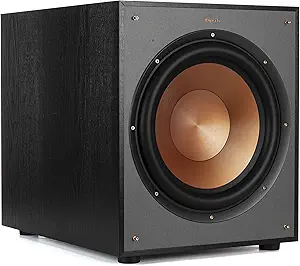
- Acoustic Transducers and Cone Composition: Klipsch relies heavily on proprietary driver technology, notably their signature spun-copper Cerametallic and Injection-Molded Graphite (IMG) woofers. These materials provide exceptional rigidity coupled with minimal mass, minimizing cone breakup and acoustic distortion even at peak excursion. BESTISAN implements standard pressed-paper or treated synthetic cellulose cones, which deliver functional performance at lower SPLs (sound pressure levels) but exhibit non-linear distortion when pushed toward their mechanical limits.
- Amplifier Topologies and Power Delivery: Klipsch subwoofers (such as the Reference and Reference Premiere series) utilize advanced, highly efficient all-digital Class-D amplifiers capable of delivering substantial continuous RMS power alongside immense dynamic peak wattage (often exceeding 300 to 800 watts dynamic). BESTISAN typically utilizes lower-tier Class-D or analog chip-based amplifiers rated for modest continuous outputs (typically between 50 to 100 watts peak), adequate for modest low-end fill, but incapable of driving true subterranean, sub-30Hz infrasonic frequencies.
- Cabinet Architecture and Damping: Resonance mitigation is critical in subwoofer design. Klipsch cabinets are constructed from heavy, dense MDF (medium-density fiberboard) braced internally with engineered internal geometry, front-firing or Tractrix-ported venting to eliminate port chuffing. BESTISAN enclosures feature lighter, thinner fiberboard with standard round bass-reflex ports, making them more portable but prone to enclosure coloration and acoustic air turbulence during high-output passages.
- Crossover and Connectivity Integration: Klipsch subwoofers provide variable low-pass crossovers, continuous phase switches, LFE/line-level inputs, and sometimes wireless transmitter capability for seamless integration into sophisticated AV receiver architectures. BESTISAN focuses heavily on direct RCA line-in and basic 3.5mm inputs tailored to soundbars and active desktop monitors, rarely featuring robust 0–180 degree continuous phase alignment or speaker-level high-pass filtering.
Pros & Cons Comparison
BESTISAN Subwoofers
- Pros:
- Extremely budget-friendly price point accessible to casual buyers.
- Compact footprint suitable for cramped apartments, bedrooms, and computer desks.
- Effortless connectivity with active powered bookshelf speakers and soundbars.
- Lightweight design allows for easy room repositioning.
- Cons:
- Limited frequency extension; struggles to cleanly reproduce sub-bass below 40Hz.
- Low amplifier headroom leads to port chuffing and harmonic distortion at higher volumes.
- Basic aesthetic finish with lightweight cabinet materials that lack inert acoustic properties.
Klipsch Subwoofers
- Pros:
- Massive acoustic output, deep frequency extension reaching well into tactile infrasonic ranges (sub-25Hz).
- Proprietary driver technologies (Cerametallic/IMG) yield tight, transient, articulate bass response.
- Robust internal bracing and heavy MDF enclosures virtually eliminate cabinet resonance.
- Extensive input and control configurations for seamless AV receiver calibration.
- Iconic visual aesthetic featuring spun-copper cones and premium wood-grain vinyl finishes.
- Cons:
- Substantially higher initial capital investment compared to entry-level budget brands.
- Large, heavy physical footprint requires deliberate floor space allocation.
- Acoustic authority can easily overwhelm small, acoustically untreated spaces if improperly dialed in.
Performance, Durability & Value Analysis
From an acoustic performance and durability perspective, Klipsch operates on a fundamentally higher tier. The engineering tolerances deployed in Klipsch subwoofers guarantee stable operation under prolonged dynamic loads, preventing voice-coil overheating and amplifier degradation through integrated digital limiters. Their larger voice coils, robust rubber surrounds, and well-shielded internal power supplies result in a service life that routinely spans a decade or more. Acoustically, Klipsch excels in transient speed—the capacity to stop and start instantly—which prevents the muddiness often associated with inexpensive subwoofers during complex musical passages or chaotic cinema scenes.
BESTISAN, by contrast, targets maximum immediate value per dollar within the sub-$150 realm. While their internal components and thin-gauge enclosures do not match the long-term structural survivability of high-end equipment, they provide adequate low-end supplementation for secondary setups, dorm rooms, or basic desktop gaming configurations. However, value must be measured against lifespan and capability; while BESTISAN saves money upfront, it fails to achieve true low-frequency extension and may need replacement sooner if driven relentlessly, whereas Klipsch investments scale smoothly alongside evolving audio systems.
Final Verdict: Which Brand Should You Choose?
Your choice between Klipsch and BESTISAN hinges entirely on the listening environment, performance expectations, and your available budget.
Choose BESTISAN if: You are working with a strict entry-level budget, have a compact space (such as a bedroom, home office, or dorm), or need an unpretentious companion subwoofer for an existing set of powered desktop monitors or a television soundbar. It is designed for casual users seeking an audible low-end bump rather than room-shaking cinematic power.
Choose Klipsch if: You are constructing a serious home theater, dedicated media room, or high-fidelity stereo listening environment. If your priorities include visceral dynamic impact, clear musical articulation down into the deepest octave, premium aesthetic presence, and long-term hardware reliability, Klipsch is unequivocally the superior choice and well worth the higher price point.
Design/Look
When examining visual design and cabinet construction, Klipsch subwoofers are immediately recognizable due to their signature aesthetic: spun-copper Cerametallic or thermoformed crystalline polymer (TCP) driver cones set against sleek, brushed black polymer veneer finishes. Klipsch enclosures, particularly within the Reference and Reference Premiere lineups, are built with heavy-grade MDF to minimize cabinet resonance and internal standing waves. The attention to industrial design extends to reinforced bracing, low-profile magnetic grilles, and thoughtfully placed rear or front-firing bass reflex ports that merge aggressive styling with acoustic functionality, making them striking centerpieces in dedicated home theaters.
BESTISAN, on the other hand, adopts an ultra-minimalist, utilitarian approach that prioritizes compact versatility over bold styling statements. Their subwoofers generally feature plain black wood-grain vinyl wraps over standard MDF enclosures, characterized by understated, boxy silhouettes and rounded edges meant to blend inconspicuously into living spaces or slide under television consoles. While functional and cleanly put together for small desktop setups or entry-level media rooms, BESTISAN units lack the premium architectural heft, refined hardware tolerances, and distinctive decorative elements that define Klipsch's celebrated visual identity.
Affordability
Affordability is the core pillar of the BESTISAN value proposition, placing their subwoofers firmly within the extreme budget-to-entry-level tier of the audio market. Typically priced well under a hundred dollars, BESTISAN subwoofers are accessible solutions for consumers looking to augment powered bookshelf speakers or low-end soundbars without significant financial investment. By utilizing modest integrated class-D amplifiers and cost-effective paper-composite or poly drivers, the brand manages to offer surprisingly functional bass support at a fraction of the cost of legacy audio hardware.
Conversely, Klipsch targets the mid-range to premium enthusiast markets, which is reflected in significantly higher price tags across their product lines. While Klipsch frequently offers promotional discounts on their entry-level Reference series, their subwoofers generally start at several times the cost of a BESTISAN unit and climb substantially higher for flagship Reference Premiere models. The higher cost corresponds directly to substantial engineering investments: high-efficiency digital amplifiers capable of massive dynamic wattage, proprietary driver materials, and comprehensive bass management controls, representing a long-term investment rather than an impulse budget purchase.
Reputation
Klipsch carries an legendary acoustic pedigree founded in 1946 by Paul W. Klipsch, commanding immense authority and widespread brand loyalty among audiophiles and home cinema enthusiasts globally. Known for pioneering high-efficiency, low-distortion sound reproduction, Klipsch has built a sterling reputation backed by decades of research, ubiquitous distribution in premium AV retailers, and a proven history of durable, high-output home theater products. Their subwoofers are consistently benchmarked in consumer and professional audio publications as industry standards for visceral, theater-grade dynamic impact.
BESTISAN operates under a very different market reputation, known primarily as an agile direct-to-consumer digital commerce brand rather than an established legacy manufacturer. While they have developed a positive reputation on e-commerce platforms like Amazon for providing high-value, reliable, entry-level audio accessories and computer speaker companions, they do not possess the historical footprint, audiophile prestige, or engineering patents of Klipsch. Discerning home theater hobbyists typically view BESTISAN as a capable starter brand for secondary rooms or dormitories rather than a serious high-fidelity contender.
Sound Quality
In terms of acoustic performance, Klipsch subwoofers stand far ahead in terms of output, extension, and dynamic authority. Engineered to reproduce the low-frequency effects (LFE) of modern film soundtracks, Klipsch units often reach well below 30Hz—with premier models dipping below 16Hz—delivering pressurized, tactile bass that you feel as much as hear. Their robust voice coils and stiff, lightweight drivers allow for rapid transient response, maintaining punchy, well-defined bass without noticeable thermal compression or uncontrolled driver breakup even at extreme listening volumes.
BESTISAN subwoofers provide a much more modest acoustic footprint, tailored primarily to fill out the missing lower frequencies in small rooms, desktop computer systems, or budget stereo rigs. While they successfully add warmth and presence that typical small speakers fail to produce, they feature limited low-end extension, usually tapering off sharply below 40Hz to 50Hz. At elevated volume levels, the limited amplifier headroom and smaller cabinet volume can lead to port chuffing and harmonic distortion, making BESTISAN best suited for moderate nearfield listening rather than room-shaking cinematic immersion.
Compare current retail pricing, active promotions, and verified stock availability directly from authorized stores: