Product Selection
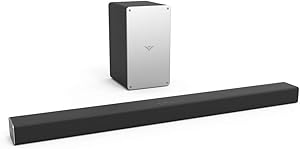
When evaluating product selection in the soundbar category, VIZIO and Bose represent two fundamentally divergent commercial and engineering philosophies. VIZIO employs an expansive, tier-based portfolio strategy designed to blanket virtually every entry-to-midrange price point. Their lineup spans ultra-compact 2.0-channel stereo bars, 2.1 systems with wireless subwoofers, and fully integrated 5.1 and 5.1.2 Dolby Atmos packages within their M-Series, V-Series, and flagship Elevate series. The defining strength of VIZIO’s catalog is out-of-the-box multi-channel completeness; rather than forcing consumers to purchase components piecemeal, VIZIO curates all-in-one SKUs that include physical rear satellite speakers and dedicated subwoofers at accessible pricing. Technically, this delivers high spatial immersion per dollar, though it naturally incurs engineering trade-offs: cabinet materials are predominantly molded plastics, and lower-tier models omit networking features like Wi-Fi and direct music streaming in favor of basic HDMI eARC and Bluetooth connectivity.
Conversely, Bose curates a tightly controlled, premium-focused catalog centered on modular scalability rather than sheer model variety. Instead of saturating the market with budget-friendly SKUs, Bose segments its offering across select core acoustic tiers, notably the standalone TV Speaker for dialogue enhancement, the mid-tier Smart Soundbar 600 with up-firing Atmos transducers, and the flagship Smart Ultra Soundbar equipped with PhaseGuide technology and AI dialogue modes. Bose’s strategic advantage lies in its a la carte architectural ecosystem: consumers purchase a high-performance, acoustically rigid standalone bar that can be seamlessly upgraded over time with the brand's wireless Bass Modules and surround satellite speakers. The engineering quality is noticeably superior, featuring custom-designed elliptical transducers, advanced digital signal processing (DSP), ADAPTiQ room calibration, and full multi-room Wi-Fi integration supporting AirPlay 2, Chromecast, and Spotify Connect.
Ultimately, the practical trade-off between the two brands centers on instant multichannel capability versus progressive high-fidelity expansion. VIZIO’s expansive product catalog is tailored for value-driven home theater enthusiasts seeking complete physical surround configurations without the complexity or expense of individual component matching. Bose’s streamlined portfolio caters to discerning buyers willing to invest in superior industrial design, proprietary acoustic beamforming, and broader smart-home compatibility, trading VIZIO’s bundled affordability for premium modular performance that retains long-term acoustic fidelity and resale value.
Design/Look
From an engineering and industrial design perspective, Bose and VIZIO approach soundbar aesthetics with fundamentally different design languages and manufacturing philosophies. Bose treats its soundbars as luxury home furnishings, employing a sophisticated, minimalist architectural aesthetic characterized by high-end materials. Flagship offerings, such as the Smart Ultra Soundbar, showcase seamless, impact-resistant tempered glass top panels paired with finely perforated wraparound metal grilles. This attention to detail extends to their low-profile, clean-lined enclosures that deliberately conceal transducer arrays and acoustic ports, resulting in a cohesive, polished look that elevates modern media consoles. In contrast, VIZIO designs through a prism of utilitarian practicality and space optimization. While VIZIO has made strides with its modern "Elevate" and "M-Series" designs—notably incorporating dark fabric wraps, matte plastic finishes, and rounded trapezoidal silhouettes—the engineering relies predominantly on cost-effective polymers and acoustic textiles that, while visually unoffensive, lack the tactile prestige, structural density, and seamless panel integration found in Bose hardware.
The technical strengths and functional integrations of both brands further define their distinct visual profiles. Bose integrates its design with functional engineering, using ultra-low profiles that easily slide underneath modern low-clearance television stands without obstructing infrared sensors or screen real estate. Furthermore, Bose utilizes discreet, capacitive touch controls and subtle micro-LED light bars rather than overt alphanumeric displays to maintain a visually serene living room environment. VIZIO, however, focuses on clever ergonomic and mechanical features. The VIZIO Elevate, for instance, features striking mechanical side-firing drivers that automatically rotate upward when Dolby Atmos signals are detected, serving as an eye-catching visual centerpiece. Additionally, VIZIO addresses modern living constraints with ultra-compact form factors and innovatively engineered low-profile, "cube" or slim-horizontal subwoofers designed to slide under sofas.
The practical trade-offs regarding design and appearance center on durability, maintenance, and interior synergy versus cost. Bose’s extensive use of high-gloss glass creates an undeniably premium look, yet it is highly susceptible to visible dust, smudges, and micro-scratches, demanding frequent cleaning to maintain its showroom elegance. Conversely, VIZIO’s extensive reliance on knit acoustic fabrics presents a different maintenance challenge: fabric is notoriously prone to snags, pet hair accumulation, and difficult-to-remove liquid stains, making it less durable over years of active family use. Ultimately, Bose delivers an uncompromising, timeless visual statement crafted with heirloom-tier materials that justify its premium price point, whereas VIZIO excels at providing modern, highly adaptable, and mechanically interesting designs that punch well above their budget-conscious weight class.
Affordability
When evaluating affordability in the soundbar market, VIZIO and Bose occupy opposite ends of the pricing and value spectrum. VIZIO has strategically positioned itself as a champion of high-value, entry-to-mid-tier audio solutions. For budget-conscious consumers, VIZIO frequently delivers all-in-one or complete surround-sound configurations—such as 5.1-channel systems with dedicated wireless subwoofers and rear satellite speakers—at price points where premium competitors sell only standalone, entry-level bars. In contrast, Bose operates firmly within the luxury audio segment, commanding premium prices even for its most compact offerings, such as the Bose TV Speaker or Smart Ultra Soundbar. With Bose, high initial acquisition costs are amplified by a modular ecosystem where adding dedicated subwoofers (Bass Modules) and rear surround speakers requires substantial additional investments that can easily quintuple the cost of a comparable VIZIO multi-speaker setup.
The engineering quality and acoustic architecture of each brand reflect these distinct financial approaches. VIZIO relies on cost-efficient manufacturing, incorporating molded plastics and standard fabric grilles to minimize production costs, which allows them to democratize advanced surround codecs like Dolby Atmos and DTS:X via acoustic reflection or digital processing at accessible price tags. However, the trade-off manifests in less refined companion apps, occasional software handshake latency via HDMI-eARC, and high-volume audio distortion. Conversely, Bose justifies its steep pricing through industrial-grade engineering, employing premium metal grilles, extruded aluminum casings, and bespoke acoustic components. Bose engineers leverage proprietary phase-guide transducers, QuietPort technology, and automated ADAPTiQ room calibration to deliver precise spatial separation and crystal-clear dialogue intelligibility out of compact footprints, though consumers must accept paying a high premium for acoustic tuning that VIZIO users circumvent with raw driver count.
From an analytical standpoint, determining true affordability hinges on the total cost of ownership and long-term utility. VIZIO offers unmatched out-of-the-box value per dollar for movie enthusiasts who prioritize dynamic, room-filling multi-channel audio without incurring thousands in home theater expenses. However, this comes with shorter component lifespans, limited multi-room expansion capabilities, and faster obsolescence. Bose, while undeniably expensive up front, offsets its financial barrier through long-term hardware reliability, superior backward and forward compatibility within its Smart Home ecosystem, and exceptionally high resale value over time. Ultimately, shoppers seeking absolute functional affordability and feature density will find VIZIO unbeatable, whereas those who measure affordability through sustained hardware longevity, pristine build standards, and seamless software ecosystems may view Bose's luxury pricing as a calculated, durable investment.
Sound Quality
When evaluating sound quality, Bose and VIZIO represent fundamentally different engineering philosophies and target distinct acoustic profiles. Bose soundbars, such as the Smart Ultra and Smart Soundbar 600, are masterclasses in proprietary digital signal processing (DSP) and spatial dispersion. Utilizing custom-engineered transducers, PhaseGuide technology, and the ADAPTiQ room calibration system, Bose creates an exceptionally wide, immersive soundstage from relatively compact enclosures. Bose emphasizes tonal balance, pristine mid-range accuracy, and crystal-clear dialogue intelligibility via dedicated center channels and AI-driven speech enhancement. The resulting audio signature is natural, warm, and highly refined, making it as capable with delicate acoustic music as it is with movie soundtracks. While Bose units produce respectable low-end using proprietary porting and QuietPort architecture, truly cinematic sub-bass rumble often requires purchasing an optional, expensive wireless bass module.
Conversely, VIZIO dominates the sound-per-dollar category by leveraging high-output, discrete multi-channel configurations. Rather than relying entirely on virtualized psychoacoustic tricks, VIZIO packages like the M-Series and Elevate frequently include dedicated wireless subwoofers and physical rear satellite speakers even at entry-to-mid-range price points. The technical strength of VIZIO lies in visceral impact and true surround immersion; their subwoofers reach deeper low-frequency thresholds out of the box than standalone Bose units, delivering powerful, theater-like bass for action-heavy content. The premium VIZIO Elevate takes engineering a step further with physical auto-rotating drivers that mechanically articulate upward to deliver genuine Dolby Atmos height channels. However, VIZIO's tuning is distinctly more commercial and V-shaped, often trading subtle high-frequency resolution, low-distortion limits at maximum volume, and natural midrange timber for raw power and dynamic punch.
Ultimately, the practical trade-offs come down to acoustic fidelity versus hardware-driven scale. Bose provides audiophile-adjacent tuning, superior acoustic separation, minimal harmonic distortion, and an uncanny ability to optimize playback to the physical acoustics of your room. It is the superior choice for discerning listeners who prioritize vocal clarity, accurate musical reproduction, and seamless, clutter-free hardware. VIZIO, while lacking the micro-detail and refined DSP polish of Bose, delivers an undeniably more explosive, physically enveloping surround sound experience right out of the box. For consumers craving rumbling cinematic bass and true rear-channel localization without spending four figures on an expanded modular system, VIZIO offers punchy, cinema-grade performance that outperforms its price tier.