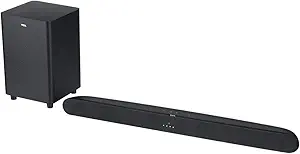
TCL vs Bose: Overview
Comparing TCL and Bose helps you determine which brand is best suited for your needs in Soundbars. Both brands offer strong choices depending on your budget and key feature requirements.
Key Features & Comparison
Evaluate factors such as build quality, warranty, customer satisfaction, and total value before making your final purchase choice between TCL and Bose.
Product Selection
Bose approaches product selection with a curated, premium-tier strategy, focusing on high-performance standalone soundbars that can be expanded into modular ecosystem setups. Their catalog centers around distinct tiers—ranging from compact dialogue enhancers like the Bose TV Speaker to flagship spatial audio solutions like the Smart Ultra Soundbar. Rather than flooding the market with dozens of redundant variants, Bose engineers distinct acoustic profiles per model, offering consumers straightforward upgrade paths via optional wireless bass modules and surround satellite speakers. This architectural consistency ensures compatibility with broader Bose multi-room smart ecosystems, though it inherently limits choices for buyers seeking all-in-one budget bundles or ultra-specific sub-$200 surround packages.
In contrast, TCL adopts a high-volume, high-variety approach designed to blanket the budget and mid-range home theater market. Their lineup spans entry-level 2.0-channel bars, accessible 2.1 systems with included wireless subwoofers, and feature-dense 3.1 or 5.1.2 Dolby Atmos setups within their Alto and Q-Series ranges. TCL’s primary strength in product selection lies in providing turnkey surround sound solutions straight out of the box at consumer-friendly price brackets. While their catalog offers exceptional breadth for consumers wanting an immediate multi-channel configuration without purchasing separate add-ons, the rapid release cycles and overlapping model numbers can sometimes make navigating the technical specifications of their lineup less straightforward than Bose's structured portfolio.
Design/Look
Bose establishes an industry benchmark for industrial design, utilizing premium materials such as polished tempered glass tops, seamless wrap-around metal grilles, and low-profile composite enclosures. Their aesthetic is deliberately sophisticated, minimalist, and designed to blend invisibly beneath high-end televisions without drawing undue attention to the hardware itself. Beyond visual elegance, Bose's physical engineering emphasizes compact acoustic efficiency; acoustic phase guides and micro-perforated grilles are structurally integrated to maximize wide-dispersion sound output while keeping the vertical profile low enough to avoid obstructing television screens or IR receivers.
TCL embraces a utilitarian, modern design language that prioritizes functional integration over luxury fabrication. Most TCL soundbars feature durable matte plastics, brushed metal textures, and acoustic fabric wraps, tailored to visually harmonize with TCL’s television designs and Roku TV interfaces. While newer high-tier models like the Q-Series sport sleeker geometric profiles and cleaner finishings, they generally lack the premium heft, seamless edge-to-edge detailing, and refined tactile luxury found in Bose products. However, TCL's pragmatic use of lightweight polymers ensures practical heat dissipation and straightforward wall-mounting without requiring heavy-duty anchors or specialized bracket assemblies.
Affordability
Affordability represents the starkest divergence between the two manufacturers, with Bose positioning itself firmly in the aspirational premium bracket. A single Bose smart soundbar often costs considerably more than an entire multi-channel TCL surround package. Furthermore, Bose employs an à la carte pricing model where high-performance subwoofers and rear satellite speakers require substantial individual investments, easily driving a complete home theater setup well past four figures. For buyers with flexible budgets, this high financial barrier is justified through superior material longevity, proprietary room calibration technology, long-term firmware support, and sustained resale value.
TCL, by contrast, dominates the value-for-money conversation by aggressively undercutting competitors on feature-to-dollar ratios. Buyers can frequently acquire a complete TCL 5.1.2 physical Atmos surround sound system, complete with a wireless subwoofer and dedicated rear channels, for less than the cost of an entry-level standalone Bose bar. TCL’s lean manufacturing processes and strategic component sourcing allow budget-conscious shoppers to access modern decoding technologies like Dolby Atmos and DTS:X without significant financial exposure. While trade-offs in structural finishing and acoustic nuance exist, TCL delivers exceptional democratization of multi-channel home audio.
Sound Quality
Bose delivers exceptional acoustic refinement driven by proprietary digital signal processing (DSP), custom transducers, and their signature ADAPTiQ room calibration. Bose soundbars excel particularly in dialogue clarity and mid-to-high frequency articulation, utilizing dedicated center channels and psychoacoustic phase-guide technology to project a remarkably wide, detailed soundstage that extends far beyond the physical enclosure. Flagship models leverage TrueSpace technology to upmix non-Atmos content, adding perceived vertical height and environmental depth with minimal distortion, even at elevated listening volumes, creating a cohesive, immersive sonic envelope.
TCL focuses on impactful, dynamic presentation, prioritizing robust low-frequency output and raw cinematic presence. Because many TCL units ship with external subwoofers, they often generate deeper, more immediate physical bass impact in action sequences compared to standalone Bose units operating without an auxiliary bass module. However, TCL's DSP tuning tends to be less refined, exhibiting occasional compression at high volumes and a slightly recessed midrange that can make spoken dialogue sound less natural. For immersive movie viewing and casual music listening on a budget, TCL offers impressive spatial volume and energy, though it falls short of Bose’s crystalline imaging, vocal separation, and harmonic balance.