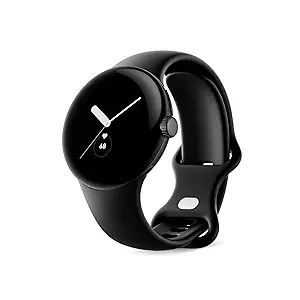
Google vs TAG Heuer: Overview
Comparing Google and TAG Heuer helps you determine which brand is best suited for your needs in Smart Watch. Both brands offer strong choices depending on your budget and key feature requirements.
Key Features & Comparison
Evaluate factors such as build quality, warranty, customer satisfaction, and total value before making your final purchase choice between Google and TAG Heuer.
Battery Life
When evaluating battery longevity, Google's Pixel Watch line and TAG Heuer's Connected series represent distinct approaches to hardware optimization within the Wear OS framework. Google engineered the Pixel Watch to deliver roughly 24 hours of operational capacity under typical usage, relying heavily on dynamic refresh rates and power-saving algorithms to balance a vibrant AMOLED display with continuous heart rate sensing. The introduction of improved dual-chip architecture in newer iterations permits light background tasks to run on a low-power co-processor, modestly stabilizing daily endurance. However, the Pixel Watch remains tethered to a daily charging cycle, particularly when GPS-enabled workouts, always-on display, or sleep tracking routines are deployed aggressively, leaving little headroom for extended off-grid usage.
TAG Heuer faces comparable platform-level power constraints with its Connected collection, yet it leverages larger physical chassis dimensions to house higher-capacity cells. Depending on the chosen model—such as the standard 42mm, 45mm variants, or the sports-oriented Calibre editions—users typically experience a full day to a day and a half of typical utilization. TAG Heuer implements customized ambient modes and aggressive power management tailored for recreational activities like full rounds of golf, where continuous satellite acquisition can otherwise drain reserves rapidly. Charging ergonomics also differentiate the brands; Google employs a proprietary magnetic puck that recharges efficiently but remains prone to misalignment, while TAG Heuer supplies an engineered, weighted charging dock that mirrors the brand's horological heritage, prioritizing desktop stability over compact travel convenience.
Build Quality & Durability
Google approaches smartwatch architecture from a minimalist, consumer-tech perspective characterized by soft, organic curves and unified geometry. The Pixel Watch utilizes a custom 3D domed Corning Gorilla Glass crystal that seamlessly flows into a recycled stainless steel or aluminum housing. While this uninterrupted dome provides exceptional tactile feedback for gesture navigation and boasts an elegant, jewelry-like visual presence, it introduces structural vulnerability. The perimeter of the crystal lacks a protective bezel, exposing the curved edges directly to incidental impacts against doorframes and hard surfaces. With 5 ATM water resistance, the Google Pixel Watch reliably withstands swimming and atmospheric exposure, but it remains decidedly urban and susceptible to abrasive wear over extended timelines.
Conversely, TAG Heuer leverages over a century of Swiss horological mastery, constructing the Connected series with premium materials typically reserved for mechanical luxury timepieces. The brand implements surgical-grade 316L stainless steel, lightweight Grade 2 and Grade 4 titanium with DLC coatings, and scratch-resistant sapphire crystal that provides significantly superior surface hardness compared to chemically strengthened glass. The integrated ceramic or titanium bezels actively protect the display from lateral impacts, yielding vastly superior mechanical resilience. Detailing extends to mechanical pushers, a highly articulated crown with tactile haptic feedback, and interchangeable strap systems featuring high-grade rubber and deployant clasp bracelets. Consequently, TAG Heuer dominates in mechanical durability, impact defense, and long-term chassis longevity.
Health & Fitness Tracking
Google establishes a decisive technical advantage in wellness and biometric tracking by integrating the deeply developed Fitbit algorithmic ecosystem into the Pixel Watch. Outfitted with a sophisticated multi-path optical heart rate sensor, an electrical sensor for skin conductance (cEDA) to assess stress responses, and wrist temperature tracking, Google delivers granular physiological data. The platform excels at continuous heart rate monitoring, automatic workout recognition, heart rate variability (HRV) metrics, and validated sleep stage tracking. The companion Fitbit application synthesizes these metrics into actionable metrics such as the Daily Readiness Score, making Google's solution an exceptional health companion for everyday users, runners, and wellness-focused individuals seeking empirical biometric guidance.
TAG Heuer approaches fitness monitoring through a specialized lens, focusing heavily on proprietary luxury sports experiences rather than wide-spectrum medical-grade tracking. The Connected watch incorporates standard biometric sensors—including optical heart rate, an accelerometer, and integrated GNSS—housed within custom sports applications designed for running, cycling, swimming, and most notably, golf. The TAG Heuer Golf app is widely regarded as best-in-class, offering comprehensive 3D mapping of tens of thousands of courses, hazard tracking, and stroke metrics directly on the wrist. However, for continuous health analytics, passive stress detection, deep sleep analysis, and recovery forecasting, TAG Heuer lacks the algorithmic maturity and cloud infrastructure of Google's Fitbit foundation, functioning primarily as a luxury activity recorder rather than a proactive wellness coach.
Smart Features & Connectivity
Google's proprietary stewardship of Wear OS ensures that the Pixel Watch operates as a premiere reference showcase for modern wearable software and ecosystem synergy. The device features seamless, responsive integration with Google Assistant, Google Maps with offline routing, Google Wallet for contactless payments, and direct access to the expansive Google Play Store. Notifications are deeply interactive, permitting fluid voice-to-text dictation, canned responses, and on-wrist keyboard composition. For users invested in the Android ecosystem, native integrations such as Fast Pair, synchronized Do Not Disturb states, and smart home controls through the Google Home app produce a remarkably cohesive, frictionless user experience that bridges cloud services directly to the wrist.
TAG Heuer implements a tailored variant of Wear OS that relies on Google's core architecture for fundamental connectivity, push notifications, and NFC payments, yet distinctively reframes the interface through high-end horological software design. The primary software differentiator is TAG Heuer's library of hyper-realistic digital watch faces, which meticulously reproduce the mechanics, shadows, and complications of iconic mechanical models like the Carrera, Monaco, and Aquaracer. While it handles basic smart features—such as viewing incoming alerts, managing calendars, and utilizing supported third-party apps—the software experience is tuned for aesthetic immersion rather than rapid-fire productivity. Google leads decisively in predictive utility, AI-assisted functionality, and ecosystem integration, while TAG Heuer trades deep technological integration for bespoke mechanical illusion and status-driven styling.
Compare current retail pricing, active promotions, and verified stock availability directly from authorized stores: