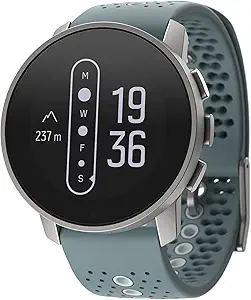







Amazfit vs SUUNTO: Overview
Comparing Amazfit and SUUNTO helps you determine which brand is best suited for your needs in Smart Watch. Both brands offer strong choices depending on your budget and key feature requirements.
Key Features & Comparison
Evaluate factors such as build quality, warranty, customer satisfaction, and total value before making your final purchase choice between Amazfit and SUUNTO.
Battery Life
When comparing battery architecture, SUUNTO and Amazfit take radically different engineering approaches suited to their core target audiences. SUUNTO specializes in performance endurance, deploying intelligent battery management modes that adjust GNSS tracking frequencies dynamically during prolonged expeditions. Flagship models like the SUUNTO Vertical and Peak series can deliver up to 60 to 85 hours of continuous multi-frequency dual-band GNSS tracking, extending to a staggering 500 hours in tour modes, bolstered by efficient solar-charging options. This makes SUUNTO an exceptional tool for ultramarathoners, thru-hikers, and expedition athletes who cannot afford system dropouts in off-grid environments where power outlets are non-existent.
Conversely, Amazfit achieves remarkable battery longevity by optimizing routine daily usage, leveraging lightweight custom operating systems (Zepp OS) and power-frugal microcontrollers. Mainstream smartwatches such as the Amazfit Balance, GTR series, and rugged T-Rex Ultra consistently deliver 14 to 24 days of normal smart use on a single charge with continuous heart-rate monitoring and sleep tracking enabled. While Amazfit's heavy GPS tracking endurance (ranging from 25 to 50 hours on rugged variants) is respectable, its true competitive advantage lies in delivering a vibrant AMOLED display experience without requiring the frequent recharging cycles typical of conventional high-performance smartwatches.
Build Quality & Durability
SUUNTO embodies traditional Nordic industrial craftsmanship, utilizing rugged, high-grade materials specifically designed to endure extreme environmental conditions. The brand's devices frequently feature sapphire crystal glass, grade 5 titanium or high-grade stainless steel bezels, and glass-fiber-reinforced polyamide casings. Engineered and predominantly tested in Finland against stringent military standards (MIL-STD-810H), SUUNTO watches boast genuine 100-meter water resistance and exceptional thermal operating limits. Tactile button controls are deliberately engineered with high actuation resistance, ensuring reliable operation when wearing thick winter gloves or maneuvering through harsh alpine terrain.
Amazfit covers a broader spectrum of manufacturing tiers, balancing cost efficiency with durable construction. While their urban-focused models utilize lightweight aluminum alloy shells and tempered mineral glass to keep prices competitive and designs slim, their rugged lineup—most notably the T-Rex series—features MIL-STD-810H certification, 10 ATM water resistance, and mud-resistant polymer guards. However, despite these rugged exterior reinforcements, Amazfit's reliance on secondary plastics and lighter-weight bezels does not match the structural density and premium metallurgical heft of SUUNTO’s titanium-clad models, positioning Amazfit more as an accessible outdoor-styled alternative than an uncompromising survival instrument.
Health & Fitness Tracking
SUUNTO delivers an uncompromising, data-dense platform engineered specifically for endurance athletes and backcountry navigators. Leveraging advanced training load analytics, recovery metrics, and native integration with platforms like TrainingPeaks, SUUNTO excels in tracking complex cardiovascular stress, TSS (Training Stress Score), and heart rate variability (HRV) trends. Its breadcrumb navigation and offline topographic mapping capabilities are best-in-class, offering reliable vector maps directly on the wrist without cellular tethering. The biometric tracking algorithms prioritize aerobic efficiency, structured intervals, and vertical ascent profiles over lifestyle wellness gamification.
Amazfit offers a significantly broader, consumer-accessible health suite powered by its proprietary BioTracker PPG optical sensors. In addition to standard heart rate and SpO2 monitoring, Amazfit delivers comprehensive 24/7 lifestyle analytics, including holistic sleep architecture scoring, nap detection, PAI (Personal Activity Intelligence), readiness scores, and one-tap multidimensional health scans. For fitness routines, Amazfit devices support well over 150 sports modes, automatic workout detection, and standard track-run algorithms. While Amazfit's athletic recovery analytics have matured significantly with Zepp Coach, it still caters more effectively to general wellness enthusiasts and cross-training gym-goers rather than specialized, data-intensive endurance professionals.
Smart Features & Connectivity
In the realm of smart features and third-party software integration, Amazfit distinctly outpaces SUUNTO by offering an expansive lifestyle-oriented ecosystem. Driven by Zepp OS, Amazfit watches support a lightweight app ecosystem with downloadable mini-applications, offline voice controls via Alexa integration, Bluetooth phone calling capabilities via onboard micro-speakers, and native music storage on higher-end tiers. The synchronization process through the Zepp App is seamless, allowing users to interact with rich notifications, send automated quick replies on Android, and manage contactless payments in select markets, making it a viable day-to-day smartwatch alternative.
In contrast, SUUNTO intentionally maintains a minimalist, distraction-free smart feature footprint to prioritize battery economy and situational focus. While SUUNTO handles incoming push notifications, media playback controls for the paired smartphone, and automated sync with Strava, Komoot, and Apple Health, it lacks standalone cellular features, third-party app stores, onboard microphone arrays, and local voice assistants. This design philosophy directly reflects SUUNTO's identity as a dedicated field instrument rather than an extension of a smartphone, offering an interface that focuses purely on navigational clarity and athletic feedback without the clutter of lifestyle micro-apps.