Acer vs Epson: Overview
Comparing Acer and Epson helps you determine which brand is best suited for your needs in Projectors. Both brands offer strong choices depending on your budget and key feature requirements.
Key Features & Comparison
Evaluate factors such as build quality, warranty, customer satisfaction, and total value before making your final purchase choice between Acer and Epson.
Product Selection
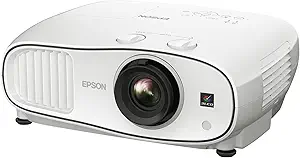
Epson commands one of the most comprehensive catalogs in the global projection market, anchored by its proprietary 3-chip 3LCD architecture. Its portfolio spans a vast continuum of use cases, stretching from entry-level classroom and boardroom presentation units to specialized ultra-short-throw (UST) living room systems under the EpiqVision line, and reaching up to flagship, high-luminance commercial venue rigs exceeding 20,000 lumens. For home theater enthusiasts, Epson provides granular stepping stones, progressing from budget-conscious 1080p lamp-based projectors to high-end pixel-shifting and native 4K laser models (such as the Pro Cinema and LS-series) complete with motorized lens memory, optical zoom, and expansive lens-shift capabilities. This engineering depth ensures that whether an enterprise needs an interactive collaborative display or an audiophile requires a dedicated dark-room cinema engine, Epson offers multiple tightly calibrated hardware options.
Conversely, Acer approaches product selection through a consumer-first, value-engineered lens predominantly powered by single-chip DLP technology. Acer’s catalog is leaner and heavily indexed toward budget-to-midrange office displays (X- and P-series), ultra-portable pico units, and hybrid lifestyle projectors. Rather than competing in the ultra-premium commercial AV or five-figure home cinema tiers, Acer strategically differentiates its product mix through modern, feature-specific niches. This is evident in its Vero projector line—which emphasizes environmental sustainability via post-consumer recycled (PCR) chassis and energy-efficient LED/laser light engines—and its Predator and gaming-centric lines (such as the GD711), which prioritize high-refresh-rate 240Hz inputs and ultra-low latency for console and PC gaming at competitive price points.
The practical trade-offs between the two brand portfolios hinge on application scalability versus cost-efficient agility. Epson’s extensive product selection guarantees superior color brightness parity, deep installer flexibility, and expansive optical tuning, but buyers often pay a premium for this commercial-grade engineering, and its portable lineup is relatively conservative. Acer excels at delivering cost-accessible, plug-and-play versatility with compact DLP form factors that offer high native sequential contrast and minimal maintenance. However, buyers facing specialized throw distances, massive screen sizes, or exacting color-grading requirements will find Acer’s catalog relatively restrictive compared to the exhaustive, multi-tiered ecosystem offered by Epson.
Affordability
When evaluating affordability in the projector market, Acer consistently positions itself as the more aggressive competitor in terms of upfront, entry-level pricing. By heavily leveraging single-chip DLP (Digital Light Processing) architecture, Acer significantly reduces manufacturing overhead, allowing the brand to deliver remarkably high lumen counts and native high-definition resolutions at price points that undercut most legacy competitors. For budget-conscious enterprise settings, educational classrooms, and casual home cinema enthusiasts, Acer’s catalog provides an exceptionally low barrier to entry, frequently offering features like native 1080p rendering and 3D compatibility in price brackets where competitors offer only basic SVGA or WXGA resolutions. Consequently, in a purely transactional, dollar-per-lumen assessment, Acer commands a decisive lead for consumers seeking the lowest immediate capital expenditure.
Conversely, Epson approaches affordability through the lens of value engineering and optical fidelity, utilizing proprietary 3LCD technology that naturally commands a higher baseline retail price. Because 3LCD optical blocks require three distinct liquid crystal panels along with specialized dichroic mirrors to split and recombine light, Epson projectors are inherently more complex and expensive to manufacture than Acer’s single-chip DLP assemblies. However, this technical divergence directly impacts performance; budget-tier Acer projectors often struggle with color brightness parity—where colored imagery appears noticeably dimmer than pure white projections—and can manifest distracting chromatic "rainbow effects." Epson counterbalances its higher price tag by delivering equal white and color brightness, superior out-of-the-box color accuracy, and more flexible optical zoom and lens shift ranges, effectively reducing the need for costly external calibration tools or specialized mounting hardware.
From a long-term Total Cost of Ownership (TCO) perspective, the affordability gap between the two brands narrows considerably. While Acer minimizes immediate purchase costs, its budget models often feature louder, cost-optimized cooling fans and thermal profiles that can shorten lamp longevity under heavy duty cycles. Epson, conversely, optimizes its lower-tier platforms with high-efficiency Eco modes and surprisingly inexpensive official replacement lamps, particularly within its mainstream Home Cinema and commercial EX lines. Furthermore, Epson’s solid-state laser offerings in the intermediate price tier provide up to 20,000 hours of virtually maintenance-free operation. Ultimately, while Acer remains the undisputed champion for cash-constrained buyers needing immediate, high-output projection on a tight budget, Epson justifies its modest price premium through superior optical stability, broader installation flexibility, and lower lifecycle maintenance costs.
Quality/Durability
Epson has established an industry-leading reputation for build quality and engineering integrity, driven primarily by its proprietary 3LCD engine technology. Because Epson designs and manufactures its optical blocks, liquid crystal panels, and laser light sources in-house, their projectors exhibit tight manufacturing tolerances, robust chassis construction, and exceptional thermal management systems. The elimination of a mechanical spinning color wheel—a common failure point in alternative technologies—fundamentally enhances the operational durability of Epson units. Flagship home theater models and commercial Pro EX series feature heavy-duty, dust-sealed optical engines and high-efficiency filtration systems that protect delicate internal prisms from heat degradation and ambient particulate accumulation. Consequently, Epson projectors demonstrate remarkable color stability over thousands of operating hours, rarely suffering from the thermal yellowing or optical misalignments that can plague lower-tier hardware.
Acer approaches the market primarily through the integration of Texas Instruments' single-chip Digital Light Processing (DLP) architecture, offering commendable build durability tailored to budget-conscious and mid-tier professional environments. Acer's engineering strengths lie in rugged, compact enclosures and sealed DLP light engines that are inherently impervious to ambient dust settling on the imaging device, circumventing the need for frequent filter maintenance. However, this relies on a mechanical color wheel and aggressive internal cooling fans, introducing mechanical wear points that can develop motor whine or bearing failure under prolonged, high-duty-cycle usage. While Acer's solid-state LED and laser hybrid projectors deliver impressive lifespan ratings that rival premium competitors, their consumer-grade plastics, focus ring mechanics, and internal thermal paste tolerances are engineered closer to price-to-performance baselines. As a result, while Acer units provide reliable, workhorse longevity for standard classroom and mobile presentations, Epson holds a distinct advantage in structural refinement, thermal endurance, and long-term optical fidelity.
Customer Support & Warranty
When evaluating after-sales infrastructure in the projector market, Epson establishes an industry-leading benchmark through its specialized, projection-focused warranty frameworks and robust post-purchase services. Epson typically protects its consumer and commercial displays with generous two-to-three-year limited warranties, extending up to five years on enterprise and high-end Pro Cinema laser engines, alongside defined light-source operational ratings (often five years or 20,000 hours for solid-state laser units). In contrast, Acer adheres to a standard consumer electronics warranty architecture, generally issuing one-to-two-year limited hardware warranties with more restrictive riders on light engines—frequently capping conventional UHP lamp coverage at just 90 days to one year. This structural difference highlights Epson's technical confidence in its proprietary 3LCD optical engines and inorganic phosphor wheels, whereas Acer’s reliance on third-party DLP components leads to a more risk-averse, entry-level warranty portfolio.
The operational disparity becomes even more pronounced in technical support infrastructure and RMA logistics. Epson operates dedicated audiovisual support tiers backed by its renowned Extra Care Home Service and PrivateLine technical assistance, offering rapid advance-exchange programs that can dispatch a replacement unit within 24 to 48 hours for verified hardware failures. Acer, on the other hand, routes projector inquiries through its generalized consumer hardware support system—the same ecosystem servicing laptops, monitors, and peripherals. Consequently, troubleshooting projector-specific issues such as color wheel desynchronization, optical degradation, or complex HDMI handshake anomalies often requires navigating lower-tier generalist support before reaching knowledgeable technicians. Furthermore, Acer predominantly relies on standard mail-in depot repairs, meaning end-users must endure several weeks of downtime while their device is inspected, serviced, and returned.
Ultimately, the trade-off centers on upfront capital efficiency versus long-term operational resilience. Acer’s warranty and support ecosystem aligns well with budget-conscious buyers, classrooms, or casual home cinema users who prioritize lower initial acquisition costs and can absorb occasional downtime. Conversely, Epson’s premium pricing subsidizes a mission-critical support apparatus that is virtually unmatched in the display sector. For professional AV integrators, educational institutions, enterprise boardrooms, and dedicated home theater connoisseurs, Epson’s rapid-exchange protocols, regional repair network, and expansive optical warranties deliver substantial total-cost-of-ownership advantages and invaluable operational peace of mind.
Picture Quality
When assessing picture quality between Epson and Acer projectors, the fundamental differentiator lies in their foundational projection technologies. Epson relies almost exclusively on proprietary 3-chip LCD (3LCD) optical engines, which process red, green, and blue light continuously and simultaneously. This architecture allows Epson to deliver an identical volume of color brightness and white brightness (measured in lumens), preventing the dull, washed-out color gamuts often seen in ambient light. Crucially, the 3LCD design completely eliminates the distracting chromatic "rainbow effect" (RBE), making Epson an inherently superior choice for viewers sensitive to temporal color artifacts. In contrast, Acer leans heavily on single-chip Digital Light Processing (DLP) technology powered by Texas Instruments DMD chips. While Acer utilizes technologies like ColorBoost3D and ColorSafe II to optimize hue saturation, their projectors utilize sequential color wheels—frequently featuring clear segments to artificially boost peak white lumens—which can lead to compromised color luminance in high-brightness modes and occasional rainbow fringing during high-contrast, fast-motion sequences.
Where Acer mounts a fierce counteroffensive is in optical sharpness, pixel convergence, and micro-contrast. Because single-chip DLP designs rely on a single micromirror array rather than the alignment of three discrete panels, Acer projectors bypass the optical convergence errors, chromatic fringing, and slight softness that can sometimes affect 3LCD units. The result is class-leading pixel demarcation, exceptional native ANSI (intra-scene) contrast, and pristine rendering of fine textures and vector text, making Acer models particularly compelling for high-resolution computing, sports, and competitive gaming. Epson counterbalances this inherent pixel-grid reality with advanced optical glass assemblies and proprietary pixel-shifting technologies (such as 4K PRO-UHD). Furthermore, Epson systematically outperforms Acer in black level depth and dynamic contrast control; higher-end Epson models leverage sophisticated dynamic irises and ultra-deep optical blocks that yield far deeper floor blacks and superior shadow detail in light-controlled cinema spaces.
Ultimately, the practical trade-off between the two brands comes down to cinematic color volume versus pixel-precise sharpness. Epson is the purist's choice for home theater enthusiasts and ambient-light media rooms where realistic color saturation, expansive dynamic range, and artifact-free viewing are paramount to the picture quality experience. Acer represents an engineering sweet spot for users prioritizing tack-sharp focus, uniform geometry, and punchy native intra-frame contrast, delivering robust performance for mixed-media usage, bright presentations, and gaming where sheer geometric clarity outweighs pitch-black shadow fidelity.
Compare current retail pricing, active promotions, and verified stock availability directly from authorized stores: