Sony vs Sennheiser: Overview & Brand Philosophy
When selecting premium audio gear, Sony and Sennheiser represent two of the most distinguished yet philosophically divergent paths in modern acoustic engineering. Sony, a Japanese titan in consumer electronics, approaches personal audio with a relentless focus on ecosystem integration, mass-market usability, and bleeding-edge digital signal processing. Over the past decade, Sony has transformed the consumer headphone market by prioritizing intelligent noise cancellation, user-centric automation, and a rich, bass-forward sound signature designed to excel with modern compressed audio and commercial genres.
Conversely, Germany's Sennheiser is rooted deeply in professional audio heritage, audiophile purism, and acoustic fidelity. Established in 1945, the brand made its reputation in broadcast studios, recording booths, and the listening rooms of discerning hi-fi enthusiasts. Sennheiser’s philosophy places acoustic tuning, dynamic extension, and spatial accuracy above digital gimmickry. While the brand has aggressively modernized its wireless consumer lineup under the Sonova umbrella, its core engineering objective remains the faithful reproduction of sound as the artist intended, emphasizing flat frequency responses and wide soundstages.
This fundamental divide makes a head-to-head comparison compelling for consumers. Sony designs headphones tailored to the demands of daily modern life—commuting, multi-device office workflows, and blocking out atmospheric chaos. Sennheiser, while matching many modern features step-for-step, designs listening instruments where the music itself is the primary focus. Understanding this distinction is vital to choosing the brand that aligns with your listening habits and operational environments.
Key Differences & Technological Comparison
The technological tug-of-war between Sony and Sennheiser spans several key domains: active noise cancellation (ANC), digital signal processing, driver design, and overall build philosophy.
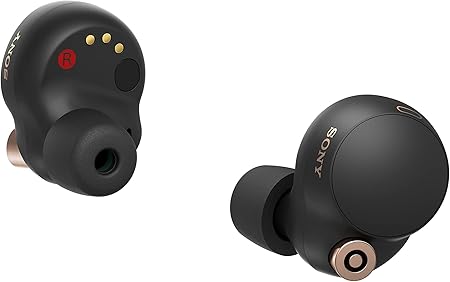
Active Noise Cancellation & Ambient Control: Sony holds an undeniable lead in real-time environmental noise suppression. Powered by proprietary processors like the Integrated Processor V1 and HD Noise Cancelling Processor QN1, alongside multi-microphone arrays, models like the WH-1000XM5 and WF-1000XM5 attenuate low- and mid-frequency ambient sounds (such as jet engine rumble and cafe chatter) more aggressively than Sennheiser. Sennheiser’s Momentum 4 and Momentum True Wireless lines offer highly capable adaptive ANC, but their tuning preserves more natural cabin pressure, prioritizing acoustic transparency rather than absolute, vacuum-like silence.
Sound Signature & Driver Engineering: Sennheiser consistently outperforms in passive acoustic tuning. Utilizing their proprietary 42mm TrueResponse transducers in the Momentum 4, Sennheiser achieves exceptional transient response, sparkling treble detail, and tight, controlled sub-bass that avoids bleeding into the midrange. Instruments are clearly delineated across an expansive soundstage. Sony relies heavily on internal DSP and software-level upscaling (such as DSEE Extreme) to deliver a warm, punchy, and energetic sound profile out of the box. While Sony's EQ can be adjusted extensively in the companion app, Sennheiser delivers superior raw acoustic balance without artificial coloration.
Codecs & Connectivity: Both brands support standard SBC and AAC codecs, but they diverge sharply in high-resolution transmission. Sony promotes its proprietary LDAC codec, capable of streaming 24-bit/96kHz audio at up to 990 kbps across almost all modern Android devices. Sennheiser favors Qualcomm's aptX family, including aptX Adaptive and aptX HD, which prioritize low latency and stability alongside high-resolution playback. Users heavily reliant on iOS devices will find these distinctions less impactful due to Apple's AAC limitation.
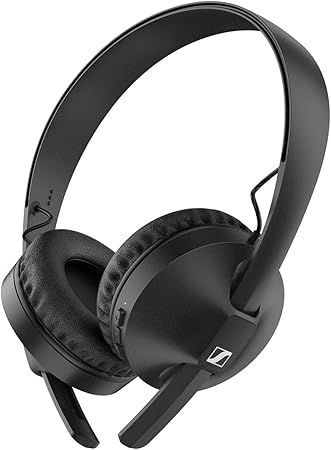
Design, Ergonomics & Materials: Sony leans heavily into sustainable, lightweight ABS plastics and vegan leather. While this results in lightweight frames that are exceptionally comfortable during long transit sessions, it can occasionally feel less luxurious in the hand. Sennheiser incorporates premium design accents, such as textured fabric-wrapped headbands, matte metallic hinges, and structural reinforcements that convey an immediate sense of durability and industrial refinement.
Pros & Cons Comparison
Sony Headphones & Earbuds
- Pros:
- Industry-leading Active Noise Cancellation (ANC) with granular ambient control.
- Advanced smart features, including Speak-to-Chat, Quick Attention, and location-based profile switching.
- Broad support for LDAC high-resolution streaming on Android devices.
- Lightweight designs with plush clamping force optimized for long commutes.
- Feature-rich companion application with robust equalizer presets and 360 Reality Audio mapping.
- Cons:
- Default sound profile leans heavily toward bass, often requiring manual EQ tuning for neutrality.
- Extensive use of exterior plastic can feel less premium relative to price point.
- Microphone voice-isolation performance can degrade in windy outdoor conditions.
Sennheiser Headphones & Earbuds
- Pros:
- Class-leading, audiophile-grade acoustic tuning with superior separation, clarity, and balance.
- Sensational battery life on flagship models (e.g., up to 60 hours on the Momentum 4 Wireless).
- Premium materials including durable fabric, high-grade polymers, and robust hinges.
- Support for aptX Adaptive and low-latency codecs suitable for mixed media and video playback.
- Natural-sounding transparency/ambient listening mode with minimal digital artifacting.
- Cons:
- Active noise cancellation falls slightly short of Sony's ability to nullify irregular mid-frequency noise.
- Companion app interface is less feature-dense and occasionally prone to pairing sync delays.
- Earbud shells tend to be slightly bulkier, requiring careful tip selection for small ear canals.
Performance, Durability & Value Analysis
When assessing long-term hardware reliability, Sennheiser exhibits a clear structural advantage. The brand's products are engineered to withstand extensive daily use, often utilizing reinforced headband yokes, modular cable designs, and readily replaceable ear cushions across both consumer and professional tiers. Furthermore, Sennheiser’s battery management protocols are exemplary; the class-leading 60-hour playback cycle on models like the Momentum 4 implies fewer charge cycles over the device's lifespan, directly delaying the inevitable degradation of the internal lithium-ion cells. Sony's consumer products, while engineered to strict quality-control standards, feature thinner hinge joints and softer plastic shells that are more prone to visible scuffs and mechanical stress over several years of rigorous mobile deployment.
From a pure value proposition, the choice pivots on software innovation versus acoustic longevity. Sony provides immense value through its deep functional versatility: its automated smart features and class-dominant ANC make it an indispensable productivity and travel tool that pays dividends in noisy work environments. Sennheiser, however, retains its intrinsic value through acoustic relevance. While active noise cancellation algorithms age rapidly, pristine acoustic driver tuning does not. An investment in Sennheiser typically offers a more satisfying return for consumers who view their headphones primarily as music reproduction equipment rather than multi-purpose digital accessories.
Final Verdict: Which Brand Should You Choose?
Both brands represent the pinnacle of their respective engineering goals, meaning the right choice comes down to how and where you spend most of your listening time.
Choose Sony if: You are a frequent traveler, commuter, or open-plan office worker whose primary requirement is silence. If your daily priority is eliminating external noise, taking frequent hands-free calls on the move, and enjoying deep, energetic bass for contemporary genres without fussing over technical acoustic nuances, Sony's flagship WH-1000XM5 headphones or WF-1000XM5 earbuds are the gold standard for daily lifestyle utility.
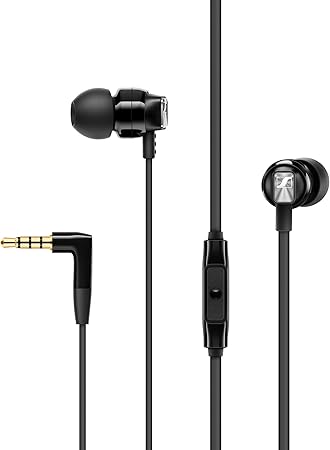
Choose Sennheiser if: Critical music listening is your primary motivation. If you value an expansive soundstage, instrumental precision, transparent midranges, and natural bass response, Sennheiser remains unmatched at consumer price points. Additionally, if you prioritize class-leading battery longevity, premium design materials, and support for aptX codecs, Sennheiser’s Momentum series or their wired audiophile offerings (like the HD 600 line) provide an uncompromised, purist listening experience.
Features
When evaluating the feature ecosystem of consumer audio, Sony operates as an aggressively innovation-first tech powerhouse, whereas Sennheiser prioritizes audio purity and foundational functionality. Sony’s engineering philosophy centers on an expansive, algorithmically driven user experience. Flagship models in the 1000X series showcase this via proprietary features like Quick Attention mode, Speak-to-Chat (which automatically pauses playback when your voice is detected), and remarkably adaptive Active Noise Cancellation (ANC) that calibrates in real-time to atmospheric pressure and personal wear patterns. Sony also leads the charge in codec versatility by leveraging their proprietary LDAC protocol, providing high-bandwidth wireless streaming alongside native support for 360 Reality Audio and DSEE Extreme upscaling. The companion Sony Headphones Connect app is dense with customizability, offering multi-point Bluetooth switching, detailed location-based ambient sound profiles, and precise EQ controls, though the sheer volume of automation can occasionally feel over-engineered for purists.
Sennheiser approaches features through a lens of acoustic engineering and tactile refinement, often stripping away redundant software gimmicks to focus on signal fidelity and core utility. Models like the Momentum 4 Wireless and Momentum True Wireless series deliver class-leading, deeply effective Hybrid Adaptive ANC, alongside an intuitive Transparency Mode that rivals Sony's naturalness. Rather than relying on LDAC, Sennheiser embraces Qualcomm's high-efficiency ecosystem, incorporating aptX, aptX Adaptive, and increasingly, low-latency aptX Lossless and LE Audio codecs, which often provide lower latency for video and gaming than Sony's pipeline. The Sennheiser Smart Control app is streamlined and intentionally straightforward; it bypasses algorithmic clutter in favor of meaningful, high-impact tools like Sound Personalization (created in partnership with the Fraunhofer Institute), custom sound zones that adjust settings as you enter geofenced areas, and a pristine 5-band equalizer with a dedicated Bass Boost.
The practical trade-offs between the two brands ultimately boil down to ambient lifestyle integration versus focused acoustic delivery. Sony is the undisputed victor for frequent travelers, commuters, and feature maximalists who demand the world's most aggressive, customizable noise cancellation and hands-free convenience features, even if functions like Speak-to-Chat occasionally trigger from an errant cough. Conversely, Sennheiser's technical strengths lie in features that serve listening longevity and audio transmission integrity, headlined by extraordinary real-world battery life—often doubling Sony's runtime per charge—and rock-solid Bluetooth stability. Consumers prioritizing advanced smart automations and immersive spatial audio should lean toward Sony, while those desiring an uncluttered, high-fidelity experience with ultra-reliable hardware metrics will find Sennheiser's more disciplined feature set better aligned with their needs.
Performance
When evaluating performance, Sony and Sennheiser approach audio engineering from fundamentally different philosophies, creating a distinct dichotomy between modern consumer-tech versatility and high-fidelity acoustic purity. Sony's performance narrative is dominated by industry-leading Active Noise Cancellation (ANC), powered by bespoke silicon like the Integrated Processor V2 and HD Noise Cancelling Processor QN1. This processing muscle delivers an aggressive, adaptive reduction of environmental noise that makes flagships like the WH-1000XM5 and WF-1000XM4 class leaders for commuting and travel. In contrast, Sennheiser prioritizes raw acoustic architecture and analog precision. Utilizing proprietary TrueResponse dynamic transducers, Sennheiser models—ranging from the consumer Momentum 4 Wireless to the audiophile HD 600 and HD 800 series—exhibit superior transient response, lower total harmonic distortion (THD), and an expansive, natural soundstage that captures micro-details Sony’s heavier digital processing often masks.
From a sound signature and codec standpoint, the brands cater to diverging sonic preferences and technical ecosystems. Out of the box, Sony leans toward a consumer-friendly, bass-forward sound with warm mids and energetic highs, optimized through their proprietary LDAC codec for high-bitrate Bluetooth streaming. While their companion app offers comprehensive EQ and DSEE Extreme upscaling, Sony's low-end can occasionally sound boomy or bleed into the midrange during complex orchestrations. Sennheiser adheres to a more neutral, reference-grade tuning characterized by articulate mid-range presentation, pristine high-frequency extension, and tight, controlled bass. Furthermore, Sennheiser frequently incorporates Qualcomm’s aptX Adaptive and aptX Lossless codecs, offering lower-latency transmission that provides an edge over Sony’s LDAC during real-time tasks like video editing and gaming.
The practical trade-offs between the two ultimately hinge on the user's operational environment and performance priorities. Sony is the undisputed victor for integrated smart performance, offering nearly peerless ambient sound transparency, frictionless multi-point switching, and superior computational voice-pickup for teleconferencing in noisy spaces. However, Sennheiser counters with pure operational endurance and physical acoustic fidelity; the Momentum 4's staggering 60-hour battery life with ANC enabled laps Sony's standard 30-hour limit, and their passive acoustic engineering requires less DSP correction to sound stellar. For listeners demanding class-leading isolation and cutting-edge software features, Sony takes the performance crown, but for critical listeners seeking authentic instrument separation, dynamic range, and unadulterated musicality, Sennheiser remains the superior acoustic performer.
Design
When evaluating design engineering, Sony prioritizes a sleek, lifestyle-oriented aesthetic defined by smooth contours, minimalist branding, and maximum functional ergonomics. In flagship models like the WH-1000XM5 and the WF-1000XM5, Sony utilizes high-grade ABS plastics and friction-reducing synthetic leather, achieving exceptionally lightweight builds that disappear during long listening sessions. However, this focus on ultra-clean, modern lines has led to notable trade-offs: the latest overhead chassis abandons fully collapsible hinges in favor of a step-less sliding stem, increasing the overall footprint in travel bags. Furthermore, Sony heavily leans on capacitive touch interfaces integrated directly into the earcups, delivering a high-tech user experience that looks immaculate, though it remains occasionally prone to accidental inputs in adverse weather compared to physical controls.
Conversely, Sennheiser approaches design through a purist, audio-engineering lens that favors utilitarian longevity, premium tactile textures, and classic acoustic architecture. From the audiophile-grade HD series to the consumer-focused Momentum 4, Sennheiser relies on robust structural elements such as visible metal sliders, woven fabric headband wraps, and deep, anatomically sculpted ear cavities designed to naturally optimize soundstaging. While this architectural methodology yields higher perceived durability and a timeless, sophisticated aesthetic, it often results in a bulkier profile and a firmer initial clamping force that may cause fatigue on wider head shapes. Sennheiser also embraces a hybrid control scheme on their consumer lines—smartly combining responsive touch zones with dedicated physical toggles for critical functions like pairing and power—providing superior mechanical feedback.
Ultimately, the design divergence between these two audio giants reflects contrasting consumer priorities. Sony excels in ergonomic travel convenience, modern styling, and lightweight smart-feature integration, making their hardware feel like a seamless digital accessory for daily commuters. Sennheiser targets discerning listeners who equate design with structural permanence, acoustically informed housing geometry, and premium, tactile materials. Consumers seeking an agile, featherlight design packed with invisible touch technology will find Sony unmatched, whereas those who value physical craftsmanship, breathable acoustic spaces, and hardware built with repairable modularity in mind will favor Sennheiser’s industrial approach.