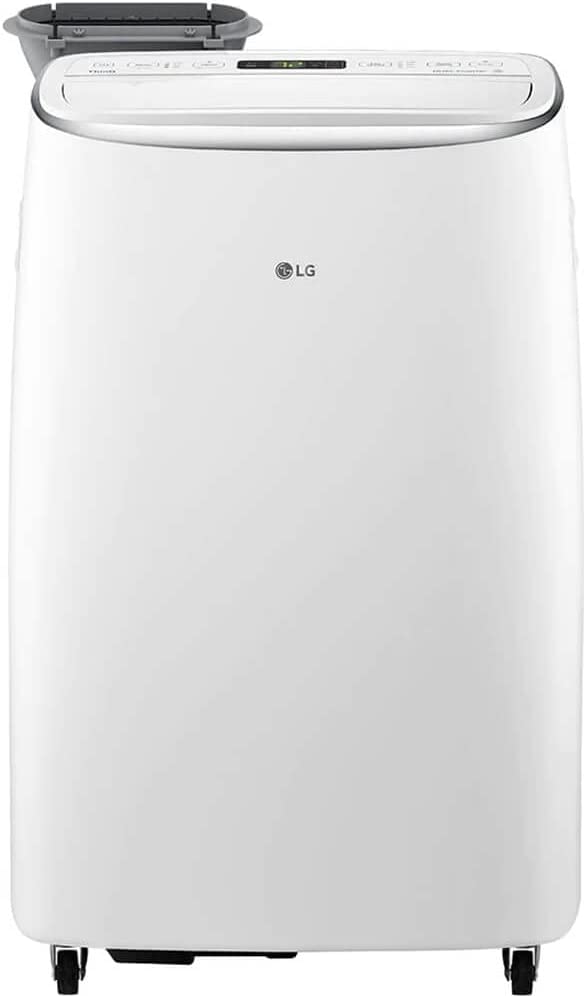
LG vs Friedrich: Overview
Comparing LG and Friedrich helps you determine which brand is best suited for your needs in Air Conditioners. Both brands offer strong choices depending on your budget and key feature requirements.
Key Features & Comparison
Evaluate factors such as build quality, warranty, customer satisfaction, and total value before making your final purchase choice between LG and Friedrich.
Customer Support & Warranty
When evaluating warranty coverage and post-purchase service, LG and Friedrich serve fundamentally different consumer expectations through their operational models. LG provides a standard 1-year limited warranty covering parts and labor across most of its residential air conditioning portfolio, with select DUAL Inverter models offering an extended 5- to 10-year warranty exclusively on the compressor. While LG boasts a vast, ubiquitous service infrastructure and modern digital support channels—including diagnostics integrated via the ThinQ ecosystem—the user experience can be inconsistent. Customers frequently encounter friction when coordinating repairs through outsourced third-party service contractors, where parts backorders and administrative delays can prolong downtime during peak summer heat waves.
Friedrich, historically anchored in light-commercial and premium residential sectors, approaches warranty and service with a more specialized philosophy. Premium lines like the Kühl and HazardGard series often feature robust warranty terms, such as a full 5-year parts and labor warranty on the sealed refrigeration system and 1 to 2 years of comprehensive bumper-to-bumper coverage. Friedrich's customer support network is notably more centralized and technical, catering to professional HVAC contractors, multi-family property managers, and discerning homeowners. While their domestic technical support is widely regarded as more knowledgeable and responsive than mass-market consumer desks, obtaining replacement parts can sometimes take longer in rural areas due to reliance on dedicated commercial HVAC distributors rather than general consumer appliance networks.
Energy Efficiency
In the realm of energy efficiency, LG holds a decisive engineering advantage in the consumer residential space due to its pioneering application of variable-speed DUAL Inverter compressor technology. Unlike traditional rotary compressors that repeatedly switch on and off at full load, LG's inverter units dynamically modulate their motor speed to match real-time cooling demands. This operational capability yields exceptional Combined Energy Efficiency Ratios (CEER), often exceeding 15.0 on premier window and portable models, well surpassing Energy Star baseline criteria. By minimizing thermodynamic cycling losses and reducing startup power spikes, LG systems consume up to 25% to 40% less electricity over a standard cooling season compared to conventional fixed-speed air conditioners.
Friedrich approaches energy conservation through rugged mechanical optimization, robust heat-exchange engineering, and sophisticated thermal scheduling. While Friedrich has gradually introduced inverter technology into select high-tier units like the Kühl line, a substantial portion of their portfolio—particularly the heavy-duty Chill Premier and Uni-Fit series—still relies on premium, highly tuned single-speed rotary compressors. Friedrich compensates for the absence of variable-speed mechanics across lower tiers by utilizing extra-dense aluminum fin-and-tube configurations, commercial-grade fan blowers, and precision programmable timers that curtail unnecessary run cycles. Consequently, while Friedrich units easily meet strict commercial building codes and Energy Star standards, they generally yield lower aggregate seasonal efficiency and higher kilowatt-hour consumption compared to LG's modulated inverter fleet.
Noise Level
Acoustic performance represents one of the starkest design differentiators between the two manufacturers. LG’s extensive deployment of dual-cylinder inverter compressors paired with swept-wing, low-profile blower fans allows their units to operate at whisper-quiet thresholds. In continuous operation, LG’s quietest window models can register sound pressure levels as low as 44 decibels (dBA) in low-fan or sleep modes. By eliminating the jarring, high-torque clatter of a compressor cycling on and off, the inverter provides a steady, unobtrusive hum that is easily masked by ambient room noise, making LG an industry benchmark for bedrooms, home offices, and nursery installations.
Friedrich engineers their equipment with a heavy acoustic emphasis, but targets solid sound dampening rather than ultra-low decibel micro-operation. Units like the Friedrich Kühl feature heavy-gauge acoustic insulation, 20-gauge steel enclosures, and vibration-absorbing grommets on motor mounts—a suite of features Friedrich markets as 'QuietMaster' technology. While this dense mechanical housing effectively deadens high-frequency mechanical whine and metallic vibration, the sheer volume of air propelled by Friedrich's high-CFM commercial blowers produces a substantial aerodynamic 'whoosh'. Friedrich units tend to idle around 50 to 55 dBA, providing a very sturdy, consistent sound signature that acts as effective white noise, but lacks the ultra-quiet, library-grade acoustics achieved by LG's variable-speed platform.
Cooling Performance
Cooling performance is where Friedrich demonstrates its institutional heritage as a manufacturer of rugged, heavy-duty environmental control equipment. Engineered to withstand punishing duty cycles, Friedrich units prioritize rapid sensible heat extraction and superior latent heat (dehumidification) removal under severe ambient conditions. The commercial-grade heat exchangers, high-capacity rotary compressors, and high-velocity air-throw systems enable Friedrich air conditioners to project cold air deeper into expansive, open-concept floor plans and sustain stable performance even when exterior ambient temperatures exceed 100°F (38°C). For challenging architectural spaces, poor insulation, or direct solar heat loads, Friedrich delivers unmatched thermodynamic brute force and structural longevity.
LG delivers a more refined, adaptive cooling profile tailored for modern residential comfort and thermal stability. Utilizing its inverter system, an LG unit can run at overdrive capacity to rapidly bring a room down to the set point, then smoothly ramp down compressor displacement to match the ambient thermal load precisely. This constant, low-speed operation prevents the temperature swings of 2 to 4 degrees typically observed with fixed-speed compressors, maintaining room temperatures within a narrow 1-degree band. Additionally, LG's continuous, low-power airflow maintains steady baseline dehumidification, preventing the room from feeling clammy. However, in scenarios with extreme thermal envelope weaknesses or unusually high heat spikes, LG’s protective inverter control algorithms may dial back performance, where a Friedrich unit would simply push through at maximum mechanical capacity.