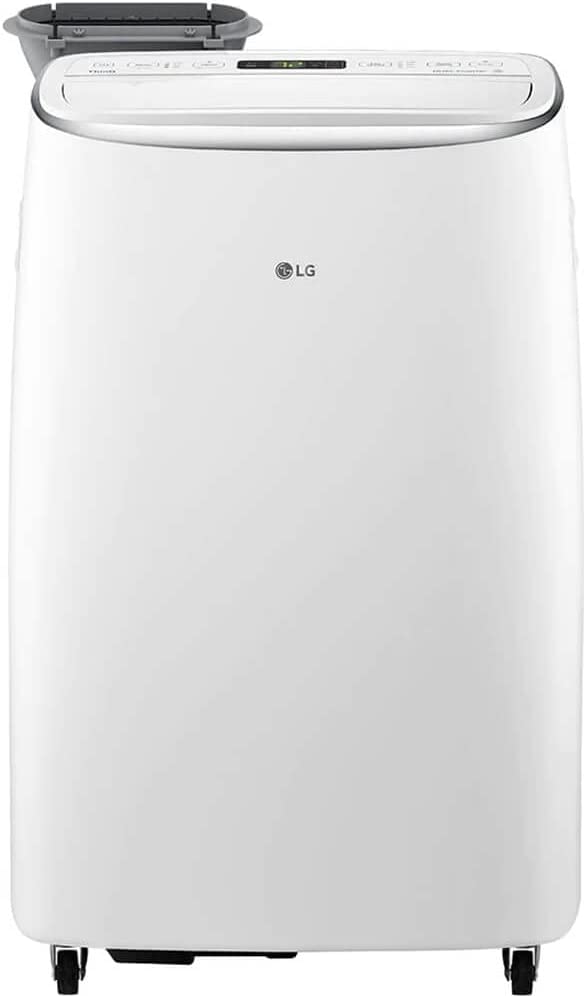



LG vs BLACK+DECKER: Overview
Comparing LG and BLACK+DECKER helps you determine which brand is best suited for your needs in Air Conditioners. Both brands offer strong choices depending on your budget and key feature requirements.
Key Features & Comparison
Evaluate factors such as build quality, warranty, customer satisfaction, and total value before making your final purchase choice between LG and BLACK+DECKER.
Customer Support & Warranty
LG demonstrates a substantial advantage in warranty structure and customer care infrastructure, largely due to its tiered component coverage and extensive authorized service network. Standard LG window and portable air conditioners typically include a 1-year comprehensive parts and labor warranty, but the brand sets itself apart by offering an extended 5 to 10-year warranty specifically covering the inverter compressor mechanism on supported models. Because the compressor is the single most expensive and failure-prone component in any refrigeration circuit, this extended backing provides long-term value and peace of mind. LG also features advanced digital diagnostics, such as Smart Diagnosis via their ThinQ ecosystem, which enables consumers to troubleshoot system faults and relay telemetry directly to service technicians over Wi-Fi, streamlining maintenance logistics and reducing unnecessary service calls.
Conversely, BLACK+DECKER offers a more traditional, entry-level warranty arrangement that mirrors its budget-friendly market positioning. Most BLACK+DECKER air conditioning units are covered by a standard 1-year limited warranty for parts and labor, occasionally supplemented by a 4 to 5-year coverage period restricted strictly to the compressor mechanism. While adequate for seasonal, plug-and-play appliances, their after-sales support relies primarily on third-party service contractors rather than a dedicated in-house technical network. When hardware defects or refrigerant circuit failures occur, resolution procedures often involve shipping the unit back to a regional hub or exchanging the entire unit rather than on-site component repair, which can lead to prolonged downtime during peak summer heat waves. Consequently, while BLACK+DECKER offers functional post-purchase assistance, LG delivers a more resilient, professionally supported long-term ownership experience.
Energy Efficiency
LG is widely recognized as an industry pioneer in thermal efficiency, predominantly driven by its integration of proprietary DUAL Inverter compressor technology. Traditional single-speed compressors cycle erratically between full-blast operation and complete shutoff, causing pronounced power spikes and inefficient energy draw. In contrast, LG's dual rotary design dynamically modulates compressor rotational frequency across a continuous spectrum, fine-tuning output to precisely counter incoming ambient thermal loads. This thermodynamic precision enables many LG window and smart portable units to achieve exceptional Combined Energy Efficiency Ratios (CEER) often exceeding 14.0 or 15.0, comfortably clearing strict ENERGY STAR criteria and reducing ongoing electrical overhead by up to 25 to 40 percent compared to conventional alternatives.
In contrast, BLACK+DECKER predominantly focuses on standard single-speed rotary compressors that rely on binary on/off duty cycles to regulate indoor climates. While these units are engineered to comply with baseline Department of Energy (DOE) minimum efficiency standards and SACC ratings for portable models, their seasonal performance metrics lag noticeably behind inverter-driven hardware. The repeated inrush currents required to restart the fixed-displacement compressor under high head pressure increase aggregate kilowatt-hour consumption over prolonged runtimes. BLACK+DECKER does incorporate utility-saving measures like 24-hour sleep timers, localized eco-modes, and standard electronic thermostats, but the lack of variable-capacity motor engineering makes them better suited for episodic or secondary-room deployment rather than continuous, high-efficiency whole-home thermal management.
Noise Level
Acoustic management is one of LG's standout technical strengths, achieved primarily through low-vibration engineering and fluid dynamic optimization. Because their DUAL Inverter systems ramp up and down smoothly without the sudden mechanical shudder of standard clutch or relay engagements, mechanical resonance is substantially muted. Coupled with skewed fan designs and high-grade BLDC (Brushless Direct Current) fan motors, LG's high-end window units can operate at acoustic thresholds as low as 44 dBA in sleep mode, rendering them virtually imperceptible over ambient household white noise. Even on maximum cooling mode, the acoustic frequency curve is tuned to avoid harsh, high-pitched mechanical whines, ensuring smooth, unobtrusive sound propagation suitable for nurseries, home offices, and master bedrooms.
BLACK+DECKER air conditioners feature a louder, more noticeable acoustic signature due to their mechanical design and traditional compressor architecture. With operational sound profiles routinely registering between 52 dBA on low fan settings and exceeding 60 dBA on maximum output, their portable and compact window units produce an auditory footprint comparable to a humming kitchen refrigerator or standard vacuum cleaner running in an adjacent room. The abrupt clunk of the compressor engaging and disengaging against a running blower fan can also disrupt light sleepers. While BLACK+DECKER employs internal insulation to deaden cabinet vibration, the structural trade-offs of lightweight casing and fixed-speed fans prioritize maximum convective airflow and economic production over specialized acoustic damping.
Cooling Performance
LG excels in delivering steady, precise thermal control, relying on variable-capacity heat exchange systems to stabilize room temperatures within narrow fractional-degree tolerances. By continuously circulating refrigerant at calculated mass flow rates, LG models avoid the distinct cold-and-warm temperature swings characteristic of legacy systems. Furthermore, LG units frequently demonstrate superior latent heat removal, pulling significant moisture out of humid environments without overcooling the air. High airflow velocity ratings, motorized multi-directional louvers, and smart geofencing routines via the LG ThinQ mobile platform allow users to precool living spaces ahead of peak heat, maintaining optimal thermodynamic equilibrium regardless of sudden solar heat gains through exterior windows.
BLACK+DECKER provides direct, aggressive cooling that works reliably for rapid localized heat reduction, though with less micro-climate subtlety. Utilizing robust single-speed cooling coils, these systems push high CFM (cubic feet per minute) volumes through straightforward manual or automatic swing vents, rapidly drawing down ambient temperatures in closed rooms that match their rated square footage. However, because the system relies on hard cycling once the target setpoint is reached, living spaces often experience a slight temperature hysteresis loop, feeling noticeably chilly right before shutoff and moderately stuffy right before the compressor re-engages. For basic, high-volume seasonal cooling in workshops, dormitories, or guest rooms, BLACK+DECKER is thoroughly dependable, though it lacks the advanced airflow distribution and micro-thermal refinement found in LG's engineered portfolio.