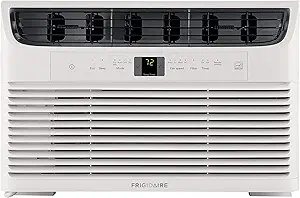
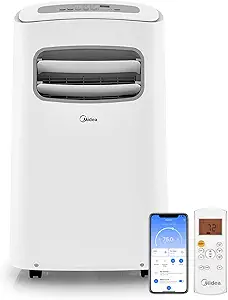
Frigidaire vs Midea: Overview
Comparing Frigidaire and Midea helps you determine which brand is best suited for your needs in Air Conditioners. Both brands offer strong choices depending on your budget and key feature requirements.
Key Features & Comparison
Evaluate factors such as build quality, warranty, customer satisfaction, and total value before making your final purchase choice between Frigidaire and Midea.
Customer Support & Warranty
When evaluating customer service ecosystems and warranty backing, Frigidaire operates under the well-established umbrella of Electrolux, offering consumers the logistical advantages of a mature North American distribution and service footprint. Most Frigidaire room air conditioners ship with a standard one-year limited warranty covering both parts and labor, backed by an extensive network of certified domestic repair technicians. Obtaining replacement components—such as washable air filters, side louvers, and electronic control boards—is generally straightforward through direct supply channels. However, consumer feedback indicates that navigating Frigidaire's automated phone systems and claim filing processes can occasionally lead to prolonged wait times, especially during the peak summer months when service calls spike.
Midea, despite its status as one of the largest original equipment manufacturers (OEMs) in global HVAC, historically relied on third-party logistical networks for customer engagement in the West, though it has significantly ramped up its direct consumer support infrastructure in recent years. Midea air conditioners generally include a standard one-year warranty, but higher-end flagship lines—notably the Midea U-shaped inverter units—frequently feature extended coverage, offering up to five to ten years of limited protection specifically on the inverter compressor. While Midea's digital support, warranty registration, and app-based troubleshooting are notably streamlined, users in remote or secondary markets may experience longer turnaround times for physical component replacements or on-site service compared to legacy domestic brands.
Energy Efficiency
Energy efficiency represents a primary battleground between these two manufacturers, with Midea holding a definitive technical advantage in variable-speed compressor engineering. Midea heavily integrates its proprietary Quattro Inverter technology across window, portable, and ductless split units, allowing the compressor to modulate its operating frequency dynamically rather than switching strictly on and off. Flagship models, such as the Midea U-Shaped window air conditioner, achieve remarkable efficiency ratings, often exceeding a Combined Energy Efficiency Ratio (CEER) of 15.0 and earning Energy Star Most Efficient recognition. This precise modulation slashes parasitic electrical draw, stabilizes indoor temperatures, and drastically reduces monthly utility expenses during sustained cooling cycles.
Frigidaire has made strong strides in energy conservation by incorporating inverter platforms into its premium Gallery and Cool Connect lineups, but its broader catalog remains largely populated by traditional rotary, single-stage compressors. Standard Frigidaire window and portable units regularly meet Energy Star benchmarks with CEER values typically hovering between 11.0 and 12.1. While these ratings are competitive for conventional units, the frequent cycling of single-stage compressors results in higher inrush current and overall energy consumption compared to variable-speed alternatives. For consumers focused on maximum operational savings and cutting-edge thermal efficiency, Midea’s architectural commitment to widespread inverter implementation delivers superior lifetime energy value.
Noise Level
Acoustic performance is heavily dictated by chassis design and mechanical architecture, an area where Midea has set an industry benchmark with its innovative U-shaped window platform. By isolating the noisy compressor and outdoor fan assembly behind the window pane using a physical acoustic barrier, Midea achieves operational sound levels as low as 32 to 42 decibels (dBA) in low-capacity modes. Coupled with smooth inverter modulation that eliminates the jarring click-and-hum cycles of traditional compressors, Midea units deliver an exceptionally quiet acoustic footprint that makes them exceptionally well-suited for bedrooms, home offices, and nursery installations.
Frigidaire manufactures durable units engineered with insulated acoustic dampening, but its traditional through-the-window and through-the-wall chassis layouts naturally transmit more operational noise indoors. While Frigidaire’s top-tier Gallery Quiet Temp models are purpose-built to operate below 45 dBA by utilizing advanced fan ducting and variable-speed fan motors, mainstream Frigidaire units typically operate within the 50 to 58 dBA range on medium-to-high fan speeds. The sound profile of standard Frigidaire models is characterized by a steady, consistent white noise and occasional mechanical clicks during compressor engagement, which, while reliable, cannot fully replicate the near-silent operational baseline of Midea’s physically separated inverter designs.
Cooling Performance
In raw thermal extraction and sensible cooling capability, Frigidaire delivers rapid, aggressive temperature pull-downs that perform exceptionally well in high-heat environments. Leveraging robust heat exchangers, optimized condenser coil geometry, and high-velocity blower wheels, Frigidaire air conditioners excel at circulating massive volumes of air (high CFM ratings) throughout large spaces. Units equipped with SpaceWise multi-directional louvers and supplemental supplemental modes—such as auto-defrost and rapid chill settings—swiftly bring stubborn, sun-baked rooms down to setpoint temperatures. However, because standard single-stage models oscillate between full blast and standby, users may observe a slight fluctuation of one to two degrees Fahrenheit around the target thermostat setting.
Midea approaches thermal regulation with a focus on stability, sustained dehumidification, and refined airflow distribution. While Midea units may have a slightly longer ramp-up time to reach the target temperature from a dead stop, their inverter compressors excel at maintaining an exceptionally tight temperature band within a fraction of a degree once at steady state. Furthermore, Midea’s advanced fan blade designs throw air up to 20 feet across living areas without generating turbulent wind draft. In terms of latent heat removal, Midea's steady, low-frequency operation continuously pulls ambient moisture from the air, preventing the clammy sensation that can occur when oversized traditional compressors cycle off too rapidly before sufficient humidity is extracted.