Yamaha vs Sonos: Overview
Comparing Yamaha and Sonos helps you determine which brand is best suited for your needs in Speakers. Both brands offer strong choices depending on your budget and key feature requirements.
Key Features & Comparison
Evaluate factors such as build quality, warranty, customer satisfaction, and total value before making your final purchase choice between Yamaha and Sonos.
Product Selection
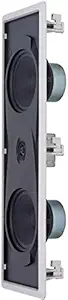
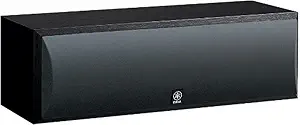
Yamaha boasts one of the most expansive and diversified audio catalogs in the consumer and professional electronics industries. Leveraging decades of acoustic engineering, their lineup ranges from budget-friendly entry-level soundbars and traditional wired bookshelf speakers to high-end audiophile tower speakers, professional studio monitors (such as the industry-standard HS series), and commercial-grade public address systems. Additionally, Yamaha supports whole-home streaming through its proprietary MusicCast ecosystem, which is integrated across AV receivers, standalone streaming speakers, and stereo amplifiers. This sheer breadth allows audio enthusiasts to configure fully bespoke, hybrid setups that bridge legacy analog hardware with modern multi-room networking capabilities.
Sonos, by contrast, operates with a highly focused, curated product portfolio engineered around wireless, lifestyle-oriented smart audio. Rather than offering component-based separates or passive speakers, Sonos specializes in all-in-one powered smart speakers (such as the Era 100 and Era 300), premium soundbars (Beam and Arc), wireless subwoofers, and architectural built-in speakers developed in partnership with Sonance. While their catalog is significantly smaller than Yamaha's, it is purpose-built to eliminate technical friction. Consumers looking for specialized professional gear or traditional passive 7.1.4 home theater setups with external receivers will find Sonos restrictive, but those seeking an elegant, modular wireless ecosystem will appreciate the deliberate, interconnected nature of their product line.
Affordability
When evaluated strictly on pricing flexibility and access to entry-level pricing tiers, Yamaha is comfortably the more affordable brand. Yamaha manufactures audio gear for virtually every budget tier, allowing cost-conscious buyers to purchase standalone soundbars, compact stereo speakers, or basic AV receivers for well under the cost of Sonos’s entry-level products. Furthermore, because Yamaha embraces passive speaker designs and open standards, buyers can incrementally upgrade individual system components over time or pair inexpensive speakers with existing third-party amplification, significantly lowering the total cost of ownership for custom home theater installations.
Sonos strictly positions itself in the premium-to-luxury consumer segment, rarely discounting hardware and commanding a substantial price premium. Because every Sonos speaker houses internal amplification, digital signal processing (DSP), and complex wireless networking hardware, the baseline cost of entry is inherently elevated. Constructing a complete multi-room system or a wireless 5.1.2 surround-sound setup using an Arc, Sub, and Era surrounds represents a substantial financial commitment compared to an equivalent component system anchored by an affordable Yamaha receiver. While Sonos delivers exceptional convenience and continuous software support that justifies its price tag for lifestyle buyers, Yamaha provides dramatically better value per dollar across entry and mid-range price brackets.
Quality/Durability
Yamaha's reputation for build quality and durability is deeply rooted in its storied manufacturing heritage, which encompasses traditional musical instruments and industrial audio equipment. Their physical construction—utilizing robust wooden MDF enclosures, heavy-gauge steel chassis, and industrial-grade internal power supplies—ensures that their passive speakers and AV receivers can easily operate reliably for decades. Because Yamaha’s traditional speakers do not rely on cloud servers or proprietary software protocols to function, their core utility remains entirely immune to software obsolescence, app discontinuation, or changes in wireless networking standards.
Sonos exhibits immaculate industrial design, modern aesthetics, and exceptional build precision, utilizing high-grade acoustic grilles, matte polycarbonate shells, and premium capacitive touch surfaces. However, durability in the Sonos ecosystem is inexorably tethered to software longevity, network architecture, and cloud services. While Sonos has established an industry-leading record for maintaining legacy hardware through long-term firmware updates, hardware longevity is ultimately constrained by memory, processing limits, and future software compatibility. Therefore, while both brands engineer physically resilient hardware capable of handling everyday wear, Yamaha offers superior functional permanence due to its mechanical independence from software lifecycles.
Sound Quality
Sound quality philosophies differ fundamentally between these two manufacturers, with Yamaha skewing toward flat, uncolored, and acoustically authentic reproduction. Emphasizing its 'True Sound' design ethos, Yamaha engineers its transducers and crossover networks to reproduce recordings as the artist and mixing engineer intended. In studio applications and high-fidelity stereo setups, Yamaha speakers offer superior mid-range transparency, pristine high-frequency detail, and expansive, natural soundstaging. When coupled with an AV receiver, Yamaha’s proprietary parametric acoustic optimization (YPAO) accurately corrects for room reflections, yielding a balanced, dynamic, and uncompressed sonic signature suitable for critical listening.
Sonos approaches sound quality through computational audio and advanced digital signal processing (DSP). Out of the box, Sonos speakers generally exhibit a warmer, more consumer-friendly frequency response with punchy, energetic low-end and crisp dialogue tuning. The brand's proprietary Trueplay tuning technology uses mobile microphones to actively remap frequency curves to counteract boundary reflections and poor room acoustics, which produces remarkably coherent and spacious output from relatively compact enclosures. However, while Sonos achieves impressive spatial immersion and Dolby Atmos processing in models like the Era 300, purists and audiophiles may find the aggressive digital limiting and processed soundstage less organic than Yamaha's naturally unconstrained, high-headroom acoustic designs.