JBL vs Klipsch: Overview & Brand Philosophy
In the high-stakes arena of loudspeaker manufacturing, few names carry the historical weight and technical pedigree of JBL and Klipsch. Founded by James B. Lansing in 1946, JBL (now a premier subsidiary of Harman International and Samsung Electronics) has spent decades operating as a dual-force titan. The brand serves both the professional sound reinforcement sector—powering recording studios, concert venues, and cinemas worldwide—and the modern consumer electronics market with ultra-popular portable Bluetooth speakers, soundbars, and lifestyle audio solutions. JBL’s design philosophy revolves around high output, wide horizontal dispersion, and acoustically neutral, science-backed tuning that emphasizes dynamic energy and visceral low-frequency impact.
Klipsch, established in 1946 by audio pioneer Paul W. Klipsch in Hope, Arkansas, represents an entirely distinct ideological foundation anchored in horn-loaded acoustic engineering. The brand operates on four bedrock principles: high efficiency with low distortion, controlled directivity, flat frequency response, and wide dynamic range. While JBL has diversified heavily into mainstream, lifestyle, and portable wireless audio, Klipsch remains deeply entrenched in traditional hi-fi, reference home theater, and architectural sound. Even within its lifestyle products and powered desktop monitors, Klipsch maintains an unapologetic commitment to vintage aesthetic heritage, high-sensitivity drivers, and an expressive, immediate sonic presentation.
Key Differences & Technological Comparison
The most foundational technical difference between the two manufacturers lies in their acoustic driver design. Klipsch is universally recognized for its proprietary Tractrix® Horn technology. By coupling compression drivers to engineered horn geometries, Klipsch loudspeakers maximize acoustic efficiency, allowing them to achieve deafening output levels with minimal amplifier power (often boasting sensitivity ratings above 95 dB @ 2.83V/1m). This controlled directivity reduces unwanted room reflections from walls and ceilings, delivering surgical imaging and exceptional vocal clarity. Complementing these horns are Klipsch's spun-copper Cerametallic™ or TCP (Thermoformed Crystalline Polymer) woofers, which combine high stiffness with low mass to minimize cone breakup during aggressive excursions.
Conversely, JBL utilizes a broader array of technological implementations across its diverse catalog. In its high-end consumer and architectural lines, JBL leverages High-Definition Imaging (HDI) waveguides paired with patented compression drivers, providing a wider "sweet spot" and smoother off-axis response than traditional horns. In the mass-consumer realm, JBL focuses heavily on digital signal processing (DSP), advanced passive radiator configurations, and rugged mechanical engineering. While Klipsch prioritizes mechanical acoustic amplification via horn loading, JBL frequently optimizes system performance through active electronic crossover management, dual-driver arrays, and robust IP67-rated waterproof enclosures engineered for extreme environmental durability.
Pros & Cons Comparison
JBL: Advantages
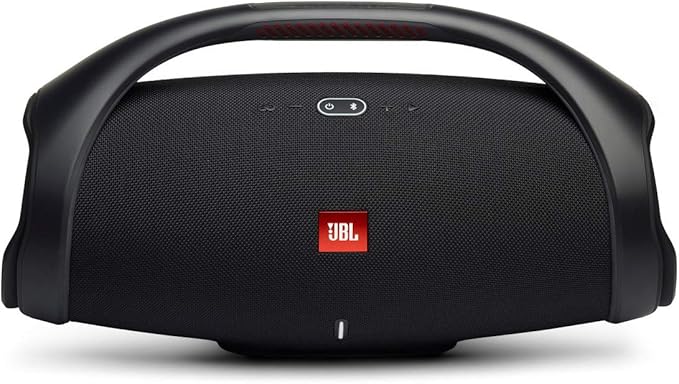
- Unmatched Versatility: Industry-leading selection ranging from ultra-rugged, waterproof portable speakers (Flip, Charge, Boombox) to high-end architectural and studio monitors.
- Broad Dispersion Sweet Spot: Waveguide technology delivers consistent sound across a wider listening area compared to traditional directional horns.
- Low-End Authority: Expertly tuned bass profiles with active DSP tuning that yield powerful, deep low-frequency extension without overwhelming the midrange.
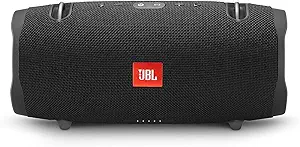
- Build Resilience: Consumer products feature best-in-class environmental protection (IP67 waterproofing, ruggedized fabric, and rubberized bumpers).
JBL: Disadvantages
- Mainstream Sound Tuning: Consumer tiers often feature a "fun" V-shaped sound signature that can sound artificially colored to classical and jazz purists.
- Ecosystem Fragmentation: Frequent changes in proprietary wireless pairing protocols (Connect+, PartyBoost, Auracast) often create backwards-compatibility issues between different hardware generations.
Klipsch: Advantages
- Extreme Efficiency: Ultra-high sensitivity ratings mean these speakers can effortlessly reach reference levels even with modest, low-wattage amplifiers or AV receivers.
- Dynamic Realism and Detail: Horn-loaded tweeters excel at micro-dynamics, transient speed, dialogue clarity, and cinematic attack.
- Iconic Industrial Design: Instantly recognizable aesthetic featuring real-wood veneers (in the Heritage lines) and striking spun-copper drivers.
- Low Distortion at High Volumes: Minimal cone and diaphragm excursion preserves signal purity during high-output playback.
Klipsch: Disadvantages
- Potential High-Frequency Fatigue: The forward, hyper-detailed treble can sound overly bright, analytical, or harsh in acoustically untreated rooms with hard surfaces.
- Narrower Off-Axis Coverage: Controlled horn directivity creates a narrower optimal listening position (sweet spot) compared to wide-dispersion dome tweeters.
Performance, Durability & Value Analysis
When assessing performance fidelity, the two brands cater to fundamentally different listening environments. Klipsch excels in dedicated indoor environments where acoustic energy and dynamic range are paramount. For multichannel home theater applications, a Klipsch Reference or Reference Premiere array delivers unmatched cinematic realism, producing razor-sharp transients and crisp, articulate dialogue that cuts through complex mixes. However, because of their hyper-resolving nature, poor source material or bright-sounding amplifiers can make them sound fatiguing over long sessions. JBL’s indoor speakers lean warmer, smoother, and more forgiving, offering balanced linearity that accommodates modern compressed streaming media effortlessly.
In terms of durability and long-term ownership value, both brands score exceptionally high, but in different arenas. Klipsch enclosures utilize rigid MDF construction, high-grade internal bracing, and premium binding posts designed to operate trouble-free for decades in living rooms and home cinemas. JBL dominates real-world physical resilience in the active lifestyle category, where its products routinely survive water submersion, sand, drops, and outdoor UV exposure. From an economic standpoint, Klipsch frequently offers exceptional value during seasonal retail sales on passive home theater packages, while JBL delivers the strongest price-to-performance ratio in the powered, portable, and party speaker sectors.
Final Verdict: Which Brand Should You Choose?
Your ultimate decision between JBL and Klipsch should be dictated by your intended primary use case, your listening environment, and your personal acoustic preferences:
Choose Klipsch if: You are assembling a dedicated home theater system, seeking reference-level audio efficiency, or building a classic stereo listening room. Klipsch is the definitive choice for audiophiles and cinephiles who crave dynamic punch, pinpoint imaging, high-frequency presence, and an iconic, mid-century or industrial design. If you want movies to sound like an authentic commercial cinema and listen primarily in treated, indoor spaces, Klipsch is unmatched in its price bracket.
Choose JBL if: You prioritize versatility, deep electronic bass response, wide-angle room coverage, or on-the-go durability. If you need a speaker that can survive outdoor pool parties, travel in a backpack, handle modern pop and hip-hop with warm low-end weight, or integrate seamlessly via smart wireless protocols, JBL remains the gold standard in modern consumer audio.
Product Selection
When evaluating product selection between Klipsch and JBL, consumers are presented with two distinctly different engineering philosophies that dictate their catalog breadth. Klipsch concentrates intensely on the high-fidelity and architectural audio spectrum, anchoring its portfolio in dedicated home theater, stereo listening, and custom installation. The Indianapolis-based brand is renowned for its proprietary horn-loaded engineering, which runs consistently through everything from entry-level Reference models to the ultra-premium, hand-built Heritage series like the Klipschorn and Heresy. While Klipsch has expanded into powered desktop monitors, soundbars, and a modest lineup of retro-styled portable Bluetooth speakers (the Heritage Groove and Three Plus), its selection remains purposefully tailored toward the critical listener and traditional home integrator seeking high acoustic efficiency, wide dynamic range, and distinctive copper-and-black aesthetics.
Conversely, JBL boasts one of the most sprawling and ubiquitous product catalogs in the global audio industry, spanning virtually every consumer and commercial category. Under the Harman International (Samsung) umbrella, JBL leverages massive technical R&D across three distinct tiers: ultra-durable lifestyle portables (ranging from the pocket-sized Clip to the massive PartyBox series), smart home audio, and high-performance architectural systems. Furthermore, its technical strengths encompass the revered JBL Synthesis and Classic lines, which offer studio-grade compression drivers and acoustic waveguides that rival Klipsch’s high-end stereo options. JBL’s mainstream dominance in IPX-rated waterproof Bluetooth speakers and true wireless electronics provides a tier of lifestyle versatility that Klipsch simply does not attempt to match.
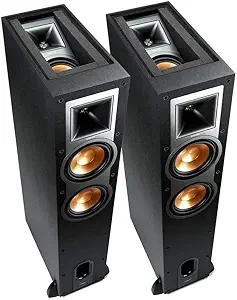
The practical trade-off between the two brands ultimately hinges on specialized home audio depth versus all-scenario ubiquity. Klipsch is the superior choice for buyers seeking deep, modular customization within home theater configurations, offering an exhaustive selection of timbre-matched floorstanding towers, Dolby Atmos toppers, and in-wall/in-ceiling architectural speakers driven by uniform high-efficiency acoustic design. On the other hand, JBL wins in pure market versatility; its engineering portfolio accommodates extreme outdoor environments, battery-powered live sound, smart ecosystem integration, and reference-grade studio monitoring within a single brand identity. For traditional hi-fi environments, Klipsch provides a more focused, unified lineup, whereas JBL offers an unmatched end-to-end selection covering every facet of modern active and residential listening.
Affordability
When assessing affordability in the speaker market, Klipsch and JBL pursue fundamentally different pricing architectures dictated by their manufacturing philosophies and target demographics. JBL holds a distinct advantage in baseline accessibility and entry-level value, primarily due to the vast manufacturing scale of its parent company, Harman International (a subsidiary of Samsung). JBL blankets the budget-to-midrange spectrum with ultra-affordable Bluetooth speakers like the Go and Flip series, as well as cost-effective home theater packages like the Stage lineup. This vertical integration allows JBL to engineer acoustic solutions that utilize cost-effective materials—such as injection-molded plastics, polycellulose drivers, and off-the-shelf class-D amplifiers—without sacrificing consumer-pleasing bass response or fundamental durability. Consequently, consumers on constrained budgets can achieve reliable, room-filling sound and modern feature suites (like IP67 waterproofing and robust app integration) at an entry-level price point that Klipsch simply does not target.
Klipsch, by contrast, operates with an aspirational pricing model centered on high-efficiency, horn-loaded transducers and premium acoustic engineering, placing its baseline price floor considerably higher than JBL's consumer tier. Even within Klipsch’s entry-level "Reference" series, the brand commands a premium due to proprietary technologies like the Tractrix horn and spun-copper TCP (thermoformed crystalline polymer) woofers, which require tighter acoustic engineering and higher-grade MDF cabinetry. While this increases the upfront capital expenditure for the buyer, Klipsch delivers superior long-term acoustic return on investment (ROI). Because Klipsch speakers boast exceptionally high sensitivity ratings (frequently exceeding 93dB @ 2.83V/1m), they demand significantly less electrical power to produce high-volume, dynamic output. This efficiency delivers a hidden economic trade-off: buyers can pair Klipsch enclosures with modest, inexpensive AV receivers or low-wattage amplifiers and still achieve audiophile-grade dynamics, whereas budget JBL speakers typically possess lower sensitivity and require more robust, costly amplification to perform at their acoustic peak.
Ultimately, the affordability trade-off centers on whether a consumer evaluates cost purely by initial purchase price or by overall component value and longevity. JBL decisively wins the battle of raw affordability across the portable, lifestyle, and entry-level home theater segments, making them the superior choice for buyers seeking immediate, high-utility audio performance with minimal financial risk. Klipsch, however, provides greater value retention and economic efficiency in traditional Hi-Fi setups. While Klipsch demands higher initial investment, frequent sales cycles on their Reference and Reference Premiere lines soften the blow, yielding superior cabinet rigidity, premium acoustic clarity, and minimal amplification requirements that justify the premium for serious home cinema and audio enthusiasts.
Quality/Durability
When assessing engineering architecture and build quality, Klipsch and JBL represent two distinct structural philosophies tailored to different acoustic environments. Klipsch champions traditional hi-fi craftsmanship, utilizing medium-density fiberboard (MDF) cabinets wrapped in tactile wood-grain vinyl, engineered bracing to eliminate internal resonance, and proprietary spun-copper Cerametallic or TCP (thermoformed crystalline polymer) woofers. Their iconic Tractrix horns are engineered to rigid tolerances, housing titanium or aluminum LTS (Linear Travel Suspension) tweeters that boast immense mechanical longevity due to their high efficiency and minimal excursion requirements. Conversely, JBL’s modern engineering spectrum is remarkably bifurcated between touring-grade enterprise hardware and ultra-rugged consumer portables. In their lifestyle and Bluetooth segment, JBL heavily integrates dense polycarbonate skeletons, dual-injection molded end-caps to absorb kinetic shock, and tightly woven, abrasion-resistant fabric grilles that withstand abrasive outdoor abuse, whereas their classic HDI and Studio lines leverage cast-aluminum frames, high-definition waveguide assemblies, and advanced PolyPlas cone drivers designed for prolonged, high-SPL thermal endurance.
From a durability and environmental resilience standpoint, JBL decisively dominates scenarios involving moisture, dust, and dynamic transit. The vast majority of JBL’s consumer portable speakers feature certified IP67 or IPX7 waterproof and dustproof ratings, meaning they can survive full submersion, direct drops onto hard surfaces, and UV exposure without sonic degradation or driver fatigue. In stark contrast, Klipsch builds primarily for stationary, indoor permanence. Aside from their specialized all-weather architectural lines, core Klipsch systems utilize passive wood composites that are inherently vulnerable to ambient humidity, physical gouging, and water damage. However, where Klipsch holds a technical durability advantage is in internal electronic longevity and thermal management: their ultra-high sensitivity ratings (often exceeding 95–98 dB @ 2.83V/1m) mean the drivers require significantly less electrical wattage to reach peak volumes, drastically minimizing voice-coil overheating, voice-coil warping, and long-term electrical fatigue compared to lower-efficiency acoustic designs.
Ultimately, the practical trade-off between the two brands hinges on intended application and deployment lifespan. Klipsch delivers superior generational longevity for dedicated listening rooms and home theaters, offering heavy, inert enclosures, mechanically resilient passive crossovers, and durable magnetic grilles that can easily operate for decades if maintained in climate-controlled spaces. On the other hand, JBL trades stationary heirloom construction for relentless real-world durability and survivability; their consumer units resist dropped impacts, fluid spills, and outdoor punishment that would permanently ruin a Klipsch cabinet, while their professional-derived studio monitors provide heavy-duty voice coils equipped with JBL's patented Vented Gap Cooling (VGC) technology designed to endure punishing commercial workloads without thermal breakdown.
Sound Quality
When evaluating sound quality, the divergence between Klipsch and JBL lies in their foundational acoustic philosophies: Klipsch champions hyper-efficient, high-impact dynamic realism, while JBL relies on rigorous psychoacoustic research to deliver a balanced, broadly appealing Harman target curve. Klipsch achieves its signature sound through proprietary Tractrix horn-loaded titanium or aluminum tweeters paired with high-rigidity Cerametallic woofers. This engineering creates an ultra-fast transient response, pinpoint stereo imaging, and class-leading sensitivity that extracts micro-detail with live-performance intensity. In contrast, JBL—under the Harman umbrella—utilizes high-performance compression drivers with High-Definition Imaging (HDI) waveguides in its premium lines and optimized dynamic drivers in its consumer gear, prioritizing low-distortion linear dispersion and smooth off-axis response over sheer acoustic aggression.
The practical trade-offs of these distinct acoustic profiles manifest heavily in listening fatigue and source material pairing. Klipsch speakers deliver unmatched clarity and visceral punch, making them the gold standard for dynamic cinema soundtracks and complex acoustic or rock recordings where brass and percussion snap with authority. However, their bright, forward-leaning treble can border on fatiguing or harsh, particularly when paired with lower-quality digital streams or analytical solid-state amplification in untreated, reflective rooms. JBL presents a warmer, more universally forgiving acoustic signature anchored by robust, controlled low-end authority and a coherent midrange. While high-end JBL studio monitors and HDI speakers compete toe-to-toe with Klipsch on detail retrieval, JBL's mainstream consumer offerings often prioritize a punchy, consumer-tuned V-shaped sound that lacks the precise top-end articulation and micro-dynamics found natively across Klipsch’s catalog.
Ultimately, your choice in sound quality depends on whether you value explosive dynamic presence or balanced, non-fatiguing versatility. Audiophiles and home theater enthusiasts seeking pristine instrument separation, crystal-clear dialogue intelligibility, and high acoustic output with minimal amplifier strain will find Klipsch acoustically superior. Conversely, listeners seeking a more forgiving, room-filling sound with a richer bass floor—ideal for modern electronic production, pop genres, and prolonged multi-room or casual listening sessions—will prefer the smooth, scientifically balanced tuning of JBL.