Sony vs JBL: Overview
Comparing Sony and JBL helps you determine which brand is best suited for your needs in Speakers. Both brands offer strong choices depending on your budget and key feature requirements.
Key Features & Comparison
Evaluate factors such as build quality, warranty, customer satisfaction, and total value before making your final purchase choice between Sony and JBL.
Product Selection
Sony and JBL approach product selection from fundamentally different foundational philosophies, resulting in portfolios tailored to distinct consumer ecosystems. JBL, backed by Harman International, boasts one of the most exhaustive speaker catalogs in the consumer audio industry. Their portfolio spans hyper-portable micro-units like the JBL Go and Clip series, cylindrical outdoor staples such as the Flip and Charge, immense party rigs within the PartyBox series, high-performance Wi-Fi smart speakers like the Authentics line, and architectural soundbars. JBL’s selection strategy prioritizes modularity, portability, and situational versatility, offering consumers highly granular choices in form factor, battery capacity, and volume output for virtually any mobile or leisure environment.
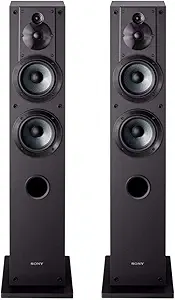
Sony counters this with an ecosystem-centric strategy that emphasizes technical specialization over pure unit variation. While Sony maintains a footprint across portable Bluetooth speakers with its ULT and XB lines, its portfolio stretches deeper into high-fidelity consumer niches, premium architectural home theater, and lifestyle audio innovation. Sony differentiates its catalog with multi-channel home audio configurations like the HT-A series soundbars, 360 Reality Audio tabletop speakers, neckband personal theater speakers, and hybrid glass sound lanterns. While JBL offers a superior gradient of outdoor, party, and rugged lifestyle speakers, Sony provides a more sophisticated spectrum connecting portable audio directly to living room cinema and high-resolution personal listening ecosystems.
Affordability
When examining affordability across entry-level and mid-range tiers, JBL consistently provides superior cost-to-performance metrics. By streamlining its portable lineup around rugged materials, passive radiators, and high-efficiency class-D amplification, JBL minimizes manufacturing overhead and passes the savings to consumers. Buyers looking for capable sub-$100 or sub-$50 speakers will find mature options in JBL's Clip and Go lines that deliver reliable acoustic pressure and weatherproofing without inflated brand premiums. Furthermore, JBL frequently discounts legacy models (such as previous-generation Flips and Charges), creating an accessible secondary tier of high-value hardware that dominates the budget-conscious market.
Sony’s pricing architecture reflects its focus on proprietary digital signal processing, advanced codec support, and premium materials, which generally shifts its entry-level baseline higher than JBL's. While Sony offers compact units like the SRS-XB100 to compete in the sub-$60 segment, the bulk of its flagship portable and home speakers demand a distinct pricing premium. Consumers purchasing Sony are typically paying for advanced onboard features—such as LDAC decoding, integrated microphones with echo cancellation, and complex companion app equalization—which inflates MSRPs compared to equivalent-output JBL devices. Consequently, JBL represents the pragmatic choice for budget-constrained buyers prioritizing raw acoustic volume per dollar, whereas Sony appeals to those willing to absorb higher costs for technological versatility.
Quality/Durability
JBL has cemented its reputation on virtually indestructible industrial design, engineering its portable speakers to endure severe physical and environmental stress. The brand predominantly employs high-durability woven fabric grilles, thick TPU bumpers, and sealed silicone ports, ensuring that the majority of its outdoor models carry stringent IP67 ratings for complete dust-tightness and water immersion. In technical stress scenarios, JBL enclosures absorb mechanical impacts and drop shock remarkably well, making them ideal for beaches, campsites, and poolside environments. The physical controls are embossed, tactile, and resilient against dirt ingress, solidifying JBL as the benchmark for rugged, throw-in-a-backpack durability.
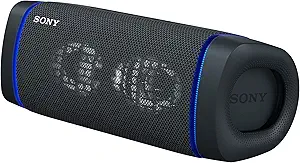
Sony approaches build quality with an emphasis on refined industrial aesthetics, structural rigidity, and premium tactile finishes. While Sony has increasingly integrated IP67 ratings, shockproof engineering, and rustproof coatings into outdoor lines like the ULT Field series, its design language generally leans toward sleek, modern living spaces. The brand frequently utilizes specialized matte polymers, integrated ambient lighting, and delicate passive radiator accents that can show scuffs and cosmetic wear more readily than JBL's ruggedized fabric wraps. Internally, Sony’s build quality shines in component isolation, high-grade acoustic dampening, and advanced thermal management, offering structural longevity and refined engineering suited for multi-purpose home and travel duty rather than pure physical abuse.
Sound Quality
JBL’s acoustic signature is engineered to adhere closely to the Harman Target Curve, delivering a vibrant, energetic, and highly dynamic sound profile that thrives in outdoor and social settings. The acoustic design typically pairs proprietary dynamic transducers with dual opposing passive radiators to maximize low-frequency punch without inducing cabinet distortion. This tuning emphasizes punchy sub-bass, clean lower-mid separation, and elevated upper treble to ensure vocals and kick drums cut through ambient background noise. However, this tuning can occasionally exhibit high-frequency sibilance at maximum volumes, and the lack of high-resolution Bluetooth codecs (such as aptX or LDAC) on standard models limits the micro-detail retrieval critical for critical audiophile listening.
Sony delivers a warmer, more nuanced, and technically sophisticated soundstage, driven by custom-engineered non-circular speaker diaphragms (X-Balanced Speaker Units) and proprietary DSP. Sony’s sound quality excels in low-end depth and midrange naturalism, offering full-bodied bass that feels resonant rather than purely punchy. A major technical advantage for Sony is the native integration of the LDAC codec, which streams high-resolution audio up to 990 kbps—substantially outperforming JBL's standard SBC/AAC limitations. Coupled with DSEE upscaling technology and granular multi-band EQ within the Sony Headphones/Music Center apps, Sony provides a superior platform for audiophiles and detail-oriented listeners seeking precision imaging, instrumental separation, and customizable acoustic fidelity.
Compare current retail pricing, active promotions, and verified stock availability directly from authorized stores: