Yamaha vs JBL: Overview
Comparing Yamaha and JBL helps you determine which brand is best suited for your needs in Speakers. Both brands offer strong choices depending on your budget and key feature requirements.
Key Features & Comparison
Evaluate factors such as build quality, warranty, customer satisfaction, and total value before making your final purchase choice between Yamaha and JBL.
Product Selection
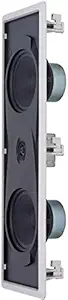
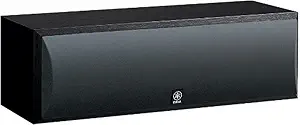
Yamaha and JBL both boast expansive catalogs, yet they orient their product portfolios toward distinct consumer demographics and use cases. Yamaha’s speaker selection leans heavily into home audio, professional studio monitoring, and multi-room ecosystem integration. The Japanese brand is particularly revered for its passive and active bookshelf speakers, high-end floorstanding units, architectural in-wall speakers, and the renowned HS series studio monitors. Additionally, Yamaha leverages its MusicCast multi-room technology across a wide swath of its AV receivers, soundbars, and wireless speakers, providing a unified network architecture tailored for dedicated listening rooms, home theaters, and professional recording spaces.
Conversely, JBL maintains a broader lifestyle footprint, dominating the consumer portable market while simultaneously running a robust professional division via JBL Professional and high-end home audio via JBL Synthesis. From compact waterproof Bluetooth speakers like the Flip and Charge series to massive party speakers like the PartyBox line, JBL covers immediate consumer recreation better than almost any competitor. While they also engineer reference-grade studio monitors and luxury architectural systems, JBL's market volume and consumer awareness heavily center around battery-powered, rugged, and highly mobile sound systems, giving them superior versatility across casual, outdoor, and commercial entertainment sectors.
Affordability
When analyzing pricing structures, JBL offers significantly lower barriers to entry for the general consumer. Their portable Bluetooth speaker lineup spans a wide range of accessible price points, frequently featuring models under one hundred dollars that deliver substantial volume and features. JBL achieves competitive pricing through aggressive supply chain scale and strategic material choices, frequently running promotions that undercut legacy hi-fi brands. While high-end offerings like the JBL Synthesis or classic retro reissue speakers demand thousands of dollars, the vast majority of consumer-facing JBL products are engineered to fit casual, price-sensitive budgets without compromising on baseline functionality.
Yamaha typically positions its catalog in the mid-to-premium pricing tier, with fewer options at the ultra-budget end of the spectrum. Even Yamaha’s entry-level bookshelf speakers and soundbars reflect component-grade manufacturing and integrated processing, which naturally elevates their baseline retail pricing. Rather than competing in the ultra-cheap portable space, Yamaha targets consumers who view audio equipment as long-term home investments. While this results in higher upfront costs for full stereo pairs or surround sound arrays, Yamaha delivers strong value retention, durable component construction, and advanced acoustic technologies that justify the higher capital outlay for dedicated audiophiles.
Quality/Durability
In terms of build quality and mechanical durability, Yamaha excels in traditional cabinet design, internal damping, and acoustic structural integrity. Yamaha’s heritage in musical instrument manufacturing directly informs its speaker construction, which often features heavy, multi-braced MDF enclosures, premium piano-black lacquer finishes, and meticulously assembled cross-over networks. These speakers are engineered for static environments where structural rigidity, thermal dissipation in amplifiers, and the prevention of micro-vibrations take precedence over impact resistance, resulting in hardware that can easily last decades with minimal component degradation.
JBL, by contrast, takes a bifurcated approach to durability that emphasizes rugged, real-world survivability in consumer lines and heavy-duty tour-grade construction in commercial products. The brand's portable speakers feature high-grade silicone bumpers, ruggedized polymer chassis, and robust IP67 water and dust resistance ratings that allow them to endure drops, sand, and submersion without mechanical failure. For their high-end and professional gear, JBL relies on robust cast-aluminum transducer frames and durable cast-enclosures designed for road-ready abuse, making their products inherently more resilient against physical trauma and outdoor environmental stressors than Yamaha's stationary enclosures.
Sound Quality
Yamaha’s acoustic philosophy is defined by their 'Natural Sound' design concept, which prioritizes neutral frequency reproduction, precise imaging, and acoustic fidelity. Yamaha speakers generally deliver transparent, highly detailed midrange and crisp, extended treble, making them an industry benchmark for mixing, mastering, and critical acoustic listening. Bass response is typically tightly controlled and articulate rather than artificially boomy, which rewards well-mastered audio sources but may feel lean to casual listeners seeking visceral low-end rumble without the assistance of a dedicated external subwoofer.
JBL’s sonic signature, famously embodied in the Harman Target Curve, favors an energetic, dynamic, and engaging sound profile characterized by punchy low-end impact and clear, crisp highs. Consumer models excel at delivering deep, tactile bass that holds up well in noisy outdoor environments or party atmospheres, though sometimes at the expense of midrange neutrality. Even in JBL's high-end studio and horn-loaded loudspeakers, there is a pronounced emphasis on dynamic efficiency, transient speed, and wide sound dispersion, offering a vibrant, live-concert presentation compared to Yamaha’s more analytical, uncolored, and studio-accurate presentation.