SVS vs Sonos: Overview
Comparing SVS and Sonos helps you determine which brand is best suited for your needs in Speakers. Both brands offer strong choices depending on your budget and key feature requirements.
Key Features & Comparison
Evaluate factors such as build quality, warranty, customer satisfaction, and total value before making your final purchase choice between SVS and Sonos.
Product Selection
SVS and Sonos approach their product catalogs from radically different audio philosophies, each tailored to distinct listening environments and customer priorities. SVS is deeply rooted in the traditional high-performance audio and home theater domain, offering an extensive selection of passive tower speakers, bookshelf monitors, center channels, surround channels, and their industry-renowned powered subwoofers. Their lineup spans multiple specialized tiers, from the entry-level Prime series to the flagship Ultra Evolution line, catering specifically to modular multi-channel setups and dedicated listening rooms where discrete amplification and customized placement are paramount.
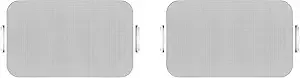
Sonos, by contrast, focuses entirely on an integrated, smart multi-room audio ecosystem dominated by active wireless speakers, soundbars, architectural solutions, and portable units. Rather than selling individual drivers meant for third-party amplification, Sonos structures its catalog around connected lifestyle devices like the Era 100, Era 300, Arc Ultra soundbar, and portable Roam and Move lines. While Sonos does offer passive architectural drivers through a partnership with Sonance and network amplifiers like the Sonos Amp, their selection is intentionally engineered to eliminate the complexity of separate AV receivers, speaker wire, and manual calibration, prioritizing seamless household coverage over component-level customization.
Affordability
When analyzing affordability, the financial entry point and total cost of ownership present distinct trade-offs between the two brands. Sonos generally offers lower barrier-to-entry pricing on an individual unit basis, with standalone smart speakers beginning around the low hundreds of dollars. Because Sonos products integrate the digital-to-analog converter (DAC), streaming chipsets, amplification, and acoustic enclosures into a single chassis, consumers avoid the hidden costs of auxiliary electronics. However, outfitting an entire residence or building an immersive Dolby Atmos soundbar-plus-surround-and-subwoofer system with Sonos components quickly scales into thousands of dollars, without the option to reuse older legacy gear.
SVS operates at a fundamentally higher baseline price point, reflecting its audiophile-grade acoustic engineering and heavy-duty materials. A single high-end SVS subwoofer or pair of Ultra Evolution floorstanding speakers often matches or exceeds the cost of a complete multi-room Sonos setup. Furthermore, purchasing SVS passive speakers mandates investment in an AV receiver, integrated amplifier, or power amplification, alongside premium speaker cabling. Nonetheless, SVS provides exceptional price-to-performance value within the dedicated Hi-Fi category, frequently outperforming boutique audiophile brands costing twice as much, and their direct-to-consumer model includes perks like the 45-day in-home trial and trade-up programs that protect long-term financial investment.
Quality/Durability
The physical build quality and structural durability of SVS products are engineered to withstand extreme mechanical stress and acoustic resonance. SVS cabinets are constructed using dense, acoustically inert medium-density fiberboard (MDF) reinforced with extensive internal bracing, massive motor assemblies, and thick cast-aluminum baskets for drivers. Their subwoofers employ proprietary Sledge DSP amplifiers with discrete MOSFET outputs that run cool and reliably over decades of rigorous use. Because passive speakers contain no software stacks or wireless radios, SVS drivers and passive crossovers remain virtually immune to technological obsolescence, ensuring a functional lifespan that can easily span twenty to thirty years with proper maintenance.
Sonos exhibits stellar consumer-electronics industrial design, featuring sleek, minimalist aesthetics, precision-molded polymers, and touch-sensitive capacitive controls that blend seamlessly into modern interiors. Structurally, Sonos hardware is robust, and their portable outdoor units carry certified IP water- and dust-resistance ratings. However, the operational durability of Sonos is intrinsically tethered to software, networking protocols, and cloud infrastructure. Over time, firmware updates, app revisions, and evolving wireless networking standards can impact the longevity of older units, making them more vulnerable to digital obsolescence than the traditional, hardwired, electro-mechanical hardware manufactured by SVS.
Sound Quality
In terms of pure acoustic fidelity, SVS delivers an uncompromised, reference-grade performance characterized by massive dynamic headroom, ultra-low distortion, and exceptional low-frequency extension. SVS subwoofers are capable of producing visceral, subterranean bass below 16 Hz with precise transient control, making them a benchmark for home cinema realism. Their high-tier speakers incorporate acoustically centered time-aligned driver arrays and diamond-coated aluminum dome tweeters that resolve intricate spatial details, deliver expansive soundstages, and preserve the original dynamic contrast of high-resolution source material without artificial compression.
Sonos delivers an impressive, DSP-optimized acoustic profile engineered for widespread consumer enjoyment and broad dispersion rather than strict audiophile neutrality. Using sophisticated digital processing, proprietary compression algorithms, and Trueplay acoustic room-tuning, Sonos speakers generate a surprisingly full, balanced, and room-filling sound that punches well above their compact physical footprints. While models like the Era 300 excel at rendering immersive spatial audio and soundbars like the Arc render dialogue with pristine clarity, they fundamentally lack the absolute physical scale, effortless slam, deep low-end extension, and nuanced micro-dynamics inherent to the larger, discrete enclosures and dedicated power supplies found in SVS systems.