JBL vs Sonos: Overview & Brand Philosophy
In the modern audio landscape, few names carry as much weight or represent such vastly different design philosophies as JBL and Sonos. JBL, a subsidiary of Harman International (itself owned by Samsung), traces its heritage back to the golden era of American acoustic engineering. Founded by James B. Lansing in 1946, JBL has long been synonymous with concert-grade sound reinforcement, professional studio monitoring, and, more recently, rugged consumer lifestyle audio. JBL’s brand ethos centers on high-output performance, accessible price points, and extreme physical durability, making high-energy music accessible whether you are in your living room, on a hiking trail, or hosting an outdoor gathering.
Conversely, Sonos pioneered the modern smart speaker category when it was founded in 2002 with a singular, revolutionary vision: reinventing home audio for the digital streaming age. Based in Santa Barbara, California, Sonos focuses on premium, whole-home audio environments powered by sophisticated multi-room software integration. The Sonos philosophy treats sound not just as an acoustic output, but as a seamlessly orchestrated domestic utility. Rather than designing for off-grid adventures, Sonos creates minimalist, architectural speakers intended to blend into interior decor while providing an uncompromising, high-fidelity wireless network throughout every room in a residence.
Ultimately, this comparison is not merely about which brand produces better sound, but about how and where you listen. JBL dominates active, mobile, and bass-forward lifestyle applications, prioritizing plug-and-play simplicity and bulletproof construction. Sonos commands the high-end residential ecosystem, emphasizing clean acoustic transparency, unified multi-room Wi-Fi streaming, advanced room-calibration algorithms, and home theater integration.
Key Differences & Technological Comparison
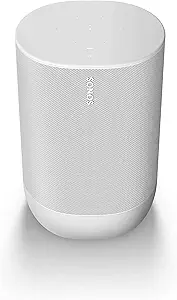
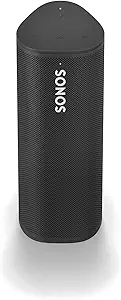
The foundational difference between JBL and Sonos lies in their connectivity architecture. JBL primarily builds on direct Bluetooth connectivity (often leveraging Bluetooth 5.1 through 5.4), alongside proprietary ecosystem protocols such as PartyBoost and the newer Auracast-enabled JBL PartyConnect. These allow users to link dozens of JBL speakers together locally without an internet connection. In contrast, Sonos is fundamentally a Wi-Fi-first platform. While portable Sonos models like the Roam and Move 2 feature Bluetooth fallbacks, the hardware is fundamentally engineered to pull uncompressed streams directly from cloud servers over local Wi-Fi, bypassing the bandwidth limitations, compression artifacts, and phone-notification interruptions typical of standard Bluetooth playback.
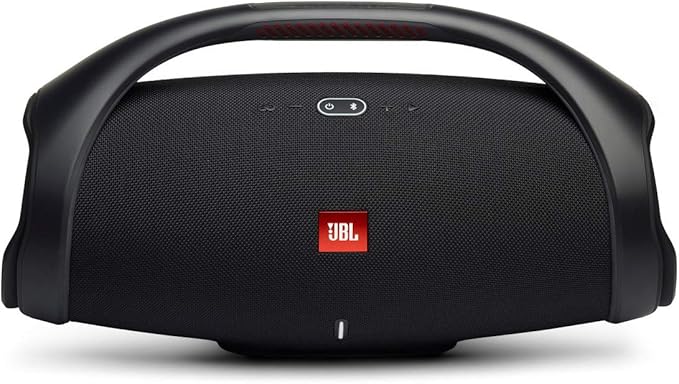
Acoustic design and sound signatures reflect these divergent applications. JBL targets a high-energy, crowd-pleasing V-shaped frequency response, defined by punchy sub-bass, resilient midrange articulation, and crisp highs capable of cutting through ambient outdoor noise. Many of their portable models feature dual external passive radiators that visibly pulse with low-frequency transients. Sonos prioritizes an acoustically neutral, audiophile-adjacent soundstage. Utilizing custom elliptical woofers, angled tweeters, and Class-D digital amplifiers tuned with DSP (Digital Signal Processing), Sonos products aim for flat, accurate reproduction across genres, preserving subtle dynamic range and spatial separation.
Software and calibration represent another major divergence. Sonos has set the industry standard with its proprietary Trueplay tuning software, which uses either an iOS device's microphone or the speaker’s onboard far-field arrays to map room acoustics and dynamically alter equalization curves based on wall reflections and furniture absorption. JBL offers user-friendly companion apps (such as JBL Portable and JBL One) with standard multi-band graphic EQs, but lacks the sophisticated architectural room-correction intelligence that elevates Sonos in complex domestic spaces.
When it comes to hardware construction, JBL designs with the elements in mind. The vast majority of its consumer portable lineup features IP67 or IP68 ratings, meaning they are completely dust-tight and can survive full submersion in water, wrapped in heavy-duty woven acoustic fabric and shock-absorbing rubberized endcaps. Sonos adopts an architectural design language—matte finishes in monochrome black or white with precision-drilled polycarbonate grilles. While models like the Sonos Move 2 feature weather resistance (IP56), Sonos units are generally meant to live safely indoors or on covered patios rather than being tossed into a backpack or poolside sand.
Pros & Cons Comparison
JBL: Pros
- Exceptional Durability: Rugged, shock-resistant designs boasting comprehensive IP67 dustproof and waterproof ratings across nearly all portable tiers.
- Unmatched Portability: Outstanding battery life with built-in power banks on select models (Charge and Boombox series) to charge mobile devices.
- High Dynamic Output: Punchy, bass-forward sound signature engineered to perform exceptionally well in open-air environments and at high volumes.
- Value Accessibility: Wide product portfolio ranging from budget clip-ons under $50 to massive battery-powered PA systems.
- Off-Grid Linking: Seamlessly daisy-chain multiple units using PartyBoost or Auracast without needing an active Wi-Fi network.
JBL: Cons
- Limited Home Ecosystem: Does not offer a cohesive, unified multi-room Wi-Fi infrastructure comparable to Sonos.
- Less Acoustically Neutral: Heavy emphasis on low-end frequencies can muddy delicate acoustic or vocal-centric tracks at lower volumes.
- Bluetooth Compression: Primary reliance on Bluetooth means playback quality is subject to standard codec compression constraints.
Sonos: Pros
- Industry-Leading Multi-Room Platform: Rock-solid, whole-home audio synchronization over Wi-Fi controlled effortlessly via the Sonos App.
- Trueplay Acoustic Calibration: Automatically tunes output based on room dimensions, surface materials, and placement.
- Home Theater Expandability: Soundbars (Arc, Beam) can be seamlessly integrated with dedicated subwoofers and satellite surrounds for true Dolby Atmos setups.
- Refined, Balanced Sound: Neutral, highly detailed tuning designed for critical indoor listening across broad acoustic genres.
- Universal Streaming Integration: Directly streams high-resolution formats via Apple AirPlay 2, Spotify Connect, Tidal, and dozens of cloud radio services.
Sonos: Cons
- Premium Price Barrier: High initial entry cost, with accessories (like dedicated wall mounts and subwoofers) carrying significant price tags.
- App Dependency: The ecosystem depends heavily on the Sonos mobile app; software redesigns or network glitches can disrupt playback.
- Reduced Outdoor Utility: Even portable units (Move 2, Roam) are bulkier, more delicate, and carry lower ingress protection ratings than JBL alternatives.
Performance, Durability & Value Analysis
From an acoustic endurance and physical durability standpoint, JBL offers industry-leading resilience. In real-world testing, JBL portable speakers consistently survive extreme physical abuse: accidental drops onto concrete, prolonged exposure to UV rays, salt water, and fine sand. The internal lithium-ion battery architecture in JBL devices is remarkably robust, retaining significant charge retention cycles over years of regular, unconditioned outdoor use. For the user who needs reliable sound on a boat, at a construction site, or by the pool, JBL delivers exceptional durability-per-dollar that Sonos simply does not aim to match.
Conversely, Sonos delivers value through lifecycle longevity, continuous software feature expansion, and modular scalability. A Sonos speaker purchased today will receive regular over-the-air firmware updates that optimize DSP curves, patch security protocols, and integrate new streaming codecs for years to come. While a Sonos setup represents a substantially higher up-front capital investment, its financial value is realized through its modular nature: you can begin with a single Sonos Era 100 in the kitchen, add a Beam soundbar to the living room a year later, and subsequently integrate an Era 300 surround pair without rendering previous purchases obsolete. Sonos products hold secondary-market resale value far better than most consumer audio hardware, reflecting their status as true home audio fixtures.
Final Verdict: Which Brand Should You Choose?
Your choice between JBL and Sonos ultimately hinges on where your audio lifestyle lives—inside the home or out in the world.
Choose JBL if:
- Your listening habits are social, dynamic, and mobile.
- You need high-output, bass-forward sound that can easily overpower environmental noise outside.
- You want an indestructible speaker that can handle water, dirt, drops, and travel without hesitation.
- You are operating on a specific budget and want the best price-to-performance ratio for personal audio.
Choose Sonos if:
- You want an integrated, high-fidelity wireless sound system distributed across several rooms in your house.
- You are building a consolidated living room home theater setup that can also play high-resolution streaming music.
- You value audio neutrality, detail clarity, and automated acoustic calibration that optimizes itself to your home's layout.
- You are willing to invest in a premium, future-proof ecosystem controlled seamlessly via your home Wi-Fi network.
Product Selection
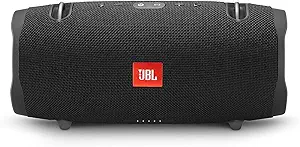
When evaluating product selection, JBL and Sonos represent two fundamentally different product philosophies, with JBL prioritizing ubiquitous variety and lifestyle versatility, while Sonos adheres to a focused, deeply integrated ecosystem. JBL’s catalog is expansive and fragmented in the best way possible, spanning hyper-portable micro-units like the Clip and GO series, rugged outdoor workhorses like the Charge and Xtreme, dedicated maritime-grade marine hardware, high-SPL party speakers with integrated light shows, and high-fidelity home theater gear under its Synthesis line. From an engineering and component standpoint, JBL provides a direct match for virtually any physical environment, budget, or form-factor requirement. Sonos, conversely, intentionally curates a compact portfolio composed of core home theater anchors (Arc, Beam, Ray), multi-room ambient speakers (Era 100, Era 300), modular architectural units, and select hybrid portables (Move 2, Roam). The trade-off is stark: JBL offers an overwhelming breadth of specialized acoustic form factors, whereas Sonos designs a limited, cohesive continuum where nearly every product communicates over the same unified home network.
From a technical and feature-set perspective, this divergence directly influences how each brand approaches connectivity and acoustic design. JBL’s vast selection leans aggressively into standalone, battery-powered durability, frequently integrating high IP67 water and dust ingress ratings, ruggedized rubberized housing, and peer-to-peer ad-hoc chaining through Bluetooth protocols like Auracast and PartyBoost. Sonos, however, engineers its hardware selection around network topology and computational audio. Rather than offering fifty discrete models for unique niches, Sonos develops fewer models equipped with advanced system-on-a-chip (SoC) architectures, far-field beamforming microphone arrays, Trueplay spatial calibration, and multi-channel Dolby Atmos compatibility. While JBL dominates in choices regarding analog I/O, microphone inputs, passive-radiator tuning, and extreme output capabilities, Sonos dominates in seamless synchronous multi-room Wi-Fi streaming, cloud integration, and cross-generational software backward compatibility.
Ultimately, the practical trade-off between the two brands centers on whether a consumer prioritizes physical deployment flexibility or digital ecosystem coherence. Consumers seeking speakers for specialized, rugged, or on-the-go applications—such as camping, tailgating, or poolside utility—benefit immensely from JBL’s broad catalog, which guarantees an exact match for battery life, durability, and acoustic throw without forcing the buyer to overpay for unneeded smart infrastructure. However, JBL’s product sprawl introduces consumer confusion, rapid product obsolescence cycles, and fractured compatibility between older and newer models. On the other hand, Sonos’s refined, premium selection virtually eliminates buyer friction for indoor home audio, offering a modular, future-proof framework where products seamlessly complement one another, albeit at a significantly higher barrier to entry and with far less freedom to venture outside the home Wi-Fi footprint.
Affordability
When evaluating affordability in the speaker category, JBL and Sonos represent two fundamentally distinct pricing models and engineering philosophies. JBL focuses on high-volume, accessible consumer audio, offering a vast spectrum of products that span from ultra-budget clip-on units like the JBL Go to moderately priced party speakers and entry-level home soundbars. In contrast, Sonos positions itself exclusively as an aspirational, premium multi-room audio ecosystem. The financial barrier to entry for Sonos is considerably higher; even its most accessible portable speaker, the Sonos Roam, is priced at a tier where JBL offers significantly larger, louder, and more acoustically potent options like the Charge or Xtreme series. From a pure hardware-per-dollar perspective, JBL decisively wins on accessible pricing, allowing consumers to achieve high-output sound, rugged IP67-rated durability, and prolonged battery life at a fraction of the cost required to enter the Sonos ecosystem.
However, true affordability must be weighed against long-term ecosystem value, firmware support, and functional versatility. Sonos justifies its premium price tag through sophisticated engineering that integrates Wi-Fi streaming, Apple AirPlay 2, voice assistant capabilities, and proprietary Trueplay room-tuning software. A single Sonos speaker is designed as a long-term investment, receiving architectural software updates for upwards of a decade and seamlessly expanding into a whole-home audio network without requiring a hardware overhaul. JBL’s more affordable Bluetooth-centric models trade this advanced network infrastructure and long-term modular scalability for straightforward, hardware-driven utility and ruggedization. While JBL incorporates proprietary linking technologies like PartyBoost or Auracast, these lack the seamless centralized network intelligence of the Sonos app, occasionally leaving users with obsolete daisy-chaining protocols across different JBL hardware generations.
Ultimately, the practical trade-off centers on whether a buyer prioritizes low upfront acquisition costs or integrated multi-room longevity. JBL delivers exceptional transactional affordability, making it the superior choice for budget-conscious consumers, outdoor enthusiasts, and casual listeners who want maximum acoustic output and physical resilience per dollar spent without software dependencies. Sonos, conversely, offers a lower value in initial affordability but provides high compositional value for home-focused audiophiles willing to absorb steep upfront costs in exchange for architectural audio fidelity, unified home automation, and an interconnected system that resists rapid obsolescence.
Quality/Durability
When evaluating build quality and durability, JBL and Sonos approach engineering from fundamentally different philosophies, each optimized for distinct operational environments. JBL has established itself as an industry benchmark for ruggedized physical endurance, utilizing dense polycarbonate skeletons wrapped in resilient, tightly woven acoustic fabric and reinforced with heavy-duty shock-absorbing rubber endcaps. The brand heavily prioritizes outdoor survivability, designing speakers like the Charge, Flip, and Boombox series to withstand drops, impacts, and abrasive debris. Most of JBL’s portable lineup boasts robust IP67 or IP68 ratings, certifying them as entirely dust-tight and capable of complete submersion in water. Internally, JBL employs ruggedized, high-excursion transducers with treated surrounds engineered to endure the physical rigors of high-volume playback in shifting thermal conditions, making them nearly indestructible under standard consumer misuse.
Conversely, Sonos champions precision engineering and acoustic refinement, designing speakers that excel in indoor longevity rather than outdoor resilience. Sonos hardware features ultra-precise tooling, seamless, micro-perforated polycarbonate grilles, and an understated, minimalist aesthetic that integrates into sophisticated interior decors. While homebound models like the Era 100, Era 300, and Five lack formal ingress protection ratings—meaning they are vulnerable to liquid spills, dust ingress, and impact damage—they exhibit superior internal quality control, featuring custom-designed neodymium motor assemblies, dedicated Class-D digital amplifiers for each driver, and thermal management architectures that outlast standard consumer components. Even portable Sonos options like the Move 2 and Roam, which offer IP56 and IP67 ratings along with shock-resistant silicone caps, are engineered with tight-tolerance finishes that are susceptible to scuffing and cosmetic wear when compared to JBL's utilitarian armor.
The practical trade-off between the two brands centers on whether you require physical resilience or long-term digital and acoustic consistency. JBL is the definitive choice for consumers who need go-anywhere, low-maintenance hardware capable of surviving drops onto concrete, beach exposure, and weather extremes without structural or functional degradation. Sonos, however, delivers a superior long-term component lifecycle within stable environments, reinforced by modular battery replacement programs on newer portable models and industry-leading software support that prevents planned obsolescence. While JBL dominates raw physical abuse tolerance, Sonos commands the premium space for architectural build integrity, component calibration, and acoustic permanence.
Sound Quality
When evaluating sound quality, JBL and Sonos diverge sharply in their acoustic engineering philosophies, reflecting their distinct heritage and intended listening environments. JBL, drawing from its storied professional audio pedigree, favors a lively, dynamic, and forward sound signature that prioritizes high-impact bass and energetic treble. Utilizing rugged, high-excursion dynamic drivers paired with dual external passive radiators, JBL speakers excel at producing room-energizing, punchy low-end that maintains physical presence even in outdoor or open-air settings. Conversely, Sonos adopts an audiophile-adjacent, reference-grade approach with a focus on neutral fidelity, midrange transparency, and expansive soundstaging. Powered by precision-engineered neodymium woofers and custom-designed tweeters driven by individual Class-D digital amplifiers, Sonos products render acoustic nuances, intricate instrument separation, and vocal articulation with clinical, balanced clarity that avoids the mid-bass bloat often found in consumer-grade tuning.
The technical superiority of Sonos becomes particularly apparent through its software integration and room-correction capabilities. Sonos leverages proprietary Trueplay tuning technology, which uses spatial acoustic measurements to analyze how sound reflects off walls, furniture, and surfaces, dynamically adjusting the speaker’s frequency response curve for optimal reproduction in any specific room geometry. While JBL offers basic manual EQ adjustments and pre-programmed listening modes via its companion app, it largely relies on sheer mechanical output rather than sophisticated adaptive DSP (Digital Signal Processing). Furthermore, Sonos benefits from uncompressed, high-resolution audio streaming over local Wi-Fi networks (supporting up to 24-bit/48kHz formats), completely bypassing the lossy compression artifacts inherent to the standard Bluetooth codecs (SBC and AAC) that dominate the majority of JBL's consumer lineup.
Ultimately, the practical trade-offs regarding sound quality center on use case, acoustic environment, and sonic preference. JBL is the undisputed master of portable, high-volume performance; its sound profile cuts through wind, background chatter, and ambient outdoor noise, offering visceral bass reproduction that is thrilling for pop, hip-hop, and electronic dance music, though it can suffer from high-frequency harshness or compressed dynamics at maximum volume. Sonos, on the other hand, delivers an unquestionably superior critical listening experience indoors, preserving spatial accuracy, natural timbral warmth, and delicate micro-dynamics across genres like jazz, classical, and indie rock. For buyers demanding true-to-source fidelity, expansive soundstages, and intelligent acoustic correction, Sonos holds the clear technical advantage, whereas JBL remains the premier choice for listeners seeking muscular bass impact and robust, distortion-resistant outdoor projection.