JBL vs Amazon: Overview
Comparing JBL and Amazon helps you determine which brand is best suited for your needs in Speakers. Both brands offer strong choices depending on your budget and key feature requirements.
Key Features & Comparison
Evaluate factors such as build quality, warranty, customer satisfaction, and total value before making your final purchase choice between JBL and Amazon.
Product Selection
JBL offers one of the most expansive and versatile speaker catalogs in the consumer audio industry, spanning almost every imaginable use case. From hyper-portable clip-on speakers like the JBL Go and Clip series to mid-sized rugged portables like the Charge and Flip, up to massive high-output transportables in the PartyBox family, JBL engineered its portfolio around mobile lifestyle and live sound dynamics. Beyond portable Bluetooth devices, the brand maintains a strong footprint in dedicated home theater soundbars, high-fidelity architectural speakers, and studio reference monitors, giving consumers deep specialization depending on whether they need rugged outdoor utility or living room integration.
In contrast, Amazon’s speaker portfolio is built around a distinct, unified purpose: ambient smart home integration powered by the Alexa voice ecosystem. Rather than focusing on varied physical acoustic scenarios, Amazon’s Echo lineup prioritizes stationary, room-filling voice assistants ranging from the compact Echo Pop and Echo Dot up to the premium Echo Studio and display-oriented Echo Show units. While Amazon lacks the rugged, battery-powered outdoor options, marine-grade options, and high-SPL party speakers that define JBL’s roster, it excels at providing clean, standardized form factors designed to nest seamlessly into modern interior design and act as intelligent household automation hubs.
Affordability
When analyzing pricing and value-to-cost metrics, Amazon strategically dominates the entry-level audio tier through aggressive hardware subsidization. Because the primary business objective of the Echo line is expanding the Alexa ecosystem and facilitating digital commerce, Amazon can price models like the Echo Pop and Echo Dot at remarkably accessible price points, frequently dropping under thirty dollars during promotional cycles. Even their flagship audio-first device, the Echo Studio, commands an MSRP significantly lower than competing high-fidelity or high-output speakers, offering integrated smart hubs, multi-room streaming, and spatial audio decoding for a fraction of traditional audio gear costs.
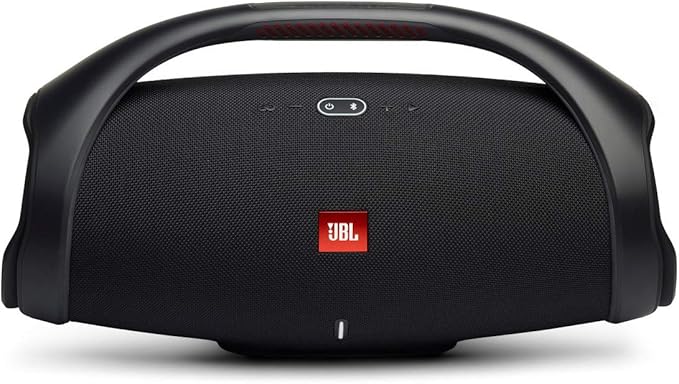
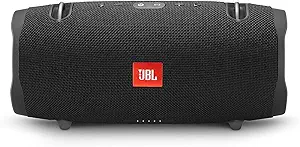
JBL approaches pricing from a conventional consumer electronics model where acoustic engineering, premium ruggedized materials, and high-capacity lithium-ion battery integration drive the cost. While JBL maintains budget-friendly pocket units like the JBL Go, stepping up into their core performance tier—such as the Charge, Xtreme, or Boombox lines—requires a far more substantial monetary investment. However, JBL justifies this price premium with mechanical durability, custom-tuned transducers, IP-rated enclosures, and extensive physical playback life, ensuring buyers pay for transportable acoustic performance rather than an interconnected digital service network.
Quality/Durability
Durability is the cornerstone of JBL’s engineering reputation, especially across its extensive catalog of portable audio products. Most JBL mobile speakers feature structural fiber-infused textiles, heavy-duty elastomer bumpers, and robust chassis designs that readily absorb drops and abrasions. Furthermore, the majority of the current lineup boasts IP67 or IP68 dust-and-waterproof certifications, meaning they can survive prolonged immersion in water, exposure to fine sand, and punishing outdoor weather without component failure. The internal lithium-ion power cells are reinforced against shock, ensuring long-term operational resilience for users taking their audio onto trails, beaches, or work sites.
Amazon Echo speakers, by contrast, are fundamentally domestic products engineered for stationary, indoor operation with a build quality tuned to home aesthetics rather than physical endurance. They utilize clean, wrap-around fabrics, recycled plastics, and understated metallic accents that look refined on a bookshelf or bedside table but possess no ruggedization, shock resistance, or meaningful liquid ingress protection. While high-grade components ensure they function continuously for years when plugged into a wall outlet, they are entirely susceptible to accidental spills, drops, and environmental hazards that a standard JBL speaker would effortlessly shrug off.
Sound Quality
From an acoustic standpoint, JBL adheres to a high-energy, performance-driven sonic philosophy characterized by its proprietary JBL Original Pro Sound curve. Equipped with dedicated high-excursion racetrack drivers, independent tweeters, and tuned dual passive radiators, JBL speakers deliver powerful, dynamic bass response without muddying the midrange clarity necessary for vocals. The acoustic tuning is engineered to project over open-air environments and high ambient noise floors, delivering punchy low-end impact, crisp transient attacks, and substantial volume levels without aggressive harmonic distortion at peak output.
Amazon focuses on digital signal processing, spatial distribution, and room-adaptive acoustic profiling rather than sheer outdoor throw. Flagship models like the Echo Studio utilize a five-speaker array—including a directional midrange, a high-performance tweeter, and a downward-firing woofer—paired with automatic room calibration that senses room boundaries to adjust EQ profiles automatically. While smaller Echo devices lack the bass depth, physical dynamic headroom, and open-air presence found in equivalent JBL hardware, higher-end Echo models deliver an exceptionally wide, clean soundstage with native support for lossless 24-bit audio and Dolby Atmos spatial formats, excelling in critical, stationary indoor listening.