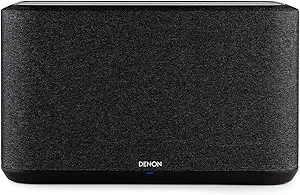
Denon vs Ultimate Ears: Overview & Brand Philosophy
When evaluating the landscape of modern audio reproduction, few matchups highlight the divergence between traditional high-fidelity engineering and contemporary lifestyle portability as clearly as Denon versus Ultimate Ears (UE). Founded in Japan in 1910, Denon has spent over a century establishing itself as a bedrock of high-end home cinema, reference amplification, and critical listening systems. Denon's speaker ecosystem—anchored by its Denon Home series and proprietary HEOS multi-room platform—is engineered with a clear philosophy: absolute acoustic fidelity, network versatility, and seamless architectural integration for discerning homeowners and dedicated audiophiles.
In contrast, Ultimate Ears represents the pinnacle of modern, active-lifestyle acoustic design. Born in 1995 from the backstage demands of touring rock musicians requiring custom in-ear stage monitors, UE transitioned under Logitech's ownership into a dominant force in consumer audio. Ultimate Ears approaches speaker design through the lens of rugged durability, total untethered freedom, and omnidirectional sound dispersion. Rather than catering to the fixed listening room or the dedicated home theater, UE designs its hardware to survive the elements, resist water immersion, and deliver high-energy, party-ready audio in outdoor and social environments.
Consequently, Comparing Denon and Ultimate Ears is not merely an assessment of sound profiles, but an evaluation of intentional design environments. Denon views the speaker as an acoustic instrument and central hub for the connected modern residence, prioritizing lossless audio streaming, digital signal processing (DSP) precision, and home automation compatibility. Ultimate Ears views the speaker as an ultra-portable acoustic companion built for high-impact durability, tactile field operation, and long battery life without fragile audio-chain bottlenecks.
Key Differences & Technological Comparison
The structural and operational differences between Denon and Ultimate Ears begin with connectivity architecture. Denon's modern speaker lineups rely primarily on high-bandwidth Wi-Fi infrastructure powered by the HEOS platform, supported by Bluetooth, AirPlay 2, and physical inputs including 3.5mm auxiliary and USB drives. This architecture enables native playback of high-resolution audio files up to 24-bit/192kHz (FLAC, WAV, ALAC) and DSD streams (2.8/5.6MHz). Ultimate Ears relies predominantly on advanced Bluetooth implementations (utilizing standard SBC and AAC codecs), intentionally omitting Wi-Fi and high-resolution direct-streaming infrastructure in favor of low-latency, rapid pairing, multipoint switching, and massive wireless operational ranges extending up to 150 feet.
Acoustic engineering and driver implementation also diverge significantly. Denon employs traditional dynamic configurations, including custom soft-dome tweeters, rigid poly-cone woofers, and sophisticated passive radiators powered by dedicated Class-D digital amplifiers. The resulting soundstage is directional, wide, and neutral, offering transparent midrange clarity, textured bass extension, and crisp high-frequency separation ideal for complex orchestral, jazz, or acoustic recordings. Ultimate Ears utilizes proprietary 360-degree cylindrical driver arrays complemented by dual passive radiators. This design emphasizes high-efficiency acoustic pressure over surgical imaging, generating deep, forward bass punch, elevated treble to cut through outdoor ambient noise, and uniform spatial dispersion so listeners hear identical frequency balances from any angle.
Build quality and environmental protection reflect their distinct operational mandates. Denon components feature elegant, non-intrusive aesthetics using acoustic fabric grilles, capacitive glass control interfaces with proximity sensors, and damped internal bracing designed to eliminate cabinet resonance inside a home. They carry no ingress protection (IP) ratings against water or particulate matter. Conversely, Ultimate Ears designs some of the most rugged chassis in the consumer market. Models such as the Wonderboom, Boom, and Megaboom series feature IP67-rated waterproof and dustproof architectures, buoyant enclosures that float in water, drop-tested rubberized bumpers, and military-grade textiles built to withstand drops, grit, and submersion.
Pros & Cons Comparison
Denon Speakers
- Pro: High-Resolution Audio Support: Native decoding of uncompressed 24-bit/192kHz files and DSD formats via Wi-Fi provides pristine sound quality.
- Pro: HEOS Multi-Room Ecosystem: Flawless synchronization across whole-home multi-room setups, soundbars, and Denon AV receivers.
- Pro: Balanced, Reference-Grade Tuning: Neutral acoustic profile delivers accurate mid-range vocals, transparent highs, and non-fatiguing bass.
- Pro: Physical and Smart Connectivity: Extensive input options including Aux-in, USB playback, AirPlay 2, and integrated voice assistants.
- Con: No Outdoor Durability: Cabinets lack water or dust resistance ratings, making them strictly indoor devices.
- Con: Limited Portability: Most models require continuous AC wall power; optional battery packs are expensive add-ons.
- Con: Higher Entry Cost: Significantly more expensive initial investment compared to mainstream wireless speakers.
Ultimate Ears Speakers
- Pro: Class-Leading Durability: Ruggedized, IP67-rated waterproof, dustproof, and shock-resistant enclosures engineered for severe outdoor use.
- Pro: 360-Degree Sound Dispersion: Cylindrical acoustic design ensures consistent, dynamic audio performance across entire outdoor areas.
- Pro: Exceptional Battery Performance: Extended battery life (ranging from 14 to 24 hours) with quick charging capabilities for off-grid listening.
- Pro: PartyUp Multi-Speaker Linking: Wireless daisy-chaining permits synchronization of dozens or hundreds of UE speakers via Bluetooth.
- Con: Compressed Audio Profiles: Dependent on standard Bluetooth codecs (SBC/AAC); lacks high-res lossless streaming codecs (LDAC/aptX HD).
- Con: Inadequate for Home Cinema: Lacks HDMI eARC, optical inputs, Wi-Fi multi-channel sync, and dedicated AV ecosystem integration.
- Con: Scooped Frequency Response: Sound signature leans toward a consumer V-shaped tuning (boosted lows and highs), masking subtle midrange detail.
Performance, Durability & Value Analysis
From a performance and durability standpoint, each brand delivers exceptional engineering tailored strictly to its operational theater. Denon's hardware longevity stems from premium electronic engineering: low-jitter digital-to-analog converters (DACs), high-efficiency thermal management, and robust, resonance-free enclosures that maintain internal component integrity over decades. While a Denon speaker will fail immediately if dropped on concrete or submerged in a pool, when kept in an interior living space it offers exceptional structural longevity and software longevity backed by persistent HEOS firmware updates. In critical listening evaluations, Denon consistently outperforms UE in stereo imaging, dynamic range, transient attack, and low-frequency harmonic distortion.
From a consumer value perspective, Ultimate Ears delivers maximum return on investment for users prioritizing utility, lifestyle resilience, and field reliability. Built with high-grade elastomeric polymers and water-shedding woven fabrics, UE speakers withstand drops from five feet, continuous saltwater submersion, and extreme temperature variations without degradation of driver compliance or housing seal integrity. While you sacrifice the acoustic nuance, high-resolution rendering, and smart architectural control of the Denon platform, UE delivers reliable, punchy sound reproduction at a fraction of the price per decibel, backed by an accessible battery-powered form factor that requires zero network infrastructure.
Final Verdict: Which Brand Should You Choose?
Your choice between Denon and Ultimate Ears should be dictated by where and how you consume your audio content:
Choose Denon if: You are seeking a stationary, high-fidelity home audio solution that seamlessly integrates into your existing home network. Denon is the clear choice for audiophiles, homeowners wanting whole-house synchronized multi-room audio via the HEOS ecosystem, and critical listeners who demand uncompressed, high-resolution sound with neutral, transparent acoustic dynamics.
Choose Ultimate Ears if: Your lifestyle requires portable, go-anywhere sound that can survive heavy outdoor use, poolside exposure, travel, and social gatherings. Ultimate Ears is the superior choice for users wanting rugged drop resistance, IP67 waterproofing, deep bass-forward tuning, long battery life, and easy Bluetooth connectivity without the complexity of home network setups.
Product Selection
When evaluating product selection between Denon and Ultimate Ears (UE), consumers are presented with two fundamentally divergent engineering philosophies and target use cases. Denon, a legacy heavyweight in high-fidelity audio, curates a portfolio heavily weighted toward stationary, premium home listening and integrated multi-room architecture. Anchored by its proprietary HEOS wireless ecosystem, Denon’s speaker catalog encompasses standalone Wi-Fi bookshelf units (such as the Denon Home 150, 250, and 350), specialized Dolby Atmos-enabled soundbars, dedicated wireless subwoofers, and direct synergy with their class-leading AV receivers. In contrast, Ultimate Ears concentrates its engineering prowess almost exclusively on lifestyle-oriented, ruggedized portable Bluetooth speakers. The UE roster—ranging from the ultra-compact Wonderboom and the cylindrical Boom and Megaboom series up to the monolithic, party-focused Hyperboom and Epicboom—is methodically segmented by physical scale, decibel output, and environmental durability rather than stationary acoustic refinement.
From a feature set and technical perspective, Denon’s lineup provides superior versatility for high-resolution audio streaming, smart home automation, and low-latency AV synchronization. Their speakers frequently integrate Apple AirPlay 2, native voice assistants, physical inputs (including optical and 3.5mm AUX), and high-grade digital-to-analog converters (DACs) that support 24-bit/192kHz decoding. Conversely, Ultimate Ears engineered its portfolio to dominate outdoor utility, featuring IP67 water and dust resistance, buoyant chassis designs that float in water, long-lasting lithium-ion batteries, and the proprietary PartyUp feature, which allows daisy-chaining over 150 speakers via Bluetooth. While UE does offer the Hyperboom to bridge the gap toward home audio with optical inputs and adaptive EQ, the brand generally eschews Wi-Fi streaming, high-res audio codecs, and home theater integration, optimizing instead for drop resistance, tactile controls, and 360-degree sonic dispersion in demanding environments.
The practical trade-offs regarding product selection ultimately hinge on whether a user requires an expansive ecosystem for dedicated home theater and whole-house fidelity or durable acoustic mobility. Choosing Denon yields a deeply interconnected audio landscape that scales smoothly from a single bedroom speaker to a full multi-channel surround sound setup, though it inherently lacks robust, all-weather portable options designed for travel or outdoor exposure. On the other hand, Ultimate Ears provides an impeccably dialed-in selection of go-anywhere outdoor monitors that resist the elements, yet entirely lacks the product depth required to anchor a formal home entertainment system or satisfy critical audiophiles demanding uncompressed network audio playback.
Affordability
When evaluating affordability in the speaker category, Denon and Ultimate Ears (UE) approach the concept from fundamentally different pricing tiers, targeting distinct acoustic applications. Ultimate Ears dominates the budget-to-midrange market, offering exceptional accessible value through its rugged, portable Bluetooth lineup. With price points generally spanning from under $100 for the ultra-compact Wonderboom series to around $400 for the festival-ready Hyperboom, UE prioritizes maximum durability and dynamic, outdoor-tuned audio per dollar. From an engineering perspective, UE achieves this cost efficiency by utilizing durable thermoplastic elastomers, sealed acoustic chambers, and energy-efficient digital signal processing (DSP) optimized for battery conservation and 360-degree dispersion. For consumers seeking straightforward personal audio with IP67 waterproofing, drop resistance, and high volume output without high financial friction, UE represents one of the most cost-effective investments in consumer electronics.
Conversely, Denon operates primarily within the premium consumer and audiophile market, positioning its affordability in terms of long-term high-fidelity value rather than low initial entry prices. While Denon’s Home series of wireless multi-room speakers features higher barrier-to-entry costs—typically starting at the upper end of UE's price ceiling and extending significantly higher—the technical architecture reflects this premium. Denon invests in discrete Class-D amplification per driver, high-resolution 24-bit/192kHz DACs, extensive physical I/O (including 3.5mm, USB, and Ethernet), and the proprietary HEOS network ecosystem. This platform supports seamless multi-room integration and advanced home theater expansion via soundbars and subwoofers. Therefore, Denon’s value proposition relies on structural longevity, software modularity, and acoustic refinement, catering to users willing to pay more upfront for an expansive, stationary home audio infrastructure.
Ultimately, the practical trade-off regarding affordability centers on use-case economics and technical longevity. Ultimate Ears offers peerless immediate affordability, delivering plug-and-play durability that withstands physical abuse, making it the superior low-risk financial choice for mobile, casual, and outdoor listening. However, UE units are strictly limited to Bluetooth codecs (typically SBC/AAC), lack Wi-Fi streaming, and are constrained by the inevitable degradation of lithium-ion batteries. Denon requires a substantially larger financial commitment, but offsets this through acoustic fidelity, true stereo imaging capabilities, and an interconnected ecosystem that elevates whole-home entertainment. Consumers operating on strict, sub-$200 budgets will find unmatched utility in Ultimate Ears, whereas buyers looking to amortize costs over years of critical indoor listening will find Denon's higher price tag justified by its superior engineering and networked versatility.
Quality/Durability
When evaluating build quality and durability, Denon and Ultimate Ears approach speaker engineering from fundamentally divergent philosophies, dictated by their intended environments. Denon, a legacy heavyweight in high-fidelity audio, designs with precision indoor longevity in mind. Their speakers—ranging from the high-end Home series to their premium AV receiver-driven monitors—feature rigid acoustical construction utilizing thick, resonance-dampening medium-density fiberboard (MDF), precision-machined brushed aluminum, and tightly wrapped acoustic fabrics. Internally, Denon prioritizes audiophile-grade components: custom-designed soft-dome tweeters, robust neodymium magnets, and advanced digital signal processing (DSP) hardware designed to deliver pristine sound without distortion for decades. However, this stationary, luxury-driven craftsmanship features practically zero environmental resistance; exposure to moisture, dust, or heavy physical impact can severely compromise both their sophisticated internal circuitry and pristine cosmetic finishes.
Conversely, Ultimate Ears (UE) is an industry benchmark for rugged, outdoor-ready physical durability, intentionally sacrificing high-end chassis materials for nearly indestructible industrial design. Products like the UE Boom, Megaboom, and Hyperboom are encased in high-grade, two-tone woven fabrics engineered originally for motorcycle jackets, coupled with thick, shock-absorbing vulcanized rubber end caps. UE speakers regularly boast rigorous IP67 and IP68 ratings, rendering them entirely dustproof and capable of full water submersion up to one meter for 30 minutes, with several models even engineered to float. From a mechanical standpoint, UE devices are rigorously drop-tested from heights of up to five feet onto concrete, surviving impacts that would shatter a Denon enclosure. While their sealed, weather-resistant plastic driver membranes inevitably lack the microscopic acoustic nuance and warm tonality of Denon’s delicate transducers, they deliver exceptional structural resilience that thrives in harsh environments.
Ultimately, the choice between Denon and Ultimate Ears centers on stationary acoustic preservation versus dynamic environmental survival. Denon delivers superior component-level engineering, offering audiophiles a long-term investment that resists electrical degradation and enclosure fatigue under stable conditions, but it lacks the physical versatility required outside the home. Ultimate Ears represents the gold standard of kinetic durability, trading the acoustic purism of timber and silk tweeters for impenetrable waterproofing, drop resistance, and thermal tolerance. Consumers demanding an immovable centerpiece for pristine hi-fi performance will find Denon’s refined assembly unbeatable, whereas those needing a lifestyle speaker that effortlessly withstands pool parties, camping elements, and accidental drops must prioritize Ultimate Ears.
Sound Quality
When evaluating sound quality, Denon and Ultimate Ears (UE) approach acoustic engineering from fundamentally divergent philosophies, catering to distinct listening environments. Denon, steeped in a century-long Hi-Fi heritage, prioritizes acoustic transparency, wide dynamic range, and tonal balance. Its wireless and multi-room speakers—such as the Denon Home series—utilize sophisticated digital signal processing (DSP), high-grade neodymium drivers, and integrated digital-to-analog converters (DACs) capable of rendering high-resolution audio up to 24-bit/192kHz. This architecture yields a neutral, detailed soundstage with warm mid-tones, articulate highs, and deep, uncolored low-end extension. In contrast, Ultimate Ears engineers its portable Bluetooth speakers around high-efficiency, maximum-impact outdoor dynamics. Employing dual passive radiators alongside angled active drivers, UE speakers like the Megaboom and Hyperboom focus on energetic, 360-degree sound distribution with punchy upper bass and forward vocals, intentionally tuned to cut through ambient outdoor noise rather than deliver analytical precision.
The technical trade-offs between the two brands directly reflect their target operational environments. Denon's internal hardware and acoustic design prioritize micro-dynamics and staging accuracy; instruments are clearly localized, complex orchestral or acoustic tracks retain separation, and distortion is kept exceptionally low even when pushing higher-fidelity lossless formats over Wi-Fi. However, this Hi-Fi tuning can sometimes sound restrained or lack low-end punch in open, noisy spaces unless manually adjusted via equalization. Conversely, Ultimate Ears leans heavily on psychoacoustic processing to produce a sound signature that feels muscular and spacious despite compact footprints. While the companion UE app allows for custom EQ adjustment, UE speakers exhibit compression and slight treble harshness at high volumes, and their monaural or pseudo-stereo spatial dispersion lacks the true imaging depth found in Denon's acoustic chambers.
Ultimately, the superior sound quality depends on your auditory standards and consumption habits. Denon easily takes the lead for critical indoor listening, multi-room home theater integration, and audiophile-grade high-resolution streaming, where faithful harmonic reproduction and acoustic finesse are paramount. On the other hand, Ultimate Ears delivers the practical victor for casual, high-volume enjoyment on the go; its tuning excels at driving upbeat genres like pop and hip-hop across omnidirectional soundfields where rugged durability and bass energy outweigh laboratory-grade acoustic fidelity.
Compare current retail pricing, active promotions, and verified stock availability directly from authorized stores: