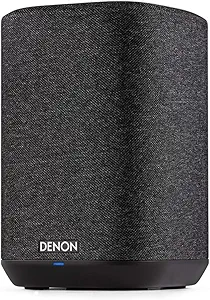
Denon vs Sonos: Overview & Brand Philosophy
When selecting a modern speaker system, consumers often find themselves choosing between two distinctly different engineering philosophies represented by Denon and Sonos. Denon, a stalwart of the Japanese audio industry with roots tracing back to 1910, approaches the speaker market from an audiophile and legacy hardware perspective. Historically celebrated for its reference-grade AV receivers and high-fidelity amplification, Denon brings meticulous acoustic tuning, support for uncompressed audio formats, and a deep commitment to physical connectivity to its contemporary wireless ecosystem, branded largely under the Denon Home line and powered by the HEOS streaming platform.
In contrast, Sonos entered the market in the early 2000s with a singular, revolutionary mission: to reinvent home audio for the digital streaming age. As a Santa Barbara-based tech-first audio enterprise, Sonos built its reputation on frictionless software integration, intuitive multi-room synchronization, and elegant minimalist design. Rather than expecting users to navigate complex impedance ratings or intricate channel configurations, Sonos prioritizes software stability, broad streaming service interoperability, and automated room-calibration technologies that allow non-technical consumers to achieve balanced, room-filling sound within minutes of unboxing.
This fundamental divergence defines the modern matchup between the two brands. Denon positions its speakers as versatile, high-resolution audio transducers capable of operating as standalone smart speakers or integrating seamlessly into high-end traditional component systems. Sonos, meanwhile, treats its speakers as nodes in a unified digital network, emphasizing modular expansion, smart home ecosystems, and seamless plug-and-play operation. Understanding which philosophy aligns with your living space and listening habits is essential to making the right investment.
Key Differences & Technological Comparison
The technological divide between Denon and Sonos is most evident across three major vectors: multi-room ecosystem architecture, audio processing capabilities, and physical connectivity options.
At the software level, the battle takes place between Denon’s HEOS platform and the Sonos OS. HEOS allows users to link standalone Denon Home speakers (such as the Home 150, 250, and 350) with traditional Denon AV receivers, Marantz amplifiers, and dedicated network streamers. This makes Denon uniquely powerful for hybrid homes that feature both dedicated high-fidelity listening rooms and multi-room satellite speakers. Sonos, by comparison, utilizes an entirely closed, proprietary mesh-ready network protocol. While Sonos speakers can only interface with traditional Hi-Fi components via specialized (and costly) hardware adapters like the Sonos Port or Sonos Amp, the native Sonos app remains the benchmark for interface responsiveness, universal search across dozens of streaming libraries, and synchronized latency-free playback.
In terms of acoustic design and audio fidelity, Denon targets high-resolution purists. Many Denon speakers natively decode ALAC, FLAC, and WAV files up to 192kHz/24-bit, as well as DSD 2.8MHz and 5.6MHz tracks. Denon speakers tend to feature dynamic, punchy low-end response paired with detailed, extended treble that appeals to classic Hi-Fi listeners. Sonos takes a more computational approach to sound. Through its proprietary Trueplay tuning technology, Sonos utilizes iOS device microphones (and onboard microphones on newer units like the Era 100, Era 300, and Move 2) to dynamically map room acoustic reflections and tailor the speaker's EQ profile. Sonos speakers typically deliver a polished, wide, and crowd-pleasing soundstage, with models like the Era 300 specifically engineered for native Dolby Atmos spatial audio projection.
Connectivity is another key differentiator. Denon provides considerable physical versatility across its line, regularly outfitting its speakers with 3.5mm analog auxiliary inputs, direct USB playback ports, and dedicated physical quick-select buttons on the chassis. Sonos has historically eliminated physical inputs entirely in favor of wireless streaming, although recent models have reintroduced connectivity via a multi-purpose USB-C line-in port (which requires a separately sold proprietary adapter).
Pros & Cons Comparison
Denon Speakers
- Pros:
- Superior native high-resolution audio support (up to 24-bit/192kHz and DSD).
- Direct integration with Denon and Marantz AV receivers via the HEOS ecosystem.
- Generous physical connectivity, including 3.5mm AUX, USB playback, and Ethernet across most models.
- Tactile capacitive quick-select preset buttons on the hardware for one-touch radio or playlist playback.
- Robust, full-bodied bass response and classic high-fidelity acoustic signature.
- Cons:
- HEOS application interface lacks the polish, search agility, and third-party app integration of Sonos.
- Smaller third-party accessory market (wall mounts, stands, and bespoke cabling).
- Lacks automated spatial acoustic calibration equivalent to Sonos Trueplay on all models.
Sonos Speakers
- Pros:
- Industry-leading multi-room synchronization and highly refined, intuitive mobile application.
- Advanced Trueplay room calibration delivers optimized sound tailored to any architectural space.
- Pioneering spatial audio and Dolby Atmos implementations in home theater soundbars and standalone units.
- Universal streaming support, integrating seamlessly with virtually every global music service and smart assistant.
- High aesthetic value with clean, minimalist industrial designs that blend into modern interiors.
- Cons:
- Limited native high-resolution audio format handling compared to dedicated audiophile gear.
- Sparse physical inputs; analog line-in typically requires purchasing proprietary adapters.
- Expensive ecosystem lock-in, with steep entry costs for legacy audio integration components.
Performance, Durability & Value Analysis
From an acoustic performance and long-term durability perspective, both manufacturers operate at the premium end of the consumer audio spectrum, but their longevity relies on different factors. Denon's physical construction is exceptional, utilizing dense acoustic enclosures, reinforced dampening, and heavy-duty drivers engineered to resist mechanical fatigue over decades. Because Denon speakers include physical analog inputs alongside wireless streaming modules, a Denon speaker remains usable as a powered monitor even if wireless standards or software protocols evolve. Sonos units are similarly built to exceptional physical tolerances with pristine finishes, but their usable lifespan is inextricably linked to ongoing cloud platform support and firmware maintenance. While Sonos has historically supported its legacy hardware with software updates far longer than standard consumer electronics brands, an eventual end-of-life status can diminish a speaker's utility once it no longer receives compatibility patches.
When assessing value, Sonos demands a premium for its software convenience, ecosystem synergy, and spatial audio innovations. A consumer investing in Sonos is paying for an uninterrupted, low-friction user experience that requires zero technical know-how to configure and expand. Denon, by contrast, delivers higher raw hardware value per dollar. When comparing the Denon Home series against equivalent Sonos tiers, Denon frequently provides larger acoustic drivers, wider dynamic range, native high-res file decoding, and onboard inputs that Sonos omits. For users who already own an AV receiver or value direct hardware-level playback from personal media servers, Denon delivers far superior sonic return on investment.
Final Verdict: Which Brand Should You Choose?
The choice between Denon and Sonos ultimately hinges on whether your priorities lie in traditional high-fidelity audio engineering or seamless digital ecosystem management.
Choose Denon if: You consider yourself an audiophile or critical listener who owns high-resolution audio files (FLAC, ALAC, DSD), already operate a Denon or Marantz home theater receiver, or demand physical input flexibility such as USB playback and standard 3.5mm analog aux jacks. Denon is the superior option for consumers who want premium sound with physical versatility and who do not mind navigating a utilitarian software interface in exchange for richer, uncompressed acoustic fidelity.
Choose Sonos if: You prioritize an effortless user experience, elegant modern design, and industry-leading multi-room software stability above all else. Sonos is unbeatable for whole-home background audio, multi-room synchronization, and streamlined home theater integration (via the Arc or Beam series paired with Era surrounds). If you rely heavily on multiple commercial streaming services, desire automated room tuning via Trueplay, and want an audio system that anyone in the household can operate without technical friction, Sonos remains the definitive market leader.
Product Selection
When evaluating product selection between Denon and Sonos, the two brands approach the audio landscape from fundamentally different engineering philosophies. Sonos focuses on a curated, streamlined ecosystem tailored for seamless multi-room integration and lifestyle convenience. Its catalog is tightly engineered, featuring compact plug-and-play speakers (Era 100, Era 300), battery-powered portables (Roam, Move 2), architectural and outdoor in-wall solutions, and home theater soundbars (Ray, Beam, Arc). Sonos products are defined by proprietary digital signal processing, automated acoustic tuning (Trueplay), and standardized wireless connectivity. While this cohesive approach eliminates compatibility guesswork and ensures a uniform aesthetic, it inherently limits the range of traditional high-fidelity form factors, leaving audiophiles with few choices outside of active, DSP-driven wireless enclosures.
Denon, backed by a century-long legacy in traditional Japanese audio engineering, offers a vastly broader and more technically diverse product selection. Through its proprietary HEOS platform, Denon mirrors Sonos's multi-room wireless capabilities with its Denon Home series, but it extends far beyond into high-performance audio electronics. Denon’s catalog is dominated by class-leading Audio/Video Receivers (AVRs) spanning the entry-level S-Series up to the flagship 15.4-channel A1H, alongside dedicated stereo amplifiers, networked SACD players, and turntables. This extensive portfolio provides immense technical flexibility, allowing consumers to bridge vintage analog gear, uncompressed multi-channel home theater setups, and modern streaming protocols within a single ecosystem. Denon’s engineering emphasizes discrete analog amplification, high-current power supplies, high-resolution audio DACs (supporting up to 24-bit/192kHz and DSD), and advanced acoustic calibration suites like Audyssey and Dirac Live.
The practical trade-offs in product selection come down to modular simplicity versus customized acoustic fidelity. Sonos provides the superior out-of-the-box lifestyle solution; its compact catalog covers modern consumer needs effortlessly, from portable outdoor audio to Dolby Atmos spatial sound, without the clutter of speaker wire or external amplification. However, power users face rigid physical limitations, as Sonos cannot power third-party passive center channels, modular subwoofers, or complex multi-zone wired systems without dedicated adapters like the Sonos Amp. Conversely, Denon’s comprehensive portfolio grants total architectural freedom, catering equally to casual streaming listeners and uncompromising custom installers. The compromise with Denon lies in ecosystem fragmentation; integrating legacy AVRs with the HEOS ecosystem can present a steeper operational learning curve compared to the plug-and-play uniformity of Sonos.
Affordability
When evaluating affordability between Denon and Sonos, the analysis extends beyond the initial sticker price into system architecture, ecosystem lock-in, and component longevity. Denon, leveraged by its deep-rooted heritage in traditional Hi-Fi and audio-video receivers through its parent company Masimo Consumer, approaches affordability through engineering versatility and backwards compatibility. Its wireless ecosystem, HEOS (found in standalone speakers like the Denon Home series as well as AV receivers), allows budget-conscious audiophiles to integrate legacy analog equipment, passive speakers, and high-resolution sources via physical inputs (3.5mm aux, USB, and optical) without requiring proprietary breakout adapters. This hardware flexibility reduces total cost of ownership; a consumer can build a hybrid multi-room system by pairing a relatively inexpensive Denon AVR with existing passive bookshelf speakers alongside dedicated Denon Home units. Consequently, Denon delivers a higher ratio of technical utility per dollar, native high-resolution audio support (up to 24-bit/192kHz and DSD) out of the box, and superior amplification headroom without mandating exclusive brand-line purchases.
Conversely, Sonos operates on a closed, streamlined acoustic and software architecture that demands a higher long-term financial commitment, framing its affordability around lifecycle value, software stability, and resale retention. Entry-level Sonos products—such as the Era 100 or the portable Roam—carry mid-to-high-tier price tags relative to their sheer acoustic output, yet Sonos historically justifies this premium with best-in-class multi-room synchronization, class-leading software UX, and proprietary acoustic engineering like Trueplay tuning. However, the trade-offs regarding hardware affordability become stark when expanding the system: Sonos notoriously minimizes physical I/O, forcing users to purchase high-margin proprietary dongles, the costly Sonos Port, or the expensive Sonos Amp just to integrate third-party turntables or legacy speakers. Furthermore, building a wireless home theater around soundbars like the Arc or Beam quickly compounds in cost because users are restricted to pairing only Sonos-branded subwoofers (Sub or Sub Mini) and surround speakers, eliminating the option to use cost-effective third-party alternatives.
Ultimately, the pragmatic verdict on affordability favors Denon for overall hardware value, integration flexibility, and acoustic performance per dollar, particularly for users willing to navigate a slightly more utilitarian software environment. Sonos provides unmatched out-of-the-box convenience, polished lifestyle integration, and robust second-hand market value, but it fundamentally requires a higher capital outlay to scale and penalizes users who seek flexibility outside its tightly controlled ecosystem. For consumers prioritizing open architecture, physical connectivity, and lower multi-component deployment costs, Denon represents a significantly more economical investment; for those who prioritize seamless plug-and-play simplicity and are willing to pay an ongoing premium to maintain that single-ecosystem cohesion, Sonos offers a predictable, albeit distinctly luxury-priced, long-term proposition.
Quality/Durability
When evaluating engineering quality and physical durability, Denon and Sonos represent two distinct philosophies within the modern audio landscape. Denon draws upon over a century of traditional Japanese hi-fi heritage, which is immediately apparent in the structural integrity of its speaker enclosures and internal components. Whether looking at their standalone Denon Home wireless series or passive reference monitors, Denon relies heavily on dense, anti-resonant MDF wood cabinetry, heavy-duty internal bracing, and thick metal switchgear designed to minimize acoustic vibration and survive years of high-volume playback. Internally, Denon uses robust toroidal transformers and discrete Class-D amplification circuitry built to high thermal tolerance limits, which significantly extends hardware lifespans. Sonos, by contrast, pioneered the premium lifestyle aesthetic, constructing products like the Era series and Five from ultra-rigid, injection-molded matte polycarbonate. While plastic may carry a psychological trade-off compared to wood and metal, Sonos’s materials are exceptionally durable, scratch-resistant, and impervious to the climate-induced warping or peeling that can affect wood veneers over time. Furthermore, models like the Sonos Move 2 and Roam feature ruggedized, shock-absorbing silicone end-caps alongside IP67 weather-resistance ratings, giving Sonos an uncontested durability advantage in portable and outdoor use cases where Denon’s largely indoor-focused designs cannot compete.
Beyond physical build, durability in modern connected speakers is intrinsically tied to software stability and ecosystem longevity, which reveals critical practical trade-offs between the two brands. Sonos holds the industry benchmark for long-term software support and architectural reliability; their proprietary mesh networking (SonosNet) and unified, low-latency app ecosystem remain operational on devices over a decade old. Even following controversial legacy splits, Sonos provides reliable backward compatibility and continuous over-the-air firmware optimizations that ensure internal DSP chips perform stably for years. Denon relies on its proprietary HEOS platform, which, while highly capable of streaming high-resolution audio (up to 24-bit/192kHz uncompressed FLAC) far beyond Sonos’s standard thresholds, has historically lagged in software refinement. HEOS users frequently report operational instability, pairing drops, and sporadic firmware glitches that compromise the "software durability" of the speaker, even when the underlying hardware remains in pristine condition. However, Denon mitigates this vulnerability by equipping almost all of its smart speakers with redundant physical inputs, including auxiliary 3.5mm jacks, USB drives, and Bluetooth connectivity. This technical redundancy means that should HEOS ever be abandoned or rendered obsolete, a Denon speaker retains functional utility as an active speaker, whereas a decommissioned Sonos unit risks becoming an expensive, app-locked paperweight.
Sound Quality
When evaluating sound quality, Denon and Sonos approach audio engineering from fundamentally different philosophies, reflecting their respective heritages in traditional high-fidelity audio and modern smart acoustics. Denon, leveraging over a century of Japanese audiophile engineering, prioritizes raw, uncolored acoustic performance and dynamic range. Across its standalone wireless lineup (the Denon Home series) and integrated Hi-Fi systems, Denon implements custom-engineered dynamic drivers, dedicated tweeters, and robust amplification that excel in delivering high-resolution audio. With native support for 24-bit/192kHz FLAC, WAV, and ALAC files—as well as DSD decoding—Denon renders acoustic tracks, complex classical arrangements, and live instrumentation with exceptional warmth, precise channel separation, and authentic micro-dynamics that digital compression often strips away.
Conversely, Sonos built its acoustic reputation on sophisticated Digital Signal Processing (DSP) and automated computational audio rather than purely purist analog design. While Denon delivers more natural bass depth and a wider frequency response on paper, Sonos hardware—exemplified by products like the Era 300 and Five—is masterfully tuned to create an expansive, room-filling soundstage through psychoacoustic processing and specialized driver orientation. Sonos holds a clear technical advantage in environmental adaptation with its proprietary Trueplay tuning technology, which measures how sound reflects off walls and furniture to dynamically correct room modes and eliminate muddy frequencies. However, purists often note that this heavy digital manipulation, while brilliant for casual listening and multi-room pop playback, can introduce subtle artificiality, dynamic compression at maximum volume, and a sound signature that favors clarity and low-end punch over nuanced textural fidelity.
Ultimately, the sound quality trade-off between the two brands centers on acoustic fidelity versus algorithmic optimization. Denon is the superior choice for discerning critical listeners and audio purists who demand support for uncompressed high-resolution formats, neutral midrange reproduction, and deep, resonant physical bass response. Sonos, on the other hand, provides the more consistently pleasing and foolproof sonic experience for standard streaming services, offering unmatched spatial dispersion and flawless acoustic calibration that sounds balanced in virtually any domestic environment, regardless of challenging room acoustics.
Compare current retail pricing, active promotions, and verified stock availability directly from authorized stores: