Denon vs Monoprice: Overview
Comparing Denon and Monoprice helps you determine which brand is best suited for your needs in Speakers. Both brands offer strong choices depending on your budget and key feature requirements.
Key Features & Comparison
Evaluate factors such as build quality, warranty, customer satisfaction, and total value before making your final purchase choice between Denon and Monoprice.
Product Selection
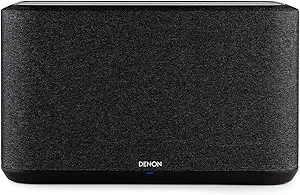
Denon and Monoprice approach speaker product selection from fundamentally different retail and engineering philosophies. Denon concentrates its speaker catalog predominantly on modern home audio integration, with a pronounced emphasis on lifestyle, multi-room wireless audio, and television sound enhancement. Through its dedicated Denon Home lineup and high-fidelity soundbar series, the brand prioritizes cohesive, ecosystem-driven hardware featuring integrated HEOS streaming, voice control capabilities, and high-resolution digital decoding. While Denon's overarching brand identity is synonymous with AV receivers, its dedicated speaker range is relatively tightly curated, focusing primarily on wireless active speakers, wireless subwoofers, and plug-and-play surround packages rather than extensive modular component separates.
In contrast, Monoprice delivers an expansive, utilitarian catalog that covers virtually every conceivable passive and active acoustic application. Rather than maintaining a small tier of lifestyle products, Monoprice offers hundreds of options spanning architectural in-wall and in-ceiling models, commercial outdoor weatherized speakers, professional studio monitors, and multi-piece passive 5.1 home theater setups. Furthermore, under its specialized Monolith sub-brand, Monoprice addresses serious audiophiles with THX-certified towers, high-excursion subwoofers, and precision satellite arrays. While Monoprice lacks the proprietary, unified wireless multi-room ecosystem of Denon, its sprawling portfolio provides significantly greater flexibility for custom integrators and dedicated traditional home theater builders looking for specific form factors and component-level versatility.
Affordability
Affordability represents one of the sharpest contrasts between these two manufacturers, dictated largely by their distribution methods and target demographics. Monoprice operates under an aggressive direct-to-consumer business model that bypasses conventional retail markups, resulting in an almost unmatched price-to-performance ratio across entry-level and mid-range audio. Consumers shopping Monoprice can outfit an entire multi-channel surround sound system or whole-home architectural audio distribution network for the cost of a single high-tier standalone active unit from heritage audio brands. Even Monoprice's premium Monolith line, which competes against specialized boutique audio gear, is priced far below market norms relative to its acoustic output and driver sizes.
Denon occupies an established premium-consumer to enthusiast pricing bracket. While Denon's speaker products are generally accessible compared to ultra-high-end audiophile brands, they carry an undeniable premium over Monoprice due to extensive integrated electronics, Wi-Fi networking modules, proprietary HEOS software development, and traditional brick-and-mortar dealer margins. A consumer purchasing a Denon Home wireless speaker or soundbar pays for self-contained amplification, digital signal processing, streaming licensing, and industrial design polish. Consequently, Denon appeals to buyers seeking seamless all-in-one convenience where budget is secondary to integrated functionality, whereas Monoprice is the quintessential choice for cost-conscious buyers and home-theater hobbyists maximizing raw audio hardware per dollar spent.
Quality/Durability
The structural engineering and long-term durability of Denon speakers reflect the high standards of an established Japanese legacy brand. Denon products feature refined industrial designs, characterized by premium acoustic wrap fabrics, solid resonance-dampened composite enclosures, and flush, tactile touch interfaces. The physical build quality is exceptionally consistent, minimizing microphonics and enclosure vibrations. However, because Denon’s primary speaker lineup consists of active, digitally interconnected devices, long-term longevity is inherently tethered to firmware stability, wireless network protocol evolution, and companion mobile app support, which represents a potential software obsolescence vector over a decade-long lifecycle.
Monoprice exhibits a bifurcated approach to build quality depending on the product tier. Its baseline, budget-oriented speakers and architectural units prioritize low production costs, utilizing basic ABS plastics, stamped steel baskets, and utilitarian vinyl-veneered MDF cabinets that are functional but aesthetically modest. However, its audiophile-oriented Monolith tier swings to the opposite extreme, employing massively overbuilt, internally braced HDF (high-density fiberboard) enclosures, heavy-gauge binding posts, and rugged magnetic grilles engineered to withstand extreme acoustic pressures. Because most Monoprice offerings are purely passive speakers devoid of complex integrated digital circuitry, their physical longevity is virtually indefinite, relying purely on the durability of their voice coils, surrounds, and passive crossover networks.
Sound Quality
Denon’s acoustic tuning emphasizes warm, refined, and non-fatiguing sound signatures optimized for everyday consumer listening and home theater dynamics. Their powered speakers and soundbars leverage advanced internal Digital Signal Processing (DSP) to dynamically adjust frequency curves, maintain bass linearity at varied volume levels, and enhance vocal dialogue clarity. Treble reproduction is generally smooth and forgiving of poorly compressed streaming sources, while the mid-range is tuned for natural vocal reproduction. The integration of proprietary DSP allows relatively compact Denon enclosures to produce expansive stereo imaging and substantial, controlled low-end impact, although extreme high-volume listening can occasionally reveal digital limiting artifacts.
Monoprice, particularly through its Monolith division, adheres to a more strictly objective, high-fidelity acoustic standard governed by neutral measurements and high-output capabilities. Monolith speakers are frequently engineered with premium ribbon tweeters, advanced waveguide designs, and long-throw woofers that produce linear, transparent, and highly analytical soundstages with wide dispersion. Monoprice subwoofers are renowned within home-theater communities for their massive dynamic headroom, deep infrasonic extension, and low distortion. However, Monoprice’s ultra-budget tier speakers lack the refined crossover tuning and acoustic balance found in Denon's active hardware, delivering a noticeably flatter and less sophisticated listening experience unless paired with quality external amplification and active room correction calibration.