





Denon vs KEF: Overview
Comparing Denon and KEF helps you determine which brand is best suited for your needs in Speakers. Both brands offer strong choices depending on your budget and key feature requirements.
Key Features & Comparison
Evaluate factors such as build quality, warranty, customer satisfaction, and total value before making your final purchase choice between Denon and KEF.
Product Selection
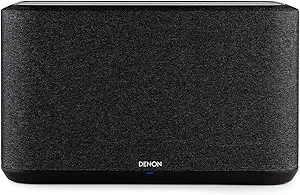
When examining product selection, Denon and KEF take fundamentally divergent approaches rooted in their core brand identities. Denon, traditionally an audio-video powerhouse, focuses its speaker lineup predominantly on home integration, multi-room ecosystems, and smart audio solutions. Its catalog is headlined by the Denon Home series of wireless streaming speakers, high-performance soundbars, and dedicated subwoofers, all designed to seamlessly interface with its HEOS streaming protocol and world-renowned AV receivers. Outside of its wireless smart speaker ecosystem and packaged home theater systems, Denon offers limited standalone passive Hi-Fi speakers, instead prioritizing connected, all-in-one lifestyle convenience for mainstream listeners and smart home builders.
In stark contrast, KEF provides an expansive, acoustically driven portfolio that spans from entry-level passive bookshelf speakers to ultra-high-end audiophile statements. The British manufacturer is celebrated for its versatile passive ranges, including the entry-level Q Series, the mid-tier R Series, and the halo Reference and Blade collections. Furthermore, KEF has established a dominant presence in the active stereo market through its LS Wireless collection (such as the LSX II, LS50 Wireless II, and LS60 Wireless), alongside architectural in-wall and architectural in-ceiling speakers. For consumers seeking architectural flexibility, passive speaker choices across numerous price tiers, or dedicated stereo imaging, KEF's catalog is significantly deeper and more specialized than Denon's ecosystem-focused lineup.
Affordability
From a cost-to-entry and pricing perspective, Denon positions itself firmly within the accessible, consumer-friendly bracket of the market. Its standalone wireless speakers and compact soundbars are priced competitively against mass-market alternatives from Sonos and Bose, making it an economical choice for multi-room audio. Because Denon's speakers are often bundled with or built to complement mid-tier electronics, consumers can assemble a complete, multi-zone smart audio system without entering the realm of luxury pricing. The value proposition is reinforced by integrated HEOS amplification and network streaming, which eliminates the need to purchase external DACs or preamplifiers, driving down the total cost of ownership.
KEF, while offering accessible entry points in its Q Series, quickly escalates into the premium and luxury pricing tiers. Even KEF's entry-level active speakers, such as the LSX family, command a substantial price premium over Denon's flagship standalone wireless speakers. As buyers move up KEF's product tiers into the R Series Meta, Reference, or flagship active floorstanders, prices stretch into thousands—and even tens of thousands—of dollars. Furthermore, investing in KEF's passive models necessitates high-current, clean amplification and quality source components to extract their full potential, resulting in a substantially higher financial investment compared to Denon's practical, plug-and-play offerings.
Quality/Durability
Denon's engineering emphasizes robust consumer electronics manufacturing, prioritizing operational durability, seamless wireless connectivity, and modern residential aesthetics. Its smart speakers and soundbars are encased in durable polycarbonate frames wrapped in dense acoustic fabrics, designed to withstand daily handling, dust, and typical ambient wear. The physical build is utilitarian and refined, built to blend into modern home decors effortlessly. Internally, Denon employs reliable Class-D amplification stages, thermally protected power supplies, and stable networking hardware that ensure dependable 24/7 network standby and longevity without physical or electronic degradation.
KEF approaches quality and durability through an uncompromising acoustic engineering and industrial design lens. KEF cabinets are renowned for their structural rigidity, employing advanced constrained layer damping, heavy internal bracing, and high-density composite materials to eliminate unwanted resonance. The physical finish on KEF products—from precision-lacquered piano glosses to bespoke real-wood veneers and anodized driver cones—represents true luxury craftsmanship. Mechanically, KEF's drivers undergo rigorous quality control to maintain tight tolerances, ensuring that moving parts, surrounds, and electrical crossovers maintain their acoustic integrity and mechanical durability over decades of rigorous, high-output listening.
Sound Quality
Denon tunes its speakers to deliver a warm, accessible, and energetic acoustic signature that excels across contemporary music, podcasts, and cinematic content. Bass response is generally punchy and full-bodied, compensating for smaller cabinet enclosures by leveraging digital signal processing (DSP) to prevent low-end distortion at moderate-to-high volumes. Midranges are tuned to prioritize vocal clarity and dialogue intelligibility, while high frequencies are smooth and forgiving of heavily compressed streaming audio. While this profile makes Denon speakers exceptionally engaging and fatigue-free for casual daily listening, they lack the absolute resolution, micro-dynamic detail, and holographic stereo imaging required by critical listeners.
KEF is globally revered for acoustic precision, transparency, and pin-point spatial imaging, largely owed to its proprietary Uni-Q driver array. By placing the tweeter directly in the acoustic center of the midrange cone, KEF achieves a point-source radiation pattern that produces an exceptionally wide sweet spot with phase-coherent, natural off-axis dispersion. High frequencies are articulate and revealing without becoming harsh, midranges are neutral and uncolored, and bass response is tight, rapid, and deeply controlled. When equipped with KEF's recent Metamaterial Absorption Technology (MAT), high-frequency distortion is virtually eliminated, yielding a level of transparency, dynamic nuance, and soundstage depth that surpasses Denon across critical evaluation metrics.