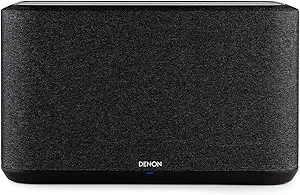
Denon vs Bang & Olufsen: Overview
Comparing Denon and Bang & Olufsen helps you determine which brand is best suited for your needs in Speakers. Both brands offer strong choices depending on your budget and key feature requirements.
Key Features & Comparison
Evaluate factors such as build quality, warranty, customer satisfaction, and total value before making your final purchase choice between Denon and Bang & Olufsen.
Product Selection
Denon and Bang & Olufsen approach product catalog architecture from fundamentally different strategic angles. Denon focuses heavily on home theater ecosystems, standalone AV receivers, multi-room wireless audio, and versatile soundbars. Anchored by its proprietary HEOS network ecosystem, Denon's product lineup enables users to assemble comprehensive, modular home entertainment setups that integrate seamlessly with traditional wired hi-fi components and smart home protocols. From entry-level bookshelf speakers to reference-grade multi-channel home cinema processors, Denon prioritizes technical compatibility, modular expansion, and utilitarian acoustic integration.
Conversely, Bang & Olufsen curates an ultra-premium lifestyle portfolio centered on architectural presence, portable elegance, and luxury standalone pieces. Rather than flooding the market with utilitarian AV hardware, B&O specializes in sculptural floorstanding units like the Beolab series, avant-garde multi-room speakers like the Beosound Shape or Balance, and high-fashion portable Bluetooth gear. While Bang & Olufsen does offer high-end television sound systems, their selection is defined by industrial design artistry rather than raw component variation. Buyers seeking specialized home theater receivers or component-level hi-fi customization will find Denon far more comprehensive, whereas those prioritizing design-led luxury audio objects are catered to exclusively by B&O.
Affordability
When analyzing price-to-performance metrics, Denon clearly targets mainstream audio enthusiasts and value-conscious audiophiles. The Japanese manufacturer engineers products that span from aggressive entry-level pricing to mid-tier enthusiast budgets. A consumer can acquire a robust Denon wireless speaker or a capable AV receiver for a fraction of the cost of any standard Bang & Olufsen product. Denon leverages scalable mass manufacturing and shared parent-company technologies (via Masimo Consumer/Sound United) to keep retail costs accessible while delivering high channel counts, current HDMI standards, and broad wireless protocol support.
Bang & Olufsen operates on an entirely different financial tier, pricing its offerings firmly in the luxury and high-end artisanal strata. Entry into the B&O ecosystem requires a substantial financial commitment, even for battery-powered portable units, while their flagship architectural speakers command tens of thousands of dollars. The pricing reflects bespoke industrial manufacturing, premium raw materials like milled aluminum and Danish wool, and brand prestige rather than raw acoustic wattage per dollar. For consumers seeking pragmatic acoustic utility and technological value, Denon represents a significantly more affordable and economical choice, whereas B&O targets affluent buyers for whom budget constraints are secondary to artistic curation.
Quality/Durability
Denon builds its hardware around classic consumer electronics durability standards, emphasizing internal engineering, circuit stability, and thermal management. The brand uses durable composite plastics, solid chassis metalwork, and industrial-grade internal transformers and DAC chips designed to withstand continuous high-output operation over years. While Denon components may not always feature exotic exterior finishes, their mechanical assemblies, firmware longevity via the HEOS platform, and standard component architecture mean they are exceptionally dependable, functional workhorses in day-to-day media room settings.
Bang & Olufsen sets an industry benchmark for structural craftsmanship, material integrity, and tactile luxury. Utilizing aircraft-grade anodized aluminum, genuine pearl-blasted surfaces, solid hardwoods, and custom acoustic textiles from Kvadrat, B&O hardware is engineered like fine bespoke furniture. Beyond exterior aesthetics, the company has heavily invested in long-term serviceability with initiatives like the Cradle-to-Cradle certification for products like the Beosound Level, which feature replaceable streaming modules and batteries to counter digital obsolescence. While Denon provides reliable electronic endurance, Bang & Olufsen achieves timeless physical durability and heirloom-grade industrial construction.
Sound Quality
Acoustically, Denon delivers a neutral, balanced, and dynamic sound signature that adheres to traditional hi-fi principles. The brand focuses on linear frequency responses, expansive dynamic headroom, and pinpoint channel separation, which makes their hardware particularly potent for complex film soundtracks and uncolored stereo music reproduction. Through partnerships with room-calibration platforms such as Audyssey and Dirac Live, Denon hardware allows users to scientifically tune acoustic output to their specific room geometry, resulting in tight bass control, articulate dialogue, and an uncolored, faithful presentation of original audio masters.
Bang & Olufsen engineers an immersive, highly sculpted, and modern acoustic profile characterized by warm, crystalline clarity and innovative spatial dispersion. Utilizing proprietary acoustic lens technology and advanced Digital Signal Processing (DSP), B&O speakers distribute 360-degree sound evenly across varied living spaces, minimizing traditional sweet-spot limitations. While purists might note that B&O leans toward an active, optimized sound signature rather than strict studio neutrality, the tuning is lavish, engaging, and remarkably full-bodied regardless of listening volume. Denon excels at accurate, reference-style domestic monitoring, whereas Bang & Olufsen creates an effortless, luxurious, and enveloping acoustic environment.