Bose vs Amazon: Overview
Comparing Bose and Amazon helps you determine which brand is best suited for your needs in Speakers. Both brands offer strong choices depending on your budget and key feature requirements.
Key Features & Comparison
Evaluate factors such as build quality, warranty, customer satisfaction, and total value before making your final purchase choice between Bose and Amazon.
Product Selection
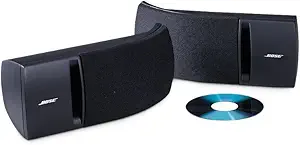
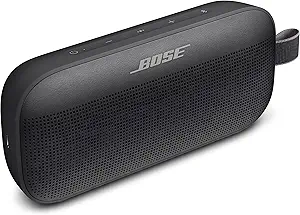
When examining product selection, Bose and Amazon cater to fundamentally different consumer needs through their audio hardware catalogs. Bose focuses on an acoustic-first lineup that spans ultra-portable Bluetooth units like the SoundLink Micro and Flex, multi-room home speakers, premium television soundbars, and dedicated outdoor architectures. Their portfolio is engineered with acoustic versatility in mind, ensuring customers have access to high-fidelity, standalone, or chainable audio solutions designed specifically to excel in challenging acoustic environments, whether poolside, on a trail, or anchored in a dedicated home theater setup.
In contrast, Amazon approaches its speaker catalog through the lens of ambient computing and smart-home integration, anchored primarily by the expansive Echo ecosystem. Amazon’s hardware selection ranges from the compact Echo Dot and standard spherical Echo to screen-enabled Echo Show smart displays and the performance-focused Echo Studio. While Amazon lacks the rugged outdoor portable segment that Bose champions—almost universally requiring wall power rather than rechargeable battery freedom—it offers unparalleled variety in smart home control hubs and budget-friendly utility devices, providing consumers with an extensive network of voice-activated endpoints.
Affordability
Affordability represents the sharpest dividing line between these two brands, reflecting their distinct business models and target demographics. Amazon treats its hardware largely as a low-margin entry vehicle to onboard consumers into its broader retail and service ecosystem, including Prime and Amazon Music. Consequently, devices like the Echo Pop and Echo Dot are priced aggressively, frequently dropping during promotional cycles to price points that make whole-home audio arrays remarkably cheap to deploy. Even Amazon’s flagship audio unit, the Echo Studio, remains priced well below mid-tier premium offerings from traditional audio manufacturers.
Bose, on the other hand, operates as a heritage premium audio brand that demands a significant financial investment across its entire range. Even its entry-level portable speakers generally command price tags that exceed Amazon's high-end smart hardware. The engineering investment in specialized transducers, high-grade passive radiators, and proprietary structural dampening drives up the manufacturing cost, meaning Bose provides poor raw value for consumers merely seeking casual playback or simple voice-assistant utility, while rewarding those specifically investing in standalone acoustic engineering and longevity.
Quality/Durability
In terms of physical construction and environmental resilience, Bose exhibits superior durability driven by purpose-built engineering for active lifestyles. The brand heavily utilizes ruggedized silicone enclosures, powder-coated steel grilles, and tear-resistant finishes across its portable portfolio. Most of Bose’s mobile speakers feature rigorous IP67 ingress protection ratings, rendering them entirely waterproof, dustproof, and capable of floating if dropped into water. Bose’s indoor models similarly feature brushed metals, tempered glass accents, and dense, low-resonance plastics that withstand extensive wear while rejecting mechanical degradation over time.
Amazon’s build quality is competent for static, indoor environments, relying on post-consumer recycled fabrics and matte plastics that blend seamlessly into modern home decor. However, because Amazon speakers are primarily stationary domestic appliances, they lack structural resistance to impact, water immersion, or harsh environmental conditions. The internal components, while reliably manufactured, are built to hit strict domestic price targets rather than withstand physical shocks or high-moisture exposure. For stationary, climate-controlled use on a shelf, Amazon hardware proves completely adequate, but Bose decisively wins on ruggedness and materials engineering.
Sound Quality
Acoustic performance is the arena where Bose's dedicated audio legacy creates a pronounced competitive advantage. Bose designs custom transducers, opposed dual-passive radiators, and sophisticated proprietary digital signal processing (DSP) to achieve surprisingly deep bass extension and clean midrange articulation from compact enclosures. While audiophiles often note the brand's sculpted sound signature—featuring boosted lows and brightened highs—Bose consistently maintains low total harmonic distortion (THD) at high output volumes, delivering clear vocals and expansive spatial imaging that belie the speaker's physical dimensions.
Amazon has made commendable acoustic strides, particularly with the multi-driver array, directional tweeters, and room-calibration sensors found in the Echo Studio. Standard Echo units deliver sufficient clarity for podcasts, ambient listening, and casual background music, but they struggle with complex, layered instrumentation and suffer from compression or boxy midrange reproduction at higher volumes. While Amazon's automated room tuning helps optimize boundary effects, it cannot match Bose's refined dynamic equalization, instrument separation, and coherent, room-filling musicality across varied genres.
Compare current retail pricing, active promotions, and verified stock availability directly from authorized stores:
Compare current retail pricing, active promotions, and verified stock availability directly from authorized stores: