Whirlpool vs RCA: Overview
Comparing Whirlpool and RCA helps you determine which brand is best suited for your needs in Refrigerators. Both brands offer strong choices depending on your budget and key feature requirements.
Key Features & Comparison
Evaluate factors such as build quality, warranty, customer satisfaction, and total value before making your final purchase choice between Whirlpool and RCA.
Features
Whirlpool units boast a modern suite of functional conveniences designed to streamline food organization and preservation. In Whirlpool’s mid-to-high-end lineups, consumers benefit from advanced technologies like the Accu-Chill temperature management system, adaptive defrosting, and adjustable spill-proof micro-etched glass shelving. Dual-cooling systems and humidity-controlled crisper drawers allow for precise microclimate segregation, keeping produce crisp and proteins chilled without cross-odor contamination. Higher-end models also incorporate exterior filtered water and ice dispensers, integrated door bins that accommodate gallon jugs, and flexible interior configurations such as fold-away shelves.
RCA keeps its feature set fundamentally utilitarian, omitting high-tech sensors and microprocessor controls in favor of manual analog thermostats and static storage layouts. Inside an RCA refrigerator, users typically encounter basic wire or standard tempered glass shelves, fixed door storage racks, and standard plastic bins that lack sophisticated humidity adjustments. While some larger RCA units include basic ice-maker hookups, high-end additions like external dispensers, smart diagnostic connectivity, or dual evaporators are virtually absent. RCA’s simplicity is functional for basic chilling needs, but it lacks the customized preservation features that make Whirlpool compelling for busy households.
Performance
Performance benchmarks heavily favor Whirlpool due to its sophisticated thermal regulation and high-efficiency variable-speed compressors. Whirlpool refrigerators excel at maintaining tight thermal bands throughout the cabinet, minimizing temperature swings that lead to freezer burn or premature food spoilage. Their multi-flow air delivery systems channel chilled air evenly to every shelf, preventing hot spots near the doors. Furthermore, Whirlpool models operate with low ambient decibel levels, thanks to sound-dampening insulation and well-balanced fan motors, while maintaining Energy Star ratings that keep long-term operating costs down.
RCA relies on conventional single-speed reciprocating compressors that cycle on and off abruptly, which frequently causes wider temperature fluctuations within the interior compartments. In smaller RCA models, cooling is often concentrated near a static chilling plate or single evaporator vent, which can inadvertently freeze items placed too close to the back wall while leaving door-mounted items slightly warmer than optimal. Noise levels on RCA units can also be more pronounced, marked by noticeable hums and clicks during compressor kick-in. For secondary or light-duty use, RCA manages adequate chilling, but it cannot match Whirlpool’s precision cooling consistency and thermodynamic efficiency.
Design
Whirlpool’s design language emphasizes contemporary aesthetics, ergonomics, and seamless kitchen integration. Their portfolio covers standard top-mount, bottom-mount, side-by-side, and French-door configurations, often finished in smudge-resistant stainless steel, sleek black, or crisp white. Whirlpool focuses on touchpoints, offering sturdy, contoured handles, soft-close hinges, and bright, energy-efficient interior LED lighting that illuminates every corner of the interior. The architectural proportions are engineered to align flush with standard cabinetry depths, creating a cohesive, upscale kitchen aesthetic without demanding a custom-built budget.
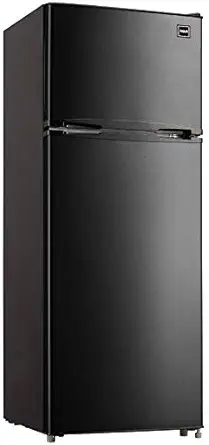
RCA’s design philosophy is centered on utility and compactness, characterized by utilitarian top-freezer profiles and freestanding retro or apartment-sized builds. Exterior materials tend to feature thinner gauge metal wraps, basic textured finishes, and recessed handle pockets designed to keep manufacturing costs and overall footprints minimal. Interior illumination on RCA units is often provided by a single incandescent bulb or a basic low-lumen LED array, resulting in dim, shadowed lower shelves. While RCA has carved out a stylish niche with its novelty retro-colored compact fridges, its standard residential models prioritize low manufacturing overhead over refined architectural polish.
Compare current retail pricing, active promotions, and verified stock availability directly from authorized stores: