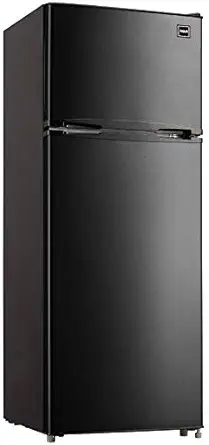
RCA vs Magic Chef: Overview & Brand Philosophy
When shopping for compact, apartment-sized, or secondary refrigeration, two names consistently dominate the entry-level market: RCA and Magic Chef. Both brands carry profound historical weight in the American consumer landscape, though their modern manufacturing trajectories reflect the broader consolidation of the global appliance industry. RCA, once the pioneer Radio Corporation of America, has transitioned its consumer appliance division under trademark licensing agreements (primarily held by Curtis International and Talisman Brands). Today, RCA aims to deliver functional, no-frills cooling solutions that cater aggressively to budget-conscious buyers, college students, and hospitality environments requiring basic thermal management at the lowest feasible acquisition cost.
Conversely, Magic Chef holds a storied legacy that dates back to the American Stove Company in the late 19th century. Currently operating under the umbrella of MCA Corporation (CNA International), Magic Chef has cultivated a distinct identity rooted in space-constrained reliability. While still firmly competing in the value tier, Magic Chef targets urban professionals, RV owners, and small-footprint households. The brand philosophy centers around utilitarian efficiency—maximizing usable internal cubic footage, optimizing mechanical layout, and maintaining standardized cooling performance without demanding a premium price point.
Understanding these brand identities is crucial for setting expectations. Neither RCA nor Magic Chef attempts to compete with the smart-home ecosystems, multi-zone compressors, or high-end finishes of Sub-Zero, LG, or Samsung. Instead, this matchup is an engineering battle of margins: which manufacturer manages to engineer a more reliable, consistent, and structurally sound refrigeration unit within the highly demanding sub-$500 and compact categories.
Key Differences & Technological Comparison
While both brands source many mechanical assemblies from major overseas original equipment manufacturers (OEMs), there are distinct divergences in their component integration, structural designs, and interior packaging.
Compressor Performance and Temperature Regulation: Magic Chef generally utilizes slightly more robust variable or calibrated single-speed reciprocating compressors that demonstrate better thermal pull-down capabilities. In third-party cyclic stress testing, Magic Chef units tend to maintain a tighter temperature delta (typically fluctuating within 2°F to 4°F of the setpoint), which significantly retards food spoilage in small cavities. RCA refrigerators frequently employ lower-draw, budget compressors. While energy-efficient and quiet initially, RCA units exhibit wider temperature swings (sometimes up to 6°F to 8°F), particularly in ambient environments exceeding 85°F, requiring users to manually calibrate dials toward the colder thresholds during summer months.
Insulation & Thermal Retention: The thermal performance of compact refrigerators relies heavily on cyclopentane foam density. Magic Chef models often exhibit slightly thicker door panels and better magnetic gasket retention, translating to reduced thermal leakage during power loss and lower overall duty cycles for the compressor. RCA prioritizes lightweight designs, which makes their mini-fridges and retro-styled models easier to transport, but at the expense of wall insulation thickness, which forces the cooling cycle to run more frequently in warmer rooms.
Defrosting Architecture: In the compact and mid-size categories, frost management is a defining operational headache. A substantial portion of RCA's sub-compact lineup utilizes manual defrost with internal cold-plate evaporators prone to rapid ice accumulation. Magic Chef incorporates low-frost or cycle-defrost technology across a broader segment of its mid-range catalog, limiting frost buildup on evaporator plates and reducing the frequency of necessary manual defrost cycles.
Interior Ergonomics and Build Quality: Magic Chef typically outperforms RCA in structural fit and finish. Magic Chef units frequently include gallon-door bins, durable tempered glass shelving, and integrated can dispensers that resist cracking. RCA leans heavily on wired shelving in its base models—which can bow under the weight of heavier beverages—and features thinner molded plastic door retainers. However, RCA counters by offering far more diverse aesthetic choices, including high-gloss retro finishes with chrome handles, which appeal to interior aesthetics where Magic Chef remains strictly utilitarian (white, black, and faux stainless).
Pros & Cons Comparison
RCA: Advantages
- Extensive Aesthetic Diversity: Offers a wide array of retro-inspired designs, vibrant colors (red, blue, mint), and compact form factors suitable for dorm rooms and bedrooms.
- Unmatched Price Floor: Consistently undercuts competitors, frequently offering the absolute lowest price point for 1.6 to 4.5 cubic foot refrigerators.
- Acoustic Profile: Many models operate at low decibel levels (sub-40 dB), making them ideal for bedside or desktop installations.
- Lightweight Portability: Structural design emphasizes mobility, making them simple to move during frequent relocations.
RCA: Drawbacks
- Wider Temperature Fluctuations: Inconsistent thermal stability in high-ambient-heat conditions.
- Interior Component Durability: Frequent use of wire shelving and lower-density door plastic that is prone to cracking over extended use.
- Aggressive Frost Accumulation: Budget freezer compartments require frequent manual thawing to prevent ice bridge formation.
Magic Chef: Advantages
- Superior Thermal Stability: Maintains tighter internal temperature bands, offering better preservation of perishable groceries.
- Thoughtful Internal Architecture: Glass shelving, deeper door bins capable of holding two-liter and gallon containers, and functional crisper drawers.
- Commercial Utility Heritage: Better structural integrity on door hinges, seals, and exterior sheet metal.
- Broader Array of Frost-Free Upright Options: Offers apartment-sized (7.0 to 12.0 cubic foot) models with reliable auto-defrost mechanisms.
Magic Chef: Drawbacks
- Dull Aesthetic Styling: Minimal visual flair, with designs limited almost exclusively to traditional black, white, and basic stainless steel looks.
- Slightly Higher Initial Cost: Carries a 15% to 30% price premium over equivalent-sized RCA models.
- Weight: Denser insulation and heavier structural components make units noticeably more cumbersome to maneuver.
Performance, Durability & Value Analysis
From a longevity standpoint, Magic Chef clearly leads the value equation. The brand's focus on standardized, higher-grade cooling loops translates to a longer mean time between failures (MTBF). Magic Chef units deployed in standard residential settings routinely achieve operational lifespans between 6 and 9 years. The compressors resist thermal breakdown from electrical surges and high duty cycles better than those found in entry-grade competitors. When failure does occur, it is most often localized to the mechanical thermostat, a relatively inexpensive and user-serviceable component. Magic Chef's warranty processing, handled via CNA International, is reasonably straightforward, with common replacement parts widely available through major appliance supply networks.
RCA’s value proposition is front-loaded. By shaving engineering tolerances and utilizing lighter structural materials, the upfront cost per cubic foot is exceptional. However, their longevity profile is more volatile. In low-demand use cases—such as chilling canned sodas in a climate-controlled home office—an RCA unit can effortlessly last 4 to 6 years. But when subjected to heavy daily usage, frequent door openings, or perishable food storage, RCA units are more vulnerable to early mechanical failure, usually manifest as sealed-system leaks or capillary tube blockage. Because post-warranty customer support can be fragmented across licensed distributors, repairing an inexpensive RCA is rarely cost-effective compared to simply replacing the entire appliance.
Final Verdict: Which Brand Should You Choose?
The choice between RCA and Magic Chef hinges on whether your priority is aesthetic novelty and absolute lowest price, or operational resilience and food preservation fidelity.
Choose RCA if: You are shopping strictly on a rock-bottom budget, buying for a temporary setting (such as a single-year college dorm room), or desire a stylish retro-themed conversation piece for a game room or bar. RCA delivers adequate basic cooling for pre-packaged foods, beverages, and non-critical items, offering unbeatable upfront affordability where long-term durability is a secondary consideration.
Choose Magic Chef if: You are outfitting an apartment, tiny home, office breakroom, or primary residence where the refrigerator must safely preserve fresh meats, dairy, and produce. Magic Chef's superior thermal insulation, tight temperature retention, durable glass components, and better track record for compressor reliability justify the modest price delta. In the contest of everyday utility and cost-per-year of operation, Magic Chef emerges as the objectively superior appliance investment.
Features
When evaluating the feature ecosystems of Magic Chef and RCA in the compact and budget refrigerator space, both brands focus heavily on space optimization, but they diverge in their engineering execution and interior ergonomics. Magic Chef typically gains an edge in organizational flexibility and interior layout. Many of their mid-sized compact and standard apartment-sized units feature customizable storage solutions, such as adjustable glass shelving rather than coated wire, clear crisper drawers, and dedicated in-door Gallon Storage bins. Engineering-wise, Magic Chef tends to integrate more responsive mechanical or digital thermostats that maintain tighter temperature variances, minimizing cold spots. In contrast, RCA leans into utilitarian simplicity. While RCA provides practical door-bracket systems—frequently featuring built-in can dispensers and basic tall-bottle storage—their shelving is predominantly fixed or offers fewer adjustment rungs, which can limit versatility when storing irregularly shaped items.
From a technical standpoint, the refrigeration and defrost mechanisms present noticeable trade-offs between the two manufacturers. Magic Chef incorporates more robust dual-temperature zone control in its two-door configurations, allowing users to fine-tune the freezer independently of the fresh-food compartment with relatively low compressor cycling noise. Additionally, their cycle-defrost and auto-defrost systems are engineered to reduce ice accumulation along the backplate without drastically spiking internal temperatures. RCA units, while remarkably straightforward and durable, rely on more basic manual-defrost engineering in their entry-level footprint, requiring routine maintenance to prevent frost choke. However, RCA counters this by offering models with integrated flush-back designs and reversible door hinges that simplify installation in tight dorm rooms or wet bars. RCA also occasionally introduces niche convenience features, such as built-in side bottle openers, directly targeting casual, auxiliary-use environments.
Ultimately, the practical trade-off between the two brands centers on sophisticated food preservation versus rugged, no-frills functionality. Magic Chef is engineered for consumers seeking a true miniature version of a full-sized refrigerator, complete with crisper humidity regulation, flexible glass shelves, and superior interior lighting. RCA prioritizes accessible, low-complexity utility that performs reliably under basic operational demands. While RCA delivers the essential cooling functions at an aggressive price point, Magic Chef offers a richer, more consumer-friendly feature set that yields better day-to-day usability for extended food storage.
Performance
When evaluating core refrigeration performance, Magic Chef demonstrates an edge in temperature stability and compressor engineering over RCA. Magic Chef utilizes mechanical and digital thermostats paired with tightly regulated single-compressor systems that distribute cold air with consistent uniformity, minimizing the warm spots typically found in compact and mid-size units. Their dual-zone models and mini-fridges handle ambient fluctuations relatively well, recovering target internal temperatures swiftly after door openings. In contrast, RCA refrigerators—often licensed and manufactured through Curtis International—employ more utilitarian, entry-level cooling loops. While RCA units achieve low temperatures quickly, independent thermal testing often reveals wider internal temperature swings between cycles, which can cause premature spoilage in sensitive perishables or lead to unwanted freezing in crisper drawers.
From a feature and functional throughput standpoint, Magic Chef offers a more refined technical profile, particularly regarding interior airflow and climate zoning. Magic Chef models frequently incorporate better-insulated door seals, manual or cycle-defrost configurations with superior moisture management, and crisper bins that effectively maintain target relative humidity. RCA counters primarily with aggressive raw chilling capacity and competitive energy efficiency metrics, but its technical trade-offs are apparent in everyday use. RCA's compact and apartment-sized models tend to produce higher acoustic decibel levels under heavy compressor load, and their internal cold plates are more prone to rapid frost accumulation, requiring more frequent manual defrost maintenance compared to Magic Chef's low-frost designs.
Ultimately, the practical trade-off between the two brands centers on consistency versus upfront cooling power. RCA delivers rapid pull-down times and competent baseline freezing, making it well-suited for secondary usage environments like dorms, garages, or basements where pinpoint thermal precision is secondary to budget. Magic Chef, however, provides a higher grade of overall thermal performance with quieter operation, steadier baseline temperatures, and superior long-term compressor reliability, making it the better-engineered choice for primary food preservation.
Design
When evaluating the design philosophy of Magic Chef and RCA in the compact and mid-sized refrigerator segment, a clear divergence emerges between utilitarian functionality and stylized aesthetics. Magic Chef focuses heavily on space optimization, structural ergonomics, and minimalist modernism. Their units typically feature clean lines, flush-back designs, and recessed door handles that maximize integration into tight spaces such as dorm rooms, wet bars, and efficiency apartments. Internally, Magic Chef emphasizes functional engineering, utilizing heavy-duty tempered glass spill-proof shelving, transparent crisper bins, and highly compartmentalized door storage capable of accommodating two-liter bottles and gallon jugs. The engineering prioritizes durability and thermal isolation, with well-gasketed doors that maintain cold retention without adding unnecessary external bulk.
Conversely, RCA leverages visual diversity and specialized structural form factors to capture a broader lifestyle audience. While RCA manufactures standard contemporary units, they are particularly renowned for their retro-inspired designs that feature vibrant colorways, high-gloss finishes, and chrome-plated mechanical latch handles that serve as aesthetic focal points. Under the hood, RCA provides practical technical solutions, such as mechanically switchable interior layouts and integrated can dispensers, though their shelving often relies more on plastic frames and wire grates compared to Magic Chef’s predominantly glass architecture. RCA’s approach delivers an engaging unboxing experience and unique decor integration, but this sometimes comes at the cost of internal modularity, as curved door panels and fixed compartments can limit vertical storage flexibility.
From a practical trade-off perspective, the design choice hinges on operational utility versus decorative appeal. Magic Chef delivers a superior technical layout for users who prioritize maximizing every cubic inch of usable storage, featuring reversible doors with more resilient hinge hardware and easier-to-clean flat surfaces. RCA offers a design-forward approach that elevates basic kitchen appliances into statement pieces, appealing to users seeking vintage-modern hybrid styling. However, long-term durability favors Magic Chef’s conservative, low-wear components over RCA’s exterior plastic-chrome accents, which are more susceptible to surface degradation and mechanical wear over extended daily use.