LG vs RCA: Overview
Comparing LG and RCA helps you determine which brand is best suited for your needs in Refrigerators. Both brands offer strong choices depending on your budget and key feature requirements.
Key Features & Comparison
Evaluate factors such as build quality, warranty, customer satisfaction, and total value before making your final purchase choice between LG and RCA.
Features
From a feature and technology perspective, LG occupies an entirely different echelon than RCA. LG refrigerators are renowned for their industry-leading technological integration, showcasing innovations such as the InstaView "knock-on" glass panels, dual and craft ice makers that produce slow-melting spherical ice, and comprehensive ThinQ Wi-Fi connectivity. This smart ecosystem allows users to monitor internal temperatures, receive door-ajar push notifications, run remote diagnostics, and even adjust cooling modes via a smartphone app or voice assistants. Interior architectures in LG models are engineered with precision, offering adjustable cantilever shelving, spill-proof tempered glass, dedicated full-convert pantry drawers with independent temperature zones, and multi-air-flow vents placed strategically to eliminate hot spots.
RCA strips away virtually all digital complexity in favor of purely mechanical simplicity. You will not find Wi-Fi connectivity, internal water filtration systems, or automated craft ice makers in an RCA catalog; instead, their feature set is limited to basic manual thermostat dials, standard incandescent or single-point LED interior lighting, and fixed or slide-out wire and glass shelves. In their specialty vintage-style mini-fridges, features are largely cosmetic, including external chrome pull-handles and built-in bottle openers. While this lack of advanced electronics significantly limits customization and food-management automation, it does mean there are fewer sensitive circuit boards prone to electronic failure or expensive replacements down the line, appealing to traditionalists who prefer simple, tactile operation.
Performance
Thermal performance and preservation capability highlight the stark mechanical divergence between the two brands. LG incorporates advanced Smart Inverter and Linear Inverter compressors, which modulate their cooling output continuously rather than cycling abruptly on and off. This mechanism, combined with technologies like Door Cooling+ and Linear Cooling, maintains internal cabinet temperatures within a narrow margin of error—often less than one degree Fahrenheit. This superior thermal stability drastically reduces temperature fluctuations, which is the primary cause of premature produce spoilage, freezer burn, and uneven chilling across varying shelf heights.
RCA appliances utilize standard, single-speed reciprocating compressors that operate on a rigid on/off duty cycle governed by basic electromechanical thermostats. Consequently, RCA units experience much wider temperature swings, with distinct cold zones near the evaporator coil and warmer zones along the door bins. While perfectly adequate for chilling canned beverages, condiments, and short-term grocery storage, this operational variance makes RCA less ideal for keeping sensitive fresh produce or delicate dairy items fresh over extended periods. Furthermore, RCA freezer compartments in compact units are often manual defrost, meaning frost accumulation can degrade thermal efficiency over time, whereas LG models utilize sophisticated sensor-driven dual-evaporator auto-defrost systems.
Design
In terms of industrial design, LG champions sleek, contemporary, and architectural kitchen aesthetics. The brand heavily utilizes smudge-resistant stainless steel, black stainless steel, and modern matte finishes, frequently opting for pocket handles and integrated flat-door profiles that sit flush with modern cabinetry. Inside, LG units are cavernous and immaculately organized, sporting bright, multi-tiered LED theater lighting, metallic backplates (Metal Fresh) that aid in thermal retention, and premium gliding crisper bins. The visual and tactile experience of an LG refrigerator communicates modernity, luxury, and meticulous attention to ergonomic detail suited for upscale open-concept kitchens.
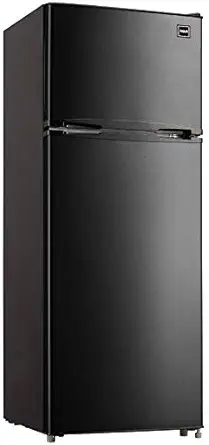
RCA approaches design from a strictly practical and nostalgic angle, often relying on utilitarian sheet-metal construction, textured plastic trim, and simple painted exteriors in black, white, or faux-stainless vinyl. However, RCA has carved out a noticeable niche with its retro-inspired compact and mid-sized refrigerators, which feature rounded corners, vibrant colorways (such as bold reds, pastels, and blues), and mid-century-style chrome hardware. While these retro units provide charming aesthetic flair in dorms, basements, or boutique spaces, the underlying materials—from the thinner gauge cabinet metals to lightweight plastic drawer bins—feel markedly lighter and less substantial than LG’s commercial-grade finishes.
Compare current retail pricing, active promotions, and verified stock availability directly from authorized stores: