Frigidaire vs RCA: Overview
Comparing Frigidaire and RCA helps you determine which brand is best suited for your needs in Refrigerators. Both brands offer strong choices depending on your budget and key feature requirements.
Key Features & Comparison
Evaluate factors such as build quality, warranty, customer satisfaction, and total value before making your final purchase choice between Frigidaire and RCA.
Features
Frigidaire excels significantly in functional technology, integrating systems designed to actively enhance food preservation and user ergonomics. Key proprietary features found throughout their mid-to-high tiers include CrispSeal Plus humidity-controlled crispers that use ethylene-gas absorbers, the EvenTemp cooling system for dynamic air circulation, and SpaceWise customizable interior modular shelving. Higher-end variants like the Frigidaire Gallery series offer external ice and water dispensing equipped with PureSource Ultra II filtration, deli drawers with independent temperature selections, and smudge-proof stainless finishes.
RCA's feature set is markedly spartan and built to lower production costs while providing basic convenience. Most RCA units are equipped with manual or rudimentary mechanical temperature dials, standard wire or basic unsealed tempered glass shelving, and static door bins with minimal adjustability. While some retro models feature built-in bottle openers or classic chrome-style handles, these are primarily aesthetic rather than technological enhancements. For users needing high-capacity ice production, advanced air filtration, or multi-zone smart climate control, RCA's minimalist spec sheets fall considerably short of Frigidaire's capabilities.
Performance
In terms of thermal dynamics and internal climate consistency, Frigidaire demonstrates superior engineering. Its compressors are paired with multi-flow air channels that quickly recover internal temperatures after frequent door openings, keeping the delta between upper and lower shelves minimal. This thermodynamic stability directly translates to extended freshness for produce and the prevention of freezer burn. Furthermore, Frigidaire appliances generally carry Energy Star certifications across a broad swath of their catalog, utilizing inverter compressors in modern configurations to optimize power draw and minimize acoustic output.
RCA units, by contrast, frequently rely on traditional single-speed compressors coupled with basic cold-wall or standard evaporative cooling systems. This mechanical layout often results in noticeable temperature swings, localized cold spots near the evaporator coils, and higher frost accumulation in non-auto-defrost units. While completely adequate for chilling beverages or non-sensitive foodstuffs in short-term storage settings, RCA lacks the precision air distribution required for delicate culinary storage, and smaller units often run with a louder, more noticeable mechanical hum relative to their compact size.
Design
From an aesthetic and structural perspective, Frigidaire aligns with contemporary kitchen cabinetry standards, leaning heavily into professional, architectural styling. The brand employs high-grade stainless steel with proprietary anti-fingerprint coatings, counter-depth footprints, and seamlessly integrated touch controls. The interior layouts are well-illuminated via tiered LED arrays, and the plastics utilized for bins, tracks, and door gaskets possess the structural rigidity required to withstand heavy, repetitive household impacts over many years of service.
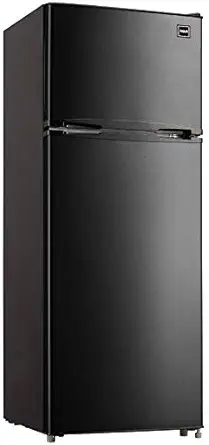
RCA opts for nostalgic, compact, or utility-driven design motifs. The brand has carved out a recognizable niche with its retro-styled mini-fridges, available in vibrant colors with vintage curved silhouettes and polished accents that appeal strongly to style-driven secondary spaces. However, the underlying build materials reveal their budget-oriented nature: plastics are generally thinner and more brittle, interior lighting is often dim or omitted in smaller compartments, and exterior casing tolerances are looser, making them better suited as accent pieces rather than focal points of a modern kitchen renovation.