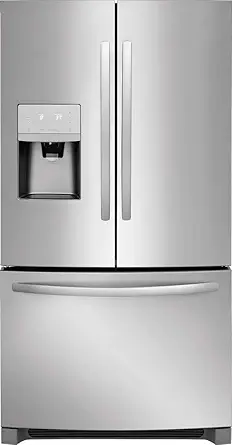
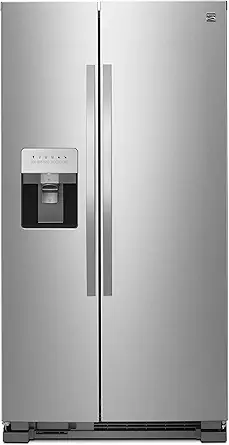
Frigidaire vs Kenmore: Overview
Comparing Frigidaire and Kenmore helps you determine which brand is best suited for your needs in Refrigerators. Both brands offer strong choices depending on your budget and key feature requirements.
Key Features & Comparison
Evaluate factors such as build quality, warranty, customer satisfaction, and total value before making your final purchase choice between Frigidaire and Kenmore.
Features
In terms of internal features and storage ergonomics, Frigidaire excels at utilitarian modularity designed around real-world household turnover. Its trademarked SpaceWise organization system incorporates flip-up shelves, expandable door bins capable of holding gallon containers, and full-width deli drawers that maximize usable cubic footage. Frigidaire’s higher-tier Gallery and Professional series introduce CrispSeal Plus crispers with auto-humidity controls and ethylene-absorbing filters that tangibly extend produce life. Furthermore, Frigidaire prioritizes clean hydration technology through its PureSource and PurePour filtration systems, which reliably strip contaminants while maintaining robust dispenser flow rates across their French door and side-by-side iterations.
Kenmore, on the other hand, frequently incorporates advanced consumer-facing features adopted from its manufacturing partners, particularly on its Kenmore Elite tier. Shoppers will encounter innovative layouts like Grab-N-Go door-in-door compartments, multi-level slide-out freezer baskets, and ultra-high-capacity dual ice makers that produce both standard cubes and specialty cocktail ice. While Kenmore’s produce preservation drawers often employ effective airtight gaskets and mechanical humidity sliders, they generally lack the automated ethylene management found in modern Frigidaire Gallery models. Nevertheless, Kenmore frequently edges out Frigidaire in raw feature volume per dollar, often integrating smart diagnostics, digital sensor suites, and expansive electronic interfaces that appeal to tech-forward buyers.
Performance
Thermal performance and mechanical reliability reveal crucial differences between the two brands' cooling architectures. Frigidaire primarily employs its TwinTech dual-evaporator system in mid-to-high configurations, separating airflow between the fresh food and freezer compartments. This decoupled cooling approach eliminates odor transfer, prevents dry freezer air from migrating to the produce bins, and ensures precise, stable compartment temperatures. Standard-tier Frigidaire units powered by single-compressor, single-evaporator systems demonstrate rock-solid recovery times following door openings, backed by robust mechanical damper controls that rarely suffer from sensor drift or catastrophic logic board failures.
Kenmore's cooling performance is largely contingent upon the underlying OEM platform, though units sourced from leading Korean and domestic manufacturers frequently deliver whisper-quiet operation and sophisticated linear or variable-speed invertor compressors. When operating properly, Kenmore’s GeniusCool and active cooling systems achieve exceptional temperature uniformity across every shelf, with minimal temperature delta from top to bottom. However, historical reliance on certain compressor platforms in specific manufacturing eras has caused intermittent durability scrutiny in the secondary market. Frigidaire consistently demonstrates a slight edge in thermal resilience and long-term compressor reliability under high-load conditions, whereas Kenmore often matches or exceeds Frigidaire's cooling speed and acoustic dampening when backed by premium build specs.
Design
Aesthetic philosophy and material craftsmanship highlight the contrasting brand identities of Frigidaire and Kenmore. Frigidaire champions a functional, commercial-inspired aesthetic, particularly throughout its Gallery and Professional lineups. These units feature heavy-duty bar handles, sharp rectilinear edges, and the brand’s proprietary Smudge-Proof stainless steel, which genuinely resists fingerprint accumulation and wipes down easily without specialized cleaners. Interior aesthetics lean toward clean white linings accented by cool-temperature LED ribbon lighting and smoke-tinted door bins, conveying an industrial-grade, no-nonsense utility that integrates seamlessly into contemporary shaker and transitionally styled kitchens.
Kenmore approaches design with a focus on seamless, integrated residential refinement. Many modern Kenmore and Kenmore Elite models boast flush, hidden hinges, contoured contour doors, and sleek integrated pocket handles that deliver a modern, built-in presence. Their exterior stainless steel finishes tend to have a classic, bright architectural luster, though standard finishes require more vigilant upkeep to mitigate fingerprints compared to Frigidaire’s treated surfaces. Internally, Kenmore embraces sophisticated multi-tier LED theater lighting that ramps up softly upon opening, complemented by metallic accents on shelf trims and drawer fronts. For consumers seeking a sleek, design-forward appliance with understated elegance, Kenmore delivers strong visual cohesion, while Frigidaire appeals to those favoring timeless, robust commercial lines.