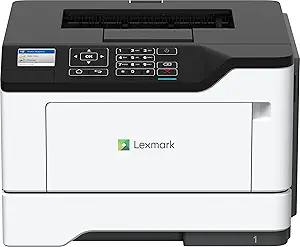

Lexmark vs Xerox : Overview
Comparing Lexmark and Xerox helps you determine which brand is best suited for your needs in Printers. Both brands offer strong choices depending on your budget and key feature requirements.
Key Features & Comparison
Evaluate factors such as build quality, warranty, customer satisfaction, and total value before making your final purchase choice between Lexmark and Xerox .
Features
In terms of feature sets, Lexmark prioritizes robust device management, deep administrative control, and proprietary security frameworks. Lexmark printers shine through their Embedded Solutions Framework (eSF), which allows devices to be customized with targeted applications directly on the hardware, such as secure forms release, direct electronic medical record (EMR) integration, and audit-trail tracking. Furthermore, Lexmark's security suite is integral rather than an add-on, featuring full-spectrum security that protects documents across the network, on the hard drive, and in memory, giving IT departments granular control over network endpoints.
Xerox counters with an exceptionally versatile software ecosystem anchored by ConnectKey Technology and the Xerox App Gallery. This platform turns Xerox AltaLink and VersaLink devices into customizable digital hubs, offering native integrations with cloud platforms like Google Drive, Microsoft OneDrive, and Dropbox, alongside automated document translation and redacting tools. Xerox also tends to offer more comprehensive hardware-based modularity, supporting professional-grade finishing accessories such as multi-position staplers, booklet makers, hole punchers, and dynamic Z-folding units that far exceed Lexmark's predominantly utility-focused accessory lineup.
Performance
When evaluating performance, print speeds and duty cycles reflect distinct operational philosophies. Lexmark devices are renowned for aggressive first-page-out times and consistent sustained throughput, especially in dense monochrome text and complex PDF environments. Their print controllers are engineered with powerful multi-core processors and generous memory, allowing them to rasterize large corporate datasets without stalling print queues. For heavy day-to-day administrative output, Lexmark printers exhibit remarkable mechanical endurance, rarely suffering from paper jams due to their simplified, direct paper path designs.
Xerox, meanwhile, dominates when performance is judged by image reproduction, tonal gradients, and fine-line detail. Utilizing advanced toner chemistry—such as Emulsion Aggregation (EA) toner—Xerox machines deliver razor-sharp text alongside vibrant, pantone-accurate color prints that Lexmark's business-color engines struggle to match. While Xerox models may take marginally longer to warm up from deep sleep modes, their heavy-duty print engines are capable of handling high-coverage, continuous production runs with remarkable color consistency across tens of thousands of pages, making them technically superior for high-impact presentations and external collateral.
Design
From an industrial design standpoint, Lexmark favors utilitarian durability, structural rigidity, and compact footprints. Their printers are designed to withstand rugged commercial environments, employing steel-frame construction across both mid-range and enterprise tiers. Lexmark’s interface design centers on e-Task touchscreens, which utilize intuitive, tablet-like icon layouts that can be easily customized to display one-touch shortcuts for complex multi-step workflows. While their aesthetics are somewhat conservative and boxy, internal components like imaging units and fusers are strategically laid out for easy user-level maintenance and rapid parts replacement.
Xerox approaches design with an emphasis on modern workplace aesthetics and human-centric ergonomics. Their VersaLink and AltaLink multifunction devices sport sleek, high-contrast enclosures and large, tiltable capacitive touchscreens that support pinch, swipe, and scroll gestures akin to modern smartphones. Xerox places significant emphasis on quiet operation and acoustic dampening, making their units well-suited for open-concept office environments. However, the sophisticated internal architecture and broader array of moving parts in their advanced paper handling and toner transfer mechanisms often demand more specialized technician intervention compared to the user-serviceable ethos of Lexmark.