



Canon vs Brother: Overview & Brand Philosophy
When navigating the modern printing landscape, consumers and businesses routinely find themselves choosing between two dominant Japanese heavyweights: Canon and Brother. While both manufacturers have established ubiquitous footprints across homes, small offices, and enterprise environments, their corporate lineages inform starkly different product philosophies. Canon approaches printing primarily through the lens of imaging precision and color science, a direct heritage of its world-class camera and optical divisions. Brother, conversely, emerged from a mechanical engineering and industrial sewing background, shaping a philosophy anchored in mechanical durability, high-throughput utility, and frictionless office workflows.
Canon’s market identity centers on output fidelity. Whether developing consumer-grade PIXMA inkjets or professional-tier imagePROGRAF systems, Canon emphasizes dynamic color ranges, fine droplet placement via its proprietary FINE (Full-photolithography Inkjet Nozzle Engineering) print heads, and exceptional photo longevity. Their units are designed for users whose work demands visual impact—ranging from creative professionals requiring gallery-standard prints to families seeking vibrant photo reproduction alongside everyday document output.
In contrast, Brother has cemented its reputation as the champion of utilitarian productivity and operating economy. Rather than chasing the hyper-saturated color market, Brother built its legacy on virtually indestructible monochrome laser printers and, more recently, robust continuous-ink (INKvestment Tank) platforms. Brother’s ethos is defined by simplicity: robust duty cycles, generous standard paper capacities, streamlined driver architectures, and an aggressive stance on keeping cost-per-page (CPP) metrics as low as possible. Where Canon prioritizes how a document looks, Brother prioritizes how reliably and inexpensively it gets delivered.
Key Differences & Technological Comparison
A granular look at the technologies deployed by both brands reveals fundamental distinctions across print engines, software ecosystems, and ink delivery mechanisms:
- Print Head Technologies: Canon relies heavily on thermal inkjet technology across its consumer and professional photo lines, utilizing heat to expand ink bubbles and eject microscopic droplets through high-density nozzles. This yields extraordinary color blending and sharp text, though it introduces vulnerability to thermal wear and nozzle clogging if units sit idle. Brother favors piezoelectric actuators in its inkjet series, applying electrical charge to shape-shifting crystals. This mechanical process runs cold, granting the print heads longer structural lifespans and greater compatibility with diverse ink formulations.
- Laser and LED Printing Engines: In the laser segment, Brother is an industry standard-setter for desktop monochrome and mid-volume color units. Brother frequently utilizes electrophotographic LED array technology alongside traditional laser setups, reducing moving parts while maintaining brisk first-page-out times. Canon leverages its sophisticated On-Demand Fixing technology, which dramatically slashes warm-up times and standby energy consumption, backed by high-yield all-in-one cartridge architectures that combine toner, drum, and developer into single, serviceable components.
- Ink Tank Systems (MegaTank vs. INKvestment): Canon’s MegaTank lineup operates on open refillable reservoirs integrated into the chassis, allowing users to pour bottled ink directly into the machine. This delivers bottom-dollar cost-per-page figures, though the refilling process carries minor spill risk. Brother’s INKvestment Tank bridges the gap between conventional cartridges and bulk tanks; users insert sealed, high-capacity sub-cartridges that feed internal storage reservoirs. Brother's approach avoids mess and protects the internal mechanics, though the upfront cost-per-page is marginally higher than Canon’s pure pour-in bottles.
- Connectivity and Software Usability: Brother is universally lauded for its lightweight, uncluttered drivers and straightforward local network interfaces. Setup is famously painless across Windows, macOS, Linux, and mobile operating systems via the Brother Mobile Connect suite. Canon offers rich mobile utility through its Canon PRINT app and creative software bundles like Easy-PhotoPrint Editor, but its desktop driver packages are historically more resource-heavy and occasional Wi-Fi pairing drops remain a documented consumer friction point.
Pros & Cons Comparison
Canon Printers
Pros:
- Superior Color and Photo Reproduction: Unrivaled depth, contrast, and color accuracy in consumer and prosumer inkjet classes.
- Industry-Leading Native Resolution: High-density nozzle arrays allow print resolutions reaching up to 4800 x 1200 dpi.
- All-in-One Toner Convenience: Canon laser cartridges often house both toner and drum, making routine maintenance single-step and foolproof.
- Deep Borderless Printing Capabilities: Robust media handling for varied paper stocks, fine art media, and specialty photo sizes.
Cons:
- Software and Network Quirks: Network discovery issues and complex multi-utility software installations can frustrate non-technical users.
- Idle Maintenance Waste: Thermal print heads perform frequent, automated ink-purging cycles to prevent drying, consuming noticeable ink volumes over time.
- Lighter Construction on Budget Lines: Low-to-mid-tier consumer PIXMA models feature thinner plastics and less resilient hinges.
Brother Printers
Pros:
- Exceptional Mechanical Reliability: Hardware is engineered for endurance, experiencing noticeably fewer paper jams and misfeeds over high-volume runs.
- Low Total Cost of Ownership (TCO): Extremely competitive toner yields and low-cost replacement parts translate to outstanding cost-per-page efficiency.
- Driver and Network Simplicity: Clean, bloat-free drivers that configure rapidly and rarely drop wireless connections.
- Generous Paper Handling: Deep internal paper trays come standard, minimizing the need for constant paper reloads in active offices.
Cons:
- Middling Photo Output: Inkjet models often struggle with dynamic range, color banding, and graininess when printing continuous-tone photography.
- Split Drum and Toner Design: Users must manage and replace toner cartridges and imaging drums separately, adding a secondary maintenance step.
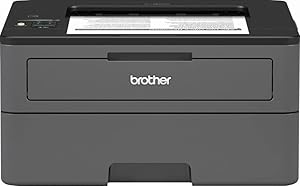
- Utilitarian Form Factor: Industrial, boxy designs with functional, low-contrast LCD screens on base-tier models.
Performance, Durability & Value Analysis
From an operational standpoint, the long-term reliability curves of Canon and Brother diverge based on usage patterns. Brother represents the gold standard in mechanical resilience for text-based, administrative workloads. In testing and field deployments, Brother's paper feed mechanisms demonstrate superior tolerance across varying media weights and environmental humidity levels. When a Brother monochrome laser or INKvestment machine sits powered on for months, it responds instantaneously with minimal wake-up delay and virtually zero maintenance routines. For micro-businesses, home offices, and corporate environments where uptime is the primary success metric, Brother consistently outlasts competitors in duty-cycle endurance without requiring internal recalibration.
Canon, on the other hand, delivers its value through specialized execution. While basic Canon inkjets can be finicky if left dormant for months—often demanding manual deep-cleaning cycles that deplete ink reservoirs—their performance ceiling is significantly higher. In professional workspaces where client-facing presentations, high-impact marketing collateral, and gallery-grade prints are standard deliverables, Canon outclasses Brother at every price tier. Regarding economic value, Canon’s MegaTank line fundamentally levels the field against Brother's toner economy, driving monochrome and color costs down to fractions of a cent per page. Ultimately, while Brother offers the safer hardware investment for daily office volume, Canon provides superior value retention when output quality directly impacts a professional image.
Final Verdict: Which Brand Should You Choose?
Selecting between Canon and Brother ultimately requires identifying your primary output medium: text-heavy operational documents or visually driven graphic media.
Choose Brother if: You need an office workhorse that prints contracts, shipping labels, academic papers, and spreadsheets with uncompromising speed, zero fuss, and maximum reliability. If you prioritize easy wireless setup, intuitive software, exceptional paper tray capacities, and lowest-in-class operational costs for high-volume monochrome or basic color output, Brother is the definitive choice. It remains the undisputed recommendation for students, home offices, and small business administrative desks.
Choose Canon if: Visual fidelity, rich color gradients, and photo-printing capability are non-negotiable. Whether you are a creative professional producing proofs, a real estate agent printing vibrant property flyers, a crafting enthusiast using specialty media, or a family wanting archival-quality home photo albums, Canon is miles ahead. If you opt for their MegaTank platform, you gain this superior visual fidelity alongside cost-per-page metrics that rival the best office-grade printers on the market.
Features
When evaluating feature sets, Brother and Canon cater to fundamentally different operational priorities, reflecting their distinct engineering heritage. Brother builds its printer line around utility, high-volume throughput, and administrative efficiency. Its laser and business-tier inkjet models frequently incorporate dual-sided single-pass auto-document feeders (ADF), high-capacity multi-purpose paper trays, and robust internal memory designed to handle complex office spooling without bottlenecking. Brother’s feature architecture is also notably open; it excels in fleet management protocols, offering comprehensive enterprise support via tools like BRAdmin Professional, native Active Directory integration, and secure, granular user-access controls via NFC and PIN-based authorization. Software integration is centered on workflow continuity, with versatile "scan-to-cloud" and optical character recognition (OCR) features prioritized over consumer multimedia gimmicks.
Canon, by contrast, engineers its feature ecosystem with a sharp focus on imaging fidelity, precision media handling, and creative flexibility. Where Brother prioritizes mechanical velocity and networking, Canon dominates in fine micro-drop ink deposition, multi-channel ink arrays (such as the 5-to-10 ink systems found in the PIXMA and imagePROGRAF series), and nuanced color management engines. Canon’s hardware features regularly include dedicated, flat-path rear feeders capable of handling heavy fine-art stocks, cardstocks, and printable optical discs—mediums that frequently jam Brother's curved internal paper tracks. Furthermore, Canon’s user interface emphasizes consumer and creative usability, integrating advanced mobile connectivity protocols, native camera-direct printing (PictBridge), and refined borderless printing algorithms across an expansive spectrum of non-standard aspect ratios.
The practical trade-off between these brands comes down to document logistics versus expressive output. Brother’s feature set is objectively superior for administrative environments, remote worker setups, and high-cadence document drafting where automatic duplex scanning, large sheet capacities, and trouble-free connectivity reign supreme. However, Brother offers minimal creative features, rendering its color outputs flat and unsuitable for nuanced design proofs. Canon trades away some of Brother’s administrative rigidity and rapid-cycle sheet processing in exchange for photographic supremacy, wider color gamuts, and expansive media compatibility. For users demanding robust, set-and-forget workplace utility, Brother is the pragmatic choice; for users requiring precision graphics, archival photo capabilities, and diverse media support, Canon's specialized feature engineering is unmatched.
Performance
When evaluating performance, Brother and Canon cater to fundamentally different operational priorities through their distinct engineering philosophies. Brother dominates high-volume office performance, with a relentless focus on throughput, duty-cycle resilience, and document processing speed. Its laser lineups and INKvestment tank series deliver blazing pages-per-minute (PPM) benchmarks, rapid first-page-out times (FPOT), and rugged paper-handling mechanics that resist jams even under sustained heavy loads. While Brother provides crisp, razor-sharp monochrome text and legible fine line-work ideal for business documentation, its color performance can appear muted and prone to subtle banding. Conversely, Canon establishes the gold standard for imaging fidelity and media versatility. Powered by proprietary FINE printhead architecture and advanced multi-channel dye/pigment ink systems—such as those in the PIXMA and imagePROGRAF lines—Canon achieves exceptional chromatic accuracy, expansive dynamic range, and seamless micro-droplet gradation, making it the superior performer for creative studios, marketing assets, and professional photo labs.
The technical trade-offs between the two brands become apparent when balancing velocity against visual resolution and ink management. Brother’s mechanical engineering prioritizes longevity and rapid turnaround; its printers wake from sleep states almost instantaneously and complete complex, multi-page vector PDF print jobs without buffering delays. However, this focus on industrial efficiency limits Brother's capability when handling heavyweight fine-art stocks or specialty photographic media. In contrast, Canon excels at complex color rendition and edge-to-edge borderless output, yet it pays a performance penalty in warm-up delays, longer mechanical calibration cycles, and more aggressive maintenance purging, which can slow down spontaneous document workflows and consume more ink. Furthermore, while Canon’s high-end imageRUNNER business class matches Brother's corporate speeds, its consumer and small-office units generally lag behind Brother in continuous, uninterrupted text output.
Ultimately, the performance winner depends entirely on the nature of the consumer’s primary workload. Brother represents the superior choice for corporate desks, home offices, and logistics environments where raw output speed, heavy duty cycles, and uncompromising operational uptime are critical. It acts as an unwavering workhorse that minimizes downtime at the expense of rich graphical vibrance. Canon is the indisputable benchmark for designers, photographers, and mixed-media users who require meticulous color reproduction, superior continuous-tone rendering, and advanced chromatic precision, accepting slightly slower transactional speeds and higher maintenance overhead as a necessary trade-off for studio-grade output quality.
Design
From an engineering and design philosophy standpoint, Brother and Canon prioritize distinctly different user experiences. Brother adopts a utilitarian, function-first approach reminiscent of industrial office equipment. Its chassis engineering heavily emphasizes durability, modular maintenance, and streamlined internal paper paths that actively minimize jams. Brother printers—especially the monochrome and color laser lineups—feature robust, matte-finished plastics that resist fingerprints and scratches, alongside high-capacity internal paper cassettes that remain fully enclosed to prevent dust accumulation. Canon, by contrast, approaches design through the lens of optical precision, consumer aesthetics, and multimedia versatility. Canon’s PIXMA and imageCLASS hardware frequently incorporates sleeker profiles, textured accents, and space-saving folding trays. While Canon’s moving parts and articulated hinges feel lighter and occasionally more fragile than Brother’s heavy-duty assemblies, Canon excels in structural miniaturization, packing advanced photo-engine arrays into remarkably compact footprints.
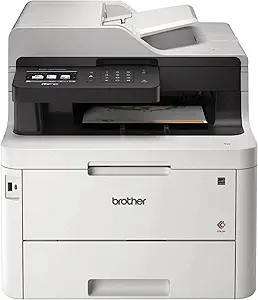
The technical user-interface design highlights further differentiation between the two brands. Canon generally leads in front-panel consumer technology, integrating vibrant, intuitive color touchscreens with smartphone-like graphical user interfaces and articulated display panels that tilt upward for ergonomic access at any desk height. Their modern MegaTank designs also showcase clean, front-facing integrated ink windows that make fluid-level monitoring instantaneous. Brother’s control panels tend to be more conservative and enterprise-focused, leaning on tactile physical buttons, numeric keypads, and simpler monochrome or small color LCDs. While less visually modern, Brother’s design choice excels in high-volume, multi-user environments where physical buttons outlast touch surfaces and reduce operational friction for straightforward copying and scanning tasks. Furthermore, Brother’s internal architecture often isolates the toner cartridge from the drum unit, a deliberate mechanical design choice that lowers ongoing consumable waste compared to Canon’s frequent use of integrated all-in-one cartridge designs.
Ultimately, the trade-offs in design reflect the intended operational context of each brand. Brother offers superior structural integrity, generous paper-handling capacities, and a no-nonsense footprint that effortlessly withstands the rigorous demands of home offices and commercial workspaces. However, this comes at the expense of aesthetic flair and a slightly bulkier profile. Canon provides superior spatial efficiency, modern aesthetic integration for contemporary living spaces, and expertly engineered rear-feed trays designed specifically to handle heavy art paper and glossy photographic media without bending. Consumers prioritizing rugged durability, dust protection, and mechanical simplicity will find Brother’s design superior, while those requiring compact elegance, versatile media pathways, and sophisticated visual interfaces will be better served by Canon.